
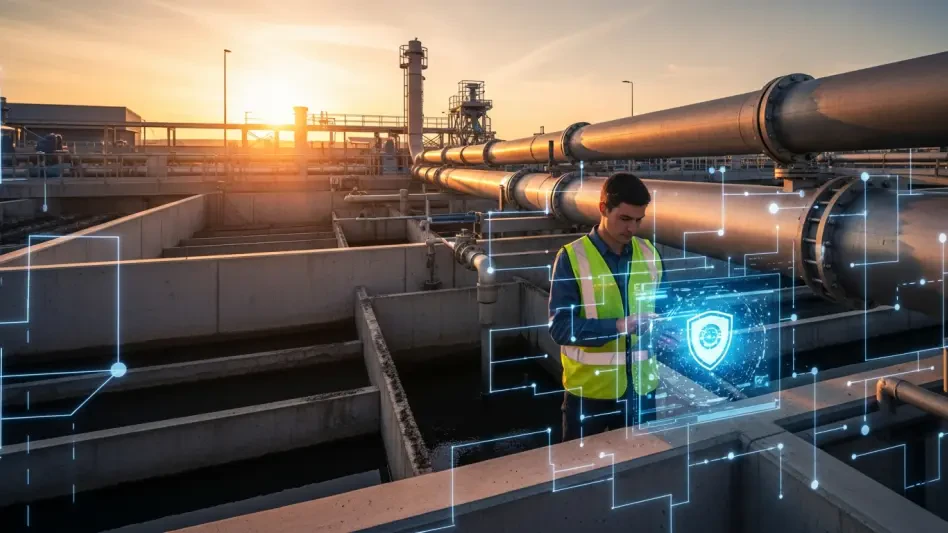
The realization that a single line of malicious code could paralyze a metropolitan water treatment plant has fundamentally transformed the legislative landscape of American infrastructure management. The Water Resources Development Act of 2026 emerges as a response to this chilling reality, pivoting from a century-old focus on physical barriers to a modern emphasis on digital sovereignty. For decades, the U.S. Army Corps of Engineers and the Environmental Protection Agency centered their efforts on the tangible—reinforced concrete, massive steel gates, and dredging operations—but the threat landscape has shifted toward the invisible. Current geopolitical tensions and the rise of sophisticated ransomware collectives have proven that traditional floodwalls provide no defense against a remote intruder targeting a valve controller. By integrating cybersecurity into the bedrock of national water policy, this legislation establishes a new precedent where digital resilience is viewed with the same urgency as structural integrity. This transition signifies more than just a policy update; it represents a comprehensive reimagining of how the United States must defend its most critical life-sustaining resource in a hyper-connected age. The act marks the end of an era where water security was synonymous only with plumbing and concrete, ushering in a period defined by data protection and the hardening of the virtual interfaces that control our liquid lifeline.
Evolution of Resilience: The Shift in National Water Policy
The most profound evolution contained within the current legislation is the expansive redefinition of what constitutes a resilient water system. Historically, resilience was a term reserved for a facility’s capacity to withstand the brute force of nature, such as the surging tides of a hurricane or the slow pressure of a decadal drought. The new framework fundamentally disrupts this narrow interpretation by codifying cybersecurity vulnerabilities as a primary risk factor on par with seismic activity or flood risk. This shift ensures that federal resources are no longer siloed into purely mechanical or geological solutions but can be deployed to defend against the sophisticated digital incursions that characterize modern asymmetric warfare. By elevating cyber threats to the same level of priority as environmental hazards, the act forces a cultural shift within the engineering community, demanding that every new project be evaluated through the lens of data integrity as much as physical durability. This legislative pivot recognizes that a pump station is only as secure as the firewall protecting its operational technology, marking a departure from the reactive policies of the past. It compels a future where the definition of infrastructure is as much about bitrates as it is about gallons per minute and cubic yards of concrete.
With this new definition in place, water utilities are now empowered to utilize federal funding for the development and implementation of advanced software safeguards that were previously ineligible for infrastructure grants. This includes the deployment of secure-by-design architectures that prioritize the isolation of critical control networks from the public internet, as well as the comprehensive hardening of Supervisory Control and Data Acquisition systems. Utility managers can now seek financial assistance for the installation of intrusion detection sensors, encrypted telemetry, and redundant communication loops that ensure manual overrides remain functional even during a massive network outage. This transition allows local municipalities to treat digital upgrades with the same financial legitimacy as the construction of a new reservoir or the replacement of lead service lines. Consequently, the act bridges the gap between traditional civil engineering and information technology, ensuring that the billions of dollars allocated for modernization result in systems that are protected against both a rising river and a malicious keyboard. This integration of digital health into the core mission of water resource management represents the most significant structural change to federal water policy in the current generation. The availability of these funds encourages a long-term perspective on maintenance where software patches are integrated into the standard operational lifecycle.
Assessment Protocols: Establishing Enhanced Oversight Frameworks
Accountability serves as the cornerstone of the new legislation, with the introduction of rigorous dual-track assessment protocols for all federal grant applicants. Under the revised guidelines, any municipality or regional authority seeking funding for a water project must demonstrate a comprehensive understanding of both natural hazards and potential cyber entry points. When the Environmental Protection Agency reviews proposals for new treatment facilities or distribution networks, the evaluation process now assigns equal weight to a project’s cyber defense strategy as it does to traditional engineering specifications like hydraulic capacity or structural reinforcement. This holistic approach prevents the common pitfall of building state-of-the-art physical facilities that remain dangerously vulnerable to digital manipulation. By requiring detailed vulnerability assessments at the onset of the planning phase, the act ensures that security is baked into the design rather than being added as an afterthought. This systematic scrutiny forces a higher level of technical literacy across all levels of government, ensuring that taxpayer dollars are invested in infrastructure that is inherently durable in every sense of the word. It establishes a clear expectation that receiving federal assistance is contingent upon a commitment to maintaining the highest standards of digital and physical vigilance.
Beyond individual project assessments, the act mandates a high-level national study designed to map the current cybersecurity landscape of the entire domestic water sector. This comprehensive research effort, set to produce its first set of findings from 2026 to 2029, aims to identify systemic weaknesses that could be exploited by state-sponsored actors or criminal syndicates. To ensure this is not merely a one-time report, the legislation authorizes $10 million in annual funding through 2030 to support ongoing research into emerging threat vectors and the development of standardized defense protocols. This long-term financial commitment signals to the industry that cybersecurity is an enduring priority that requires constant vigilance and adaptation. The data gathered through these studies will provide a factual foundation for future legislative adjustments, allowing Congress to refine resource allocation based on real-world threat intelligence. By establishing a permanent mechanism for oversight and analysis, the act transforms water security from a series of disjointed projects into a unified national strategy capable of evolving alongside the rapidly changing tactics of digital adversaries. This centralized intelligence gathering will empower local utilities with the knowledge they need to defend against the most sophisticated threats, ensuring that no system is left to face these challenges in isolation.
Vulnerable Node Protection: Securing Rural Water Networks
A critical challenge addressed by the current legislation is the pronounced digital divide that leaves rural and small-town water systems uniquely vulnerable to complex cyber threats. These smaller utilities often operate with limited budgets and lack the specialized personnel required to manage sophisticated network defenses, making them attractive targets for those seeking to disrupt the national grid through its weakest links. To mitigate this risk, the act authorizes $25 million annually for digital infrastructure grants specifically tailored to the needs of these underserved communities. These funds are designated for the procurement of managed security services, the implementation of automated monitoring tools, and the adoption of water reuse technologies that require secure remote management. By providing a financial safety net for these smaller nodes, the bill aims to eliminate the soft targets that could otherwise serve as gateways for larger regional disruptions. This targeted investment acknowledges that national security is only as strong as its most isolated component, ensuring that the benefits of digital modernization are distributed equitably across the geographical landscape. This funding also supports on-site technical assistance, providing rural operators with the expertise needed to implement these new technologies effectively without overwhelming their local resources.
Recognizing that even the most advanced technology is ineffective without skilled operators, the act significantly expands the scope of the Innovative Water Infrastructure Workforce Development Program. Funding for this initiative has been tripled to $15 million annually, with a permanent mandate to include cybersecurity training as a core component of the eligible curriculum. The Environmental Protection Agency is tasked with updating its national workforce strategy to ensure that the next generation of water engineers and system operators possesses the technical fluency to navigate the intersection of hydraulics and information technology. This program supports internships, apprenticeships, and continuing education courses that emphasize the practical application of cyber-hygiene and incident response. By investing in human capital, the legislation ensures that the people managing the nation’s water supply are prepared to identify and neutralize digital anomalies before they escalate into full-scale crises. This focus on education ensures that the physical and digital upgrades authorized by the bill are matched by a workforce capable of maintaining their long-term integrity and operational reliability. It fosters a new breed of professional who is as comfortable with a wrench as they are with a network diagnostic tool, bridging the historical gap between trade skills and digital expertise.
Implementation Path: Strategic Success and Actionable Next Steps
The passage of the legislation marked a definitive turning point in how municipal and federal leaders approached the longevity of water infrastructure. It moved the conversation beyond the immediate repair of leaking pipes and toward a sophisticated model of multi-vector defense. For water system administrators, the most immediate next step involved conducting a full-scale audit of their operational technology networks to identify gaps that qualified for federal assistance. It became essential for local boards to integrate their information technology departments directly into their capital improvement planning processes, ensuring that every physical expansion was accompanied by a corresponding digital security plan. By adopting these measures, utilities successfully mitigated the risk of unauthorized access to chemical dosing systems and pump controls, effectively neutralizing potential threats before they could impact public health. The shift in funding priorities demonstrated a national commitment to safeguarding the water supply against the invisible threats of the modern era, setting a high bar for future infrastructure legislation across all sectors. These actions stabilized the sector and provided a framework for future investments that prioritized long-term security over short-term savings.
Future security depended on the establishment of a continuous improvement cycle that prioritized adaptability over static defense. Municipalities were encouraged to establish mutual aid agreements for cyber emergencies, sharing resources and technical expertise when a specific system came under attack. The national study provided a roadmap that allowed for the targeted hardening of the most critical distribution hubs, focusing resources where they could provide the greatest protective impact. These steps ensured that the water supply remained a resilient pillar of national security, effectively bridging the gap between physical and digital protection for years to come. Organizations that embraced this integrated approach found themselves better positioned to manage the complexities of modern resource management, from environmental compliance to network integrity. The legacy of this legislation was defined by its ability to foster a culture of proactive vigilance, transforming the way the nation perceived and protected its most vital liquid resource. By prioritizing the human element alongside technological upgrades, the water sector set a standard for resilience that other critical infrastructure industries eventually sought to replicate, ensuring a safer and more secure environment for the entire population.