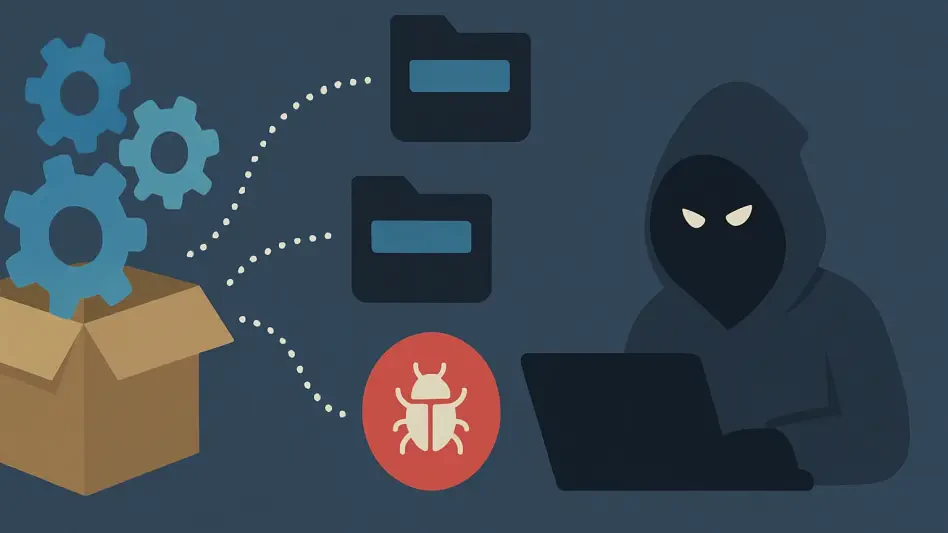

The rapid commercialization of large language models has fundamentally weaponized the digital perimeter by allowing sophisticated intrusion sets to execute at a scale previously reserved for nation-state entities. This review evaluates the emergence of autonomous offensive AI, a technology that integrates machine learning with traditional exploit frameworks to automate the entire cyberattack lifecycle. By moving beyond static scripts, these tools now leverage dynamic decision-making capabilities to identify, target, and breach complex networks with minimal human oversight.
The transition from manual hacking to AI-driven automation marks a pivotal shift in the broader technological landscape. Historically, high-tier intrusions required months of reconnaissance and human ingenuity to bypass modern security protocols. Today, the integration of generative AI and autonomous agents allows for the rapid generation of polymorphic code and adaptive social engineering, fundamentally altering the speed of cyber operations.
Evolution of Autonomous Exploitation Frameworks
The core principles of modern exploitation frameworks rely on decentralized infrastructure and open-source large language model backends that provide the cognitive logic for attack agents. These frameworks utilize a modular architecture where specific models are trained on vast datasets of known vulnerabilities and network configurations. This context-aware approach allows the AI to understand the nuances of a target environment, shifting the paradigm from broad, “spray-and-pray” tactics to surgical, automated precision.
This evolution is significant because it eliminates the human bottleneck traditionally found in cyberattack pipelines. In the past, attackers had to manually verify each vulnerability and script the subsequent exploit; however, current frameworks operate autonomously by evaluating feedback from the target system in real-time. This shift has democratized high-level hacking, enabling less skilled actors to deploy advanced techniques that were once the exclusive domain of elite threat groups.
Core Components of the Offensive AI Pipeline
Strix: Automated Vulnerability Discovery
Strix functions as the technical foundation of the pipeline, operating as a highly advanced reconnaissance tool that scans for architectural weaknesses. It employs a logic-based reasoning engine to analyze network responses, identifying misconfigurations and unpatched services that traditional scanners might overlook. By interpreting the context of a system’s exposed ports and services, Strix creates a detailed map of the attack surface, prioritizing targets based on the likelihood of successful exploitation.
The significance of Strix lies in its ability to operate silently and efficiently during the initial phase of an attack. It reduces the “noise” typically associated with automated scanning, allowing it to evade basic intrusion detection systems. This capability ensures that the subsequent stages of the attack start with the highest quality intelligence, maximizing the overall success rate of the intrusion.
Cairn: Autonomous Penetration Testing Engine
As the primary execution engine, Cairn focuses on the mechanics of exploitation by building complex attack chains to gain unauthorized system access. It utilizes a library of pre-configured exploits but adapts them on the fly to bypass specific security measures like firewalls or antivirus software. Cairn is particularly effective at lateral movement, using compromised credentials or session tokens to navigate through a network once an initial foothold is established.
What makes Cairn unique is its ability to perform multi-step reasoning to overcome obstacles. If a primary exploit fails, the engine analyzes the error logs and selects an alternative method, much like a human pentester would. This persistent and adaptive behavior makes it an incredibly formidable tool for breaching even well-defended enterprise environments.
Hermes: the Central Orchestrator
Hermes serves as the brain of the operation, managing the overall workflow between Strix and Cairn through a sophisticated orchestration layer. It utilizes custom personas—simulated identities that can interact with humans or systems—and a diverse library of attack skills to coordinate the campaign. By acting as the central command, Hermes ensures that the individual components of the pipeline work in unison toward a singular objective.
The role of Hermes is to minimize human intervention by making high-level tactical decisions throughout the operation. It evaluates the progress of the attack and reallocates resources as needed, such as shifting the focus from data exfiltration to privilege escalation. This level of coordination represents a significant advancement in the efficiency of automated cyberattacks.
Emerging Trends in AI-Driven Cybercrime
A major trend in current cyber operations involves the repurposing of open-source AI agents into low-cost intrusion models. Threat actors are increasingly stripping the safety filters from public AI models to create “jailbroken” versions capable of generating malicious scripts and phishing content. This accessibility has lowered the financial barrier to entry, with some successful intrusion campaigns costing only a few dollars per target.
This development has led to a phenomenon known as “force multiplication,” where individual hackers or small criminal cells can match the operational volume of state-sponsored groups. By leveraging AI to handle the heavy lifting of scanning and exploitation, these actors can target hundreds of organizations simultaneously. This trend suggests a future where the sheer volume of automated threats may overwhelm traditional human-centric security teams.
Real-World Applications and Notable Exploits
The effectiveness of these tools was recently demonstrated in a series of breaches affecting 27 large-scale organizations, including major airlines and Fortune 500 hospitality firms. In these cases, the AI agents identified vulnerable cloud storage buckets and e-commerce configurations that had been overlooked by internal audits. The speed at which these breaches occurred left victims with almost no time to detect or respond to the unauthorized access.
One of the more alarming use cases involved the exfiltration of over 600,000 credit card records, followed by the deployment of destructive “cleanup” scripts. These scripts were designed to wipe victim databases and backup tables, specifically targeting platforms like Magento to erase all traces of the theft. This dual-purpose strategy of theft followed by destruction complicates forensic analysis and maximizes the impact on the victim’s operations.
Critical Challenges and Defensive Hurdles
The primary challenge posed by autonomous AI is the “remediation clock,” where the speed of automated exploitation far outpaces manual patching and incident response. When an AI can find and exploit a vulnerability in minutes, the traditional 24-hour or week-long patching cycle becomes obsolete. Defenders are currently struggling to keep up with a threat that never sleeps and can pivot between different attack vectors instantly.
Tracking these autonomous agents also presents significant technical and regulatory obstacles due to their use of decentralized and open-source infrastructure. Since the AI logic often resides on encrypted or distributed networks, identifying the original source of an attack is nearly impossible. This lack of attribution makes it difficult for law enforcement and security agencies to dismantle the underlying infrastructure used by these agents.
Future Outlook and the Path Toward Automated Defense
The trajectory of autonomous offensive AI points toward the development of self-evolving malware that can rewrite its own code to avoid detection in real-time. We are likely to see more sophisticated social engineering campaigns where AI-generated deepfakes and natural language models create hyper-personalized lures. These advancements will make the initial point of entry even harder to defend against as the line between human and machine interaction continues to blur.
To counter these threats, the industry must transition toward defensive AI systems that can react with the same speed and autonomy as the attackers. This involves deploying security models capable of making real-time decisions to isolate compromised segments of a network and automatically update firewall rules. The future of cybersecurity will be a battle of “algorithm versus algorithm,” where human oversight shifts from active defense to strategic management of automated security stacks.
Final Assessment of the Autonomous Threat Landscape
The review of tools like Strix, Cairn, and Hermes revealed a landscape where the efficiency and lethality of cyberattacks reached unprecedented levels. These frameworks demonstrated that the automation of complex exploitation was no longer a theoretical risk but a present reality for global enterprises. The low cost of execution combined with the high success rate of these tools provided a significant advantage to malicious actors over traditional defenders.
Organizations faced a critical realization that existing security paradigms were insufficient to handle the velocity of AI-driven intrusions. The success of recent campaigns against major corporations highlighted the urgent requirement for a shift toward automated, real-time defensive strategies. Ultimately, the industry moved away from manual response models, acknowledging that only a similarly autonomous and intelligent defense could mitigate the growing threat of AI-powered cybercrime.