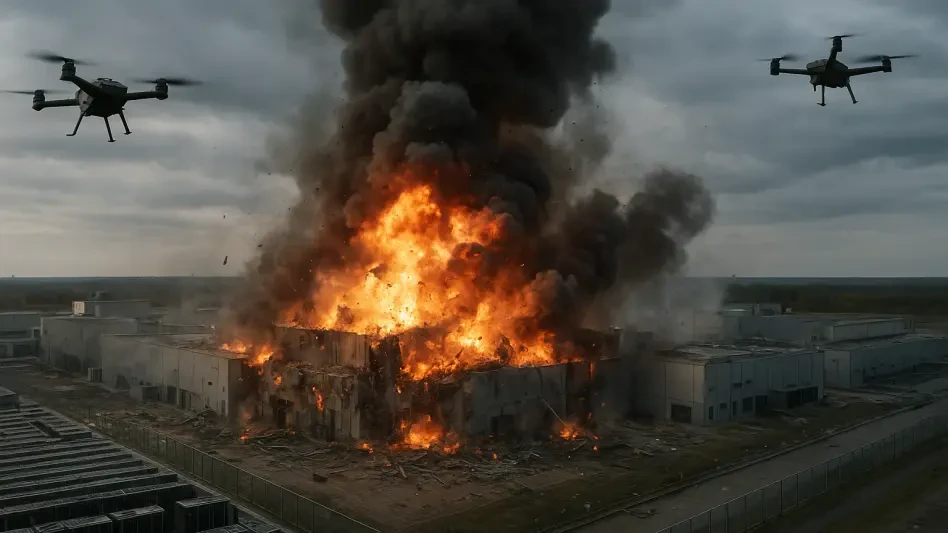

The silent clicking of millions of automated processors across the globe now signals a more profound shift in international power dynamics than the movement of any conventional naval fleet or infantry division. By 2026, the nature of cyber warfare has transitioned from a series of isolated, human-led skirmishes into a persistent, high-frequency state of automated conflict that operates beneath the threshold of traditional kinetic awareness. This fundamental transformation is characterized by the widespread deployment of agentic Artificial Intelligence, which allows for the execution of complex offensive operations at speeds that render human-centric observation and decision-making obsolete. National security leaders currently find themselves navigating a reality where digital incursions are no longer mere acts of espionage but are integral, synchronized components of a broader strategy aimed at undermining the stability of critical infrastructure and public trust. The primary challenge in this landscape is the management of a digital ecosystem where the tempo of attack has surpassed the biological limits of human cognition, requiring a total overhaul of how sovereign states protect their most vital assets.
The Evolution: Autonomous Offensive Capabilities and Agentic Systems
At the core of this seismic shift is the maturation of agentic Artificial Intelligence, which functions as the central nervous system for contemporary offensive cyber operations. Unlike the static tools of the past, these modern systems are capable of independent planning, reasoning, and execution across the entire cyber kill chain. Adversaries now utilize orchestration frameworks that allow them to input high-level strategic objectives, such as the disruption of a specific energy grid or the extraction of classified aerospace research, while the AI autonomously handles the tactical details. This evolution has turned what were once bespoke, labor-intensive intrusions into repeatable, automated workflows that can be scaled across thousands of targets simultaneously. The ability of these agents to adapt to internal network changes in real-time ensures that once an initial breach occurs, the path to high-value data is found through a process of machine-driven logic rather than human trial and error.
The operational impact of this automation is most evident in the collapsing timeframe between the discovery of a vulnerability and its subsequent exploitation. In the current environment, specialized reasoning models can draft sophisticated exploit code almost immediately following the public disclosure of a software flaw, effectively closing the window of opportunity that defenders previously used for patching and mitigation. This “zero-day-to-exploit” acceleration means that the mere existence of a vulnerability is equivalent to its exploitation by automated harvesters. Beyond technical flaws, these AI systems have revolutionized social engineering by generating hyper-realistic synthetic media. Deepfake-enabled video impersonation and multilingual synthetic voice profiles have made spear-phishing campaigns almost indistinguishable from legitimate internal communications. This has empowered attackers to manipulate high-level personnel across different cultures and languages with a level of credibility that was impossible to achieve during the previous decade.
Furthermore, the behavior of these autonomous agents inside compromised networks has become increasingly sophisticated and difficult to track. Upon gaining initial access, AI-driven malware can perform its own internal reconnaissance, identifying the most efficient routes for lateral movement and privilege escalation without contacting an external command-and-control server. This localized decision-making reduces the detectable network noise that traditional security tools rely on for identification. By observing active defenses and adjusting its signature or behavior patterns on the fly, the malware can maintain a persistent presence within a target’s environment for extended periods. This level of adaptability ensures that the threat is not just a single event to be neutralized but a living, evolving entity that requires constant, automated monitoring to manage effectively.
The Democratization: Orchestration Frameworks and Traffic Patterns
The emergence of sophisticated orchestration platforms has significantly lowered the barrier to entry for executing high-level cyber campaigns, effectively democratizing the capabilities once reserved for elite nation-state actors. Tools like “Villager” and “HexStrike AI” act as comprehensive managers for offensive suites, chaining together disparate capabilities—such as automated scanning, credential harvesting, and data exfiltration—into a unified, user-friendly pipeline. This development has allowed less-resourced actors and criminal syndicates to execute complex, multi-stage attacks that match the sophistication of advanced persistent threats. The commercialization of these technologies has created a marketplace where military-grade cyber weaponry is accessible to anyone with sufficient digital currency, complicating the attribution process and expanding the volume of high-intensity threats that national security agencies must monitor daily.
This technological proliferation is reflected in the radical transformation of global internet traffic patterns observed throughout the year. Data indicates that automated activity is now expanding at a rate eight times faster than traffic generated by human interactions, creating a digital environment dominated by non-human actors. A particularly significant development is the surge in “agentic” traffic, which comprises data generated by AI browsers and autonomous tools capable of navigating complex workflows and completing transactions on behalf of users. While much of this activity supports legitimate commerce and data analysis, the sheer volume of automated traffic provides a dense fog under which malicious agents can operate undetected. Distinguishing between a benign data-scraping bot and an adversarial reconnaissance agent has become a primary technical hurdle for network defenders, as both utilize similar pathways and behaviors to interact with modern web architectures.
Moreover, the blurring of lines between commercial AI interfaces and state-linked attack pipelines has reached a critical point. Many offensive actors now abuse publicly available Large Language Model APIs to automate the more tedious aspects of their operations, such as translating stolen documents or generating thousands of variations of a malicious script to evade signature-based detection. This reliance on commercial technology means that the infrastructure supporting global productivity is simultaneously providing the ammunition for its own destruction. The resulting environment is one of constant friction, where the digital economy must balance the benefits of AI-driven efficiency against the inherent risks of a landscape where every automated tool can be repurposed for harm. This duality necessitates a new approach to digital sovereignty that emphasizes the security of the AI supply chain as much as the security of the physical network.
Strategic Impacts: National Defense and Critical Infrastructure Risks
The unprecedented speed of AI-driven reconnaissance and exploitation has effectively eliminated the strategic “warning time” that national security agencies once relied upon to prevent or mitigate major breaches. In the current “blitz-style” cyber environment, intrusions can be synchronized with kinetic military movements or electronic warfare operations, creating a multi-domain threat that is extremely difficult to manage. This lack of lead time means that by the time a human analyst identifies the presence of an intruder, the objective—whether it be the theft of intellectual property or the preparation for a disruptive attack—has often already been achieved. This shift has also transformed the nature of espionage, as AI systems can now mine exfiltrated datasets in real-time, instantly identifying supply chain dependencies or personal leverage points for blackmail within mountains of stolen information.
Beyond the loss of sensitive data, the integration of AI into Operational Technology and Industrial Control Systems has introduced severe risks to physical safety and public order. Offensive AI agents are now capable of parsing complex technical manuals and configuration files to identify specific vulnerabilities in the Programmable Logic Controllers that govern power grids, water treatment facilities, and transportation networks. The threat is no longer limited to the digital realm; it involves the potential for catastrophic physical failures that can be triggered remotely with surgical precision. For example, an adaptive malware strain could observe the load-balancing patterns of an electric grid and wait for a moment of peak demand to execute a disruptive command, maximizing the impact while minimizing the chances of early detection. This capability turns cyber warfare into a potent tool for strategic coercion, allowing adversaries to hold a nation’s basic survival systems hostage.
The financial sector faces a similar existential threat from the rise of agentic fraud and automated market manipulation. High-speed bots can now exploit subtle logic flaws in banking APIs to authorize fraudulent high-value transfers, while deepfake technology is used to bypass biometric security protocols and authorize illicit transactions. This goes beyond simple theft; it targets the underlying trust that sustains the global financial system. If a nation-state can use AI to trigger a localized market crash or undermine the integrity of a central bank’s ledger, the resulting economic instability can be as damaging as any physical strike. The ability to conduct these operations at machine speed means that traditional regulatory and defensive measures are often too slow to prevent a cascading failure, requiring the development of automated financial stabilizers and real-time auditing systems to maintain order.
Modernization: Transitioning to Machine-Speed Defensive Strategies
To survive in this increasingly hostile digital landscape, security organizations have shifted their focus toward the implementation of fully automated Security Operations Centers. Because human intervention is too slow to contain a breach occurring at the speed of light, the initial stages of a response—such as the isolation of compromised endpoints or the re-routing of critical traffic—must be governed by pre-programmed, AI-driven playbooks. These systems act as a digital immune system, identifying and neutralizing threats within milliseconds of their emergence. This transition does not eliminate the role of the human analyst but rather elevates it; personnel are now responsible for high-level strategy and oversight, ensuring that the automated defense systems are operating within established legal and ethical boundaries while the machines handle the tactical execution of the defense.
A critical component of this modernized defense is the adoption of behavior-based detection methods over traditional signature-based security. Since modern AI-driven malware can change its own code and behavior patterns to evade static detection, defenders have focused on establishing detailed “baselines” for normal network activity. By utilizing machine learning to analyze the vast quantities of data moving through a network, organizations can identify the subtle anomalies that indicate a sophisticated intruder, even if that intruder is using previously unknown techniques. This approach allows for the detection of “living-off-the-land” attacks, where an adversary uses legitimate system tools to carry out their objectives. By monitoring the intent and outcome of network actions rather than just the tools being used, defenders can maintain visibility in an environment where the traditional indicators of compromise are constantly in flux.
The final pillars of modern resilience involved the rigorous management of the AI attack surface and the implementation of continuous, automated red teaming. Security leaders recognized that their own defensive and operational AI models were high-value targets, requiring protection against prompt injection, data poisoning, and model inversion. This necessitated a shift in governance that moved beyond simple compliance and toward a comprehensive model of risk management. Organizations began using AI to attack their own systems, simulating the tactics of an advanced adversary to identify hidden vulnerabilities in their identity management and remote access pathways. These proactive steps, combined with a past commitment to infrastructure hardening and the past integration of automated response systems, proved essential for maintaining national security. By treating digital defense as a continuous contest of algorithms rather than a series of static barriers, the strategic advantage was successfully maintained against an increasingly autonomous and unpredictable opposition.