
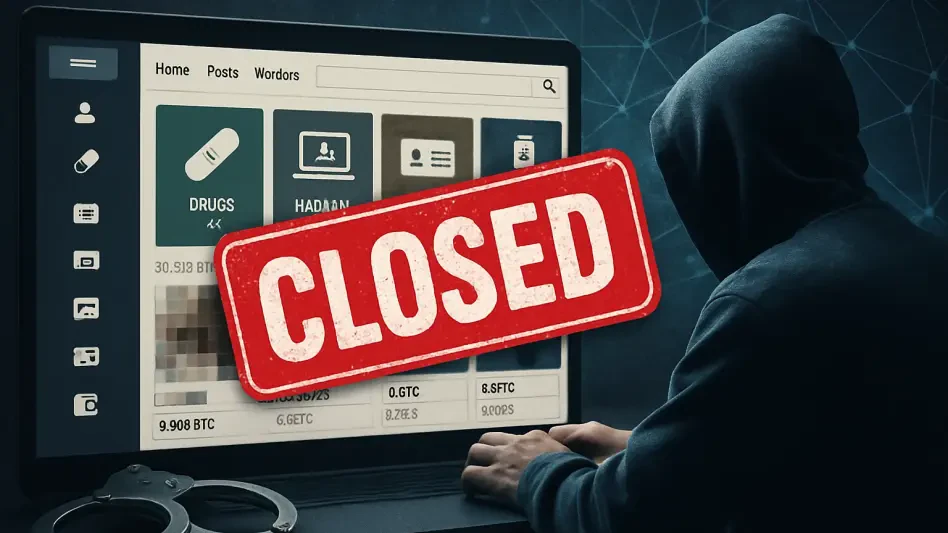
The digital underground remains a volatile landscape where the sudden disappearance of a major marketplace often signals a massive relocation of criminal assets rather than a complete cessation of illegal activity. When international law enforcement agencies recently dismantled the relaunched version of Crimenetwork, they addressed a defiant attempt to resurrect one of the most significant hubs for German-speaking cybercriminals. This operation, led by the German Federal Criminal Police Office (BKA) and the Central Office for Combating Internet Crime (ZIT), successfully apprehended a 35-year-old German national in Mallorca, Spain. The suspect allegedly rebuilt the infrastructure of the site only days after its initial shutdown and the arrest of its previous administrator. This rapid “phoenix” style emergence highlights a growing trend where seasoned operators utilize redundant servers and mirrored databases to minimize downtime. The persistence shown by these actors forces a shift in policing strategy toward long-term surveillance and the systematic dismantling of underlying hosting providers located in jurisdictions like Moldova.
Beyond the immediate disruption of the storefront, the financial scale and user engagement metrics uncovered during the investigation provide a stark look at the profitability of modern dark web ventures. While the original iteration boasted over 100,000 users, the new platform managed to attract 22,000 registered accounts and 100 active vendors in an incredibly short timeframe. The financial logistics were equally impressive, with the platform generating approximately €3.6 million through a calculated business model involving sales commissions and monthly subscription fees for sellers. Historical data indicates that the ecosystem processed more than 1,000 BTC and 20,000 XMR between 2026 and the present, illustrating a sophisticated reliance on privacy-focused cryptocurrencies to mask the flow of capital. The sheer volume of forged documents, narcotics, and stolen data exchanged on the site confirms its status as a critical node in the global illicit economy. Consequently, the seizure of €194,000 in assets during the Spanish raid represents only a fraction of the total wealth generated by this network over the years.
Cross-Border Cooperation and the Evolution of Investigative Tactics
The success of this mission hinged on an intricate web of judicial and police cooperation that spanned several European nations, proving that national borders are becoming less of a shield for digital fugitives. By coordinating efforts between authorities in Germany, Spain, and Moldova, investigators were able to track the suspect’s physical location while simultaneously securing the digital backbone of the marketplace. This holistic approach resulted in the acquisition of massive quantities of user and transaction data, which now serve as a treasure trove for future intelligence operations. Unlike previous eras where a server takedown might only result in the loss of a domain, modern law enforcement is prioritizing the recovery of backend databases to de-anonymize buyers and sellers. This shift in focus ensures that the impact of the raid extends far beyond the administrator, casting a wide net over the entire community that relied on the platform for illicit trade. The precedent set by the previous administrator’s seven-year sentence and the forfeiture of €10 million serves as a grim warning to those attempting to fill the sudden power vacuum.
Strategic intelligence gathering during these raids allows agencies to map out the secondary service providers that facilitate the dark web’s existence, such as “bulletproof” hosting services and specialized crypto-mixers. The dismantling of Crimenetwork revealed how criminals leverage geographically dispersed infrastructure to evade detection, a tactic that is increasingly being met with synchronized global warrants. As authorities analyze the seized data, they are likely to uncover links to other emerging marketplaces, creating a domino effect that destabilizes the trust-based systems inherent to underground commerce. This strategy moves away from the “whack-a-mole” style of policing toward a more comprehensive degradation of the criminal supply chain. By targeting the reputation and reliability of these platforms, law enforcement aims to instill a permanent sense of paranoia among users. This psychological pressure is often more effective than physical arrests alone, as it discourages new vendors from entering the market and forces existing ones to operate under conditions of extreme risk, eventually leading to the stagnation of the broader illicit digital economy.
Future Implications for Cybersecurity and Proactive Defense
The aftermath of this takedown suggests that the dark web is entering a period of forced adaptation, where decentralized models may eventually replace the centralized marketplace structure. Organizations and cybersecurity professionals must now prepare for a migration of criminal activity toward encrypted messaging apps and specialized peer-to-peer networks that are harder to infiltrate through traditional server seizures. To counter this, security teams should prioritize the monitoring of data leak sites and the implementation of robust identity and access management (IAM) protocols to protect against the credentials frequently traded on these hubs. As criminals move toward more fragmented and private communication channels, the focus of defense must shift to “zero trust” architectures that assume a breach is already in progress. Leveraging automated threat intelligence feeds that incorporate findings from recent law enforcement actions can help businesses stay ahead of the specific malware strains and phishing kits that were popularized on the now-defunct Crimenetwork platform.
In light of these developments, the private sector should actively collaborate with public agencies by sharing anonymized telemetry data that could point toward the infrastructure used by emerging marketplaces. This proactive stance included the adoption of advanced blockchain analytics to track the movement of illicit funds before they can be laundered through complex mixing services. Furthermore, companies had to reconsider their incident response strategies, ensuring that they were not just reacting to attacks but also investigating the origins of the stolen data found during the Crimenetwork investigation. Law enforcement’s move toward securing full administrative access to criminal servers provided a unique window into the current tools of the trade, allowing researchers to develop more effective countermeasures. Ultimately, the fall of this network demonstrated that while criminal infrastructure is resilient, it is not invincible. Future defense strategies will likely focus on the continuous disruption of the financial incentives that drive the creation of these platforms, making the cost of operation far higher than the potential rewards for prospective dark web administrators.