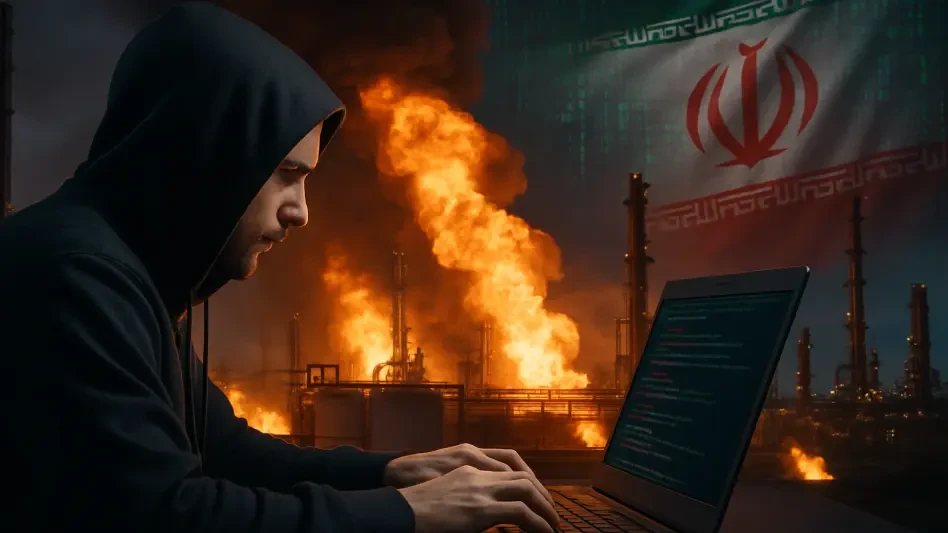
Federal authorities in the United States are currently untangling a sophisticated web of digital intrusions targeting automatic tank gauge (ATG) systems, which serve as the central nervous system for monitoring fuel levels, temperature, and volume in storage tanks. These breaches, occurring across multiple states, primarily affect the retail gas sector but indicate a much more alarming systemic vulnerability within the nation’s critical infrastructure. While the immediate consequences of these attacks have not yet manifested as physical destruction or mechanical failure, the investigation strongly points to Iranian state-sponsored actors as the primary architects behind these intrusive campaigns. This situation highlights a dangerous reality where the digital and physical realms collide, leaving essential services exposed to foreign adversaries who are becoming increasingly bold in their attempts to probe the resilience of the American energy supply chain and public safety frameworks.
The core of this developing security crisis lies in the widespread and often negligent use of internet-connected monitoring systems that lack even the most fundamental protection measures, such as password requirements or robust multi-factor authentication. These systems represent a critical intersection between digital networks and physical machinery, a domain known as Operational Technology (OT), which governs everything from power grids to water treatment facilities. Because these specific ATG systems manage hazardous and flammable materials, any degree of unauthorized compromise poses significant real-world risks, including the potential for massive environmental disasters, supply chain paralysis, and the sudden disruption of essential services across the country. The ongoing investigation serves as a stark reminder that the convenience of remote monitoring has introduced a massive, unshielded flank in the nation’s defensive posture.
Research and Risk Assessment
Uncovering Hardware Flaws and Global Exposure
A significant portion of the current federal investigation stems from comprehensive research conducted by BitSight in late 2024, which identified eleven distinct vulnerabilities, including several critical “zero-day” flaws, across multiple ATG vendors. These vulnerabilities are particularly dangerous because they allow unauthorized users to manipulate tank settings, silence safety alarms, and even alter the digital geometry of tanks to hide leaks or spills. Such flaws provide attackers with a sophisticated toolkit to bypass traditional safety protocols without being detected by onsite personnel or remote monitoring teams. By compromising the integrity of the data being reported, an adversary can effectively blind an operator to a dangerous situation, turning a safety system into a liability that facilitates a crisis rather than preventing one. This research has shifted the conversation from theoretical risks to documented, exploitable weaknesses in the hardware that keeps the fuel industry operational.
The scale of this exposure is massive, with thousands of these systems currently identified as directly accessible via the public internet without any intermediary security layers. This vulnerability is not confined to local gas stations; it extends to critical logistical hubs such as international airports, regional hospitals, massive manufacturing centers, and sensitive government facilities. Currently, the United States is identified as the most affected nation globally regarding these specific hardware vulnerabilities, which has prompted urgent, high-level coordination between independent researchers and the Cybersecurity and Infrastructure Security Agency (CISA) to implement immediate fixes. The sheer volume of exposed endpoints suggests a systemic failure in how OT hardware is procured and deployed, as many of these devices were never intended to be exposed to the global web, yet they remain reachable by any motivated actor with basic scanning tools.
Systematic Vulnerabilities in Critical Hubs
Beyond the immediate threat to fuel retailers, the investigation has revealed that the risk profile for these automatic tank gauges is deeply embedded in the logistics of daily American life. For instance, an airport that loses the ability to accurately gauge its jet fuel reserves due to a cyberattack faces an immediate grounding of flights, leading to a cascading failure of the transportation network. In hospital environments, where backup generators rely on steady fuel supplies, a manipulated gauge could lead to a sudden power failure during a critical emergency, putting lives at risk. These scenarios are no longer the stuff of speculative fiction but are realistic outcomes of the flaws discovered in the existing infrastructure. The federal government is now tasked with auditing not just the devices themselves, but the entire ecosystem of third-party vendors and service providers that maintain these systems, ensuring that a single point of failure does not lead to a regional or national catastrophe.
The response to these findings has necessitated a shift in how CISA and other regulatory bodies approach the security of the fuel supply chain, moving toward more aggressive oversight. Historically, many of these facilities operated under the assumption that their specialized equipment was too obscure to be targeted, a concept often referred to as security through obscurity. However, the BitSight research proved that modern search engines designed for the Internet of Things (IoT) have made it trivial for attackers to locate and identify specific brands of fuel controllers. This newfound transparency in the threat landscape has forced a rapid acceleration of patching cycles, though many legacy systems remain difficult to update without significant downtime or physical hardware replacement. The challenge now is to bridge the gap between the speed of digital exploitation and the slower, more methodical pace of physical infrastructure maintenance and upgrades.
Geopolitical Context and Technological Gaps
The Critical Divide Between IT and OT Security
A recurring challenge highlighted by this investigation is the fundamental and often dangerous difference between Information Technology (IT) and Operational Technology (OT). Historically, OT systems like fuel gauges, water pumps, and power relays were designed for extreme longevity and mechanical reliability rather than digital defense against sophisticated cyber threats. Many of these systems were installed decades ago, long before the current era of constant connectivity, leaving them ill-equipped to handle modern threats from nation-state actors who view them as “low-hanging fruit.” While an IT network is frequently updated and monitored by dedicated security teams, an OT device at a gas station might go years without a firmware update, often managed by a technician who lacks any formal training in cybersecurity or network defense protocols.
Attributing these attacks to Iran is based on a well-documented and consistent history of Iranian operatives targeting fuel-related infrastructure in both the West and the Middle East over the past several years. Intelligence experts believe these intrusions serve as “test runs” or reconnaissance missions, allowing adversaries to probe the resilience of American infrastructure without triggering a full-scale military response. By identifying and exploiting these weaknesses during periods of relative geopolitical calm, state actors can prepare for more aggressive, destructive operations during times of heightened tension. This strategic patience allows them to map out the network architecture of critical utilities, ensuring that when they choose to strike, the impact is maximized. The investigation underscores that these are not random acts of digital vandalism but are part of a broader, state-led effort to achieve asymmetric advantages.
Probing National Resilience Through Test Runs
The psychological impact of these “test runs” cannot be overstated, as they create a persistent sense of vulnerability within the public consciousness and among policy makers. By successfully infiltrating fuel systems, Iranian-backed groups demonstrate that they can reach into the physical world of American citizens, affecting their ability to commute, heat their homes, or transport goods. This form of gray-zone warfare is designed to stay just below the threshold of open conflict while still achieving strategic objectives, such as deterring certain foreign policy decisions or signaling a capacity for retaliation. The federal probe is looking specifically at how these actors move laterally from a simple tank gauge into more sensitive parts of a facility’s network. This lateral movement is the ultimate goal, as it allows a small, insecure device to serve as a gateway for much more damaging activities, such as disabling safety valves or overriding pressure controls.
Furthermore, the technological gap is widened by the fact that many OT systems use proprietary protocols that do not integrate easily with standard IT security tools. This creates “blind spots” where malicious activity can go unnoticed for months or even years. Security analysts have noted that the Iranian groups involved often use living-off-the-land techniques, employing legitimate administrative tools already present on the system to avoid triggering traditional antivirus software. This makes detection a game of cat and mouse, requiring specialized forensic expertise that is often in short supply within the private sector. The government’s role has therefore expanded to include providing these specialized resources to smaller entities that lack the budget to defend themselves against a nation-state’s resources. The investigation is as much about building a defensive community as it is about identifying the specific individuals behind the keyboards.
Emerging Threats and Defensive Shifts
Manipulating Reality and Strengthening Defense
The investigation reveals a profound shift in the cyber threat landscape from simple data theft to the more insidious manipulation of “false telemetry” within industrial control systems. The danger is that an attacker can trick a human operator by making a digital display show inaccurate information, such as reporting an empty tank when it is actually full, or vice versa. This type of manipulation could lead to massive overfills and catastrophic environmental damage, as the human operator makes critical decisions based on compromised data rather than the actual physical reality. In a high-stakes environment like a fuel depot, believing a false reading for even a few minutes can result in thousands of gallons of hazardous material spilling into the ground, leading to long-term ecological consequences and massive financial liability for the affected companies.
To counter these evolving threats, cybersecurity leaders are urging a rapid shift from a “prevention-only” mindset toward a more realistic focus on resilience and containment. Key recommendations include implementing granular microsegmentation to isolate OT systems from the public internet and applying basic cyber hygiene, such as removing default credentials and mandating the use of multi-factor authentication for all remote access. These foundational steps are seen as essential for preventing relatively unsophisticated exploits from causing major operational disruptions that could paralyze a region. By treating every device as a potential entry point for an adversary, organizations can build a “Zero Trust” architecture that prevents a single compromised tank gauge from becoming a catastrophic failure point for the entire facility or the broader national infrastructure.
Future Considerations for Infrastructure Integrity
As the integration of digital controls into the physical world continues to accelerate, the transition to a robust Zero Trust environment for critical infrastructure has evolved into a top-tier national security priority. Security experts now argue that the era of “security through obscurity” is officially over, and organizations must adopt automated maintenance protocols for firmware and passwords to keep pace with the speed of modern threats. This shift requires a cultural change within the industrial sector, where safety and security must be viewed as two sides of the same coin rather than separate departments. The current breaches at gas stations and fuel hubs serve as a final warning that the systems monitoring the nation’s most vital resources are active targets. The path forward requires a blend of regulatory mandates, technological innovation, and a renewed commitment to securing the mundane devices that underpin the modern economy.
In the coming years, the focus will likely shift toward building systems that are “secure by design,” meaning that security features are baked into the hardware and software from the very beginning rather than being added as an afterthought. This will involve closer collaboration between the federal government and private hardware manufacturers to set minimum security standards for any device connected to the national power or fuel grids. Additionally, the use of artificial intelligence to monitor for anomalies in OT telemetry could provide a new layer of defense, identifying “impossible” data patterns that suggest a system has been compromised. The ultimate goal is to create a defensive posture that is as dynamic and adaptable as the threats it faces. While the current investigation has exposed significant gaps, it has also provided a clear roadmap for the necessary improvements that must be made to ensure the long-term stability and safety of American infrastructure.
The investigation into automatic tank gauge breaches concluded that the vulnerabilities were largely preventable through standard security practices. Authorities recommended that all fuel infrastructure operators immediately disconnect their ATG systems from the public internet and implement dedicated VPNs for any necessary remote monitoring. These steps were paired with a push for mandatory reporting of all anomalies in fuel telemetry to CISA to help identify patterns of state-sponsored activity more quickly. Moving forward, the focus shifted toward a national certification program for OT hardware to ensure that new installations met high security benchmarks. These actions demonstrated that the path to a more secure future lay in the rigorous application of existing security principles to the physical systems that maintain the nation’s energy flow.