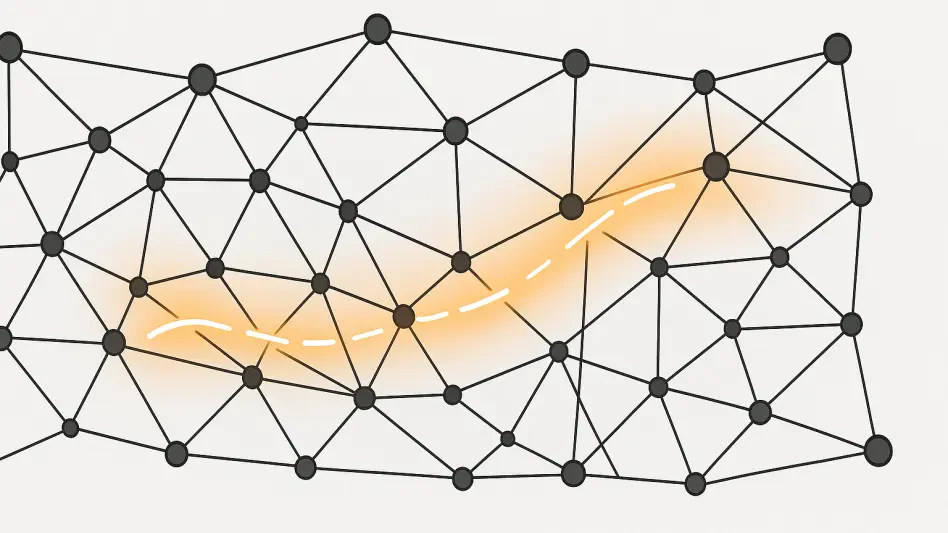

The digital landscape of 2026 has witnessed an unprecedented escalation in the scale and frequency of distributed denial-of-service attacks, transforming once-minor nuisances into catastrophic network events for server administrators. As botnet capacity becomes increasingly affordable and accessible to even the most casual users, the traditional reliance on simple firewall rules or obscurity has become entirely obsolete. A modern game server, whether hosting a tight-knit community in Minecraft or a high-stakes competitive arena in Counter-Strike 2, exists in a constant state of visibility to automated scanning tools and malicious actors looking to exploit any architectural weakness. Protecting these environments now requires a multi-layered approach that prioritizes identity concealment, traffic scrubbing, and proactive monitoring. By shifting the defensive focus away from the local hardware and toward a distributed network edge, administrators can effectively neutralize massive volumetric floods before they ever touch the server’s primary uplink. This strategy hinges on the principle of isolation, ensuring that the true origin of the game traffic remains hidden behind a robust series of proxies and filters designed to absorb the brunt of any coordinated assault.
1. Reviewing Vulnerabilities: Establishing a Traffic Baseline
The first essential step in any defensive strategy involves a comprehensive audit of the current exposure level and the establishment of a rigorous performance baseline. Most administrators are unaware of how much information their servers leak through public aggregators, server list websites, and even community-managed Discord bots that might be broadcasting the raw IP address to the entire internet. Identifying these leaks is paramount, as an attacker who knows the direct address of the host machine can bypass any external protection layers entirely. Beyond simple visibility, it is necessary to understand what “normal” looks like for the specific game environment being hosted. This involves deploying lightweight monitoring tools like vnstat to log bandwidth consumption over several days, capturing the nuances of peak player hours, periodic backups, and automated updates. Without this baseline data, distinguishing between a legitimate surge in player activity following a major game update and the early stages of a sophisticated application-layer attack becomes nearly impossible, leading to delayed reactions and unnecessary downtime.
Data gathered during this audit phase serves as the foundation for all subsequent security decisions, providing the metrics needed to tune firewall rules and rate-limiting thresholds. For example, if a Minecraft server typically sees a sustained incoming rate of three megabits per second during full occupancy, an sudden jump to fifty megabits is a clear indicator of a volumetric flood or an amplification attack in progress. By utilizing vnstat in a live-monitoring capacity, administrators can observe packet per second (PPS) counts and bandwidth throughput in real-time, allowing for the precise calibration of defense mechanisms. This phase should also include a review of the internal network configuration to ensure that only the necessary ports are open and that the administrative interfaces are not inadvertently exposed to the public. The goal is to move from a reactive posture to a proactive one, where the administrator possesses a deep, data-driven understanding of the server’s network profile and can identify anomalies with surgical precision long before they escalate into service-disrupting events.
2. Selecting Your Defense Framework: Matching Protection to Scale
Choosing the appropriate defense framework is a critical decision that depends heavily on the scale of the operation and the specific threat profile of the gaming community. A hobbyist server catering to a dozen friends does not require the same infrastructure as a competitive tournament hub, yet both must implement the fundamental principles of traffic isolation to remain viable. For smaller deployments, a combination of a free or low-cost reverse proxy paired with hardened local firewall rules is often sufficient to mitigate the most common botnet attacks. However, as the server grows in popularity and prestige, it becomes an increasingly attractive target for “mega” attacks that can exceed several terabits per second. In these scenarios, the architecture must evolve to include enterprise-grade scrubbing centers and specialized game-layer protections that can distinguish between malicious UDP floods and legitimate player packets. Selecting the right tier of protection early in the process prevents costly migrations later and ensures that the defensive stack can scale alongside the server’s player base.
The framework must also account for the technical requirements of the specific game engine, as different protocols present unique challenges for DDoS mitigation. TCP-based games like Minecraft Java Edition benefit significantly from traditional reverse proxies that can terminate connections at the edge and perform deep packet inspection. In contrast, UDP-heavy titles like Rust, ARK: Survival Ascended, or Counter-Strike 2 require more specialized handling to manage the connectionless nature of their traffic and the potential for amplification attacks. Administrators must evaluate whether a managed service, which provides a “set-and-forget” experience with a significant price tag, or a DIY approach involving GRE tunnels and custom nftables rules, is better suited to their technical proficiency and budget. This stage of the roadmap is about defining the boundaries of the defense and ensuring that every dollar spent on security provides the maximum possible protection against the specific types of floods the server is most likely to encounter in the current 2026 threat environment.
3. Setting Up a DDoS-Hardened Proxy Service: Creating the Shield
At the core of a modern defense strategy lies the implementation of a DDoS-hardened proxy service, which serves as a sacrificial front line for all incoming traffic. Services like TCPShield or Cloudflare Spectrum are engineered to sit between the vast, chaotic internet and the vulnerable origin server, absorbing massive volumetric floods that would otherwise saturate a standard data center uplink. By assigning a public-facing address owned by the proxy service rather than the host machine, the administrator effectively masks the server’s true location. These services operate globally distributed networks with massive bandwidth capacities, allowing them to scrub malicious traffic at the network edge, often thousands of miles away from the actual server hardware. When an attack occurs, the proxy’s automated systems identify the signatures of the flood and drop the malicious packets, forwarding only the authenticated, clean traffic to the origin. This ensures that the server’s local resources remain focused on game logic rather than struggling to process millions of junk requests.
Provisioning one of these accounts is a straightforward process but requires careful configuration to avoid introducing unnecessary latency or breaking game-specific features. For Minecraft administrators, a specialized proxy like TCPShield offers a free tier that is remarkably effective against common botnets, while larger communities may opt for paid tiers that offer higher throughput and more advanced filtering logic. When setting up the proxy, the administrator must define the “backend” IP (the real address of the server) and the “frontend” hostname that players will use to connect. It is vital to ensure that the proxy service supports the specific protocols used by the game, such as SRV records for Minecraft or specific UDP port ranges for Valve’s Source engine games. Once the proxy is active, the origin server should be configured to accept connections only from the specific IP ranges used by the proxy provider. This creates a “walled garden” effect where the only way to reach the server is through the heavily fortified gates of the scrubbing service, rendering direct IP attacks against the origin completely ineffective.
4. Routing Your Domain Through the Proxy: Validating the Connection
Once the proxy service is provisioned, the next logical step is to redirect the domain’s traffic through this newly established shield and verify that the configuration is working as intended. This process involves modifying the Domain Name System (DNS) records to replace any existing A or AAAA records that point to the origin IP with a CNAME record provided by the proxy service. This change ensures that when a player types the server’s address into their game client, their computer first connects to the proxy’s nearest edge node rather than the server itself. It is critical to lower the Time to Live (TTL) on these records prior to making the change to ensure that the new settings propagate across the internet as quickly as possible. Failure to manage DNS correctly can result in “ghost” traffic where some players continue to hit the old, unprotected IP while others successfully move to the proxy, creating a fragmented and vulnerable environment that an attacker can easily exploit.
Verification of the DNS changes is best performed using low-level network tools like dig or nslookup, which allow the administrator to see exactly how the domain is resolving in real-time. By executing a command such as dig +short play.yourserver.com, the administrator should see the hostname or IP address of the proxy service, not the original host IP. If the old address still appears, the migration is incomplete, and any protection remains illusory. Furthermore, it is important to test the connection from multiple geographic locations using a Virtual Private Network (VPN) or remote testing services to ensure that the proxy is correctly routing traffic from all player regions. This testing phase also provides an opportunity to measure any added latency introduced by the proxy; while a well-configured shield should add negligible ping, a poorly routed proxy can frustrate players and lead to a decline in server population. Only after the DNS resolution is verified and the connection quality is confirmed should the administrator consider the proxy layer fully operational.
5. Deleting Legacy DNS Entries: Securing the Origin Hardware
One of the most common mistakes in server security is leaving old DNS records active or failing to change an IP address that has already been exposed to the public. If a server’s direct IP was ever used for connections before the proxy was implemented, it is highly likely that this address is already stored in the databases of various DDoS-for-hire services and automated scanners. Simply adding a proxy on top of an old IP does nothing to stop an attacker who already knows the “backdoor” to your hardware. Therefore, it is absolutely essential to remove every trace of the old A records and any subdomains—such as status.yourserver.com or dev.yourserver.com—that might still be pointing to the origin. In the current 2026 threat landscape, hackers frequently use historical DNS data to find the real location of protected servers, making a “clean slate” approach the only viable option for long-term stability.
If the server’s current IP address has ever been public, the most effective course of action is to request a completely new IP from the hosting provider. This “IP rotation” essentially moves the server to a new, unknown digital location, effectively cutting off any attackers who were previously targeting the hardware directly. Once the new IP is assigned, it must be guarded with extreme caution, never shared with anyone, and never used in any public-facing capacity. The proxy service is the only entity that should ever know the origin IP. By combining a fresh, unlisted IP with the removal of all legacy DNS entries, the administrator creates a significant barrier to entry for even the most persistent attackers. This step transforms the server from a visible target into a hidden node that can only be accessed through the heavily scrutinized and filtered pathways provided by the DDoS protection service, ensuring that the hardware remains isolated from the wider internet’s volatility.
6. Concealing Your Source IP: Eliminating Information Leaks
Hiding the origin IP is a continuous effort that goes beyond just setting up a proxy; it requires a meticulous audit of every tool and service that interacts with the server. Many administrative utilities, such as RCON clients, webhooks, and monitoring bots, are often configured to connect directly to the server’s IP to avoid the overhead of the proxy or to ensure “direct” management. However, every time one of these tools makes a connection, it risks leaking the server’s true location to anyone who might be monitoring the network or the tool’s logs. Discord bots that display live player counts or server status are notorious for this, as they often require a direct connection to the game port to function. To prevent these leaks, all such tools must be reconfigured to use the proxy’s hostname or, if a direct connection is unavoidable, restricted to a very specific, authenticated tunnel that is not visible to the public.
Beyond management tools, the game server itself can sometimes inadvertently broadcast its real IP through internal protocols or “server list” ping responses. Many modern games include a feature where the server reports its own IP to a master list maintained by the game developer, such as Steam’s master server list or Mojang’s internal tracking. If the server is not explicitly told to report the proxy’s IP instead of its own, it will happily hand over its direct address to any scraper that asks. Administrators must delve into the server’s configuration files—such as server.properties in Minecraft or the startup scripts for Rust—to ensure that the “public IP” variable is set to the proxy’s address. Additionally, any web-based maps, such as BlueMap or Dynmap, must be hosted on a separate machine or routed through an authenticated web proxy like Nginx or Cloudflare. A single overlooked plugin or monitoring script is all it takes to render a multi-thousand-dollar defense strategy useless, making this audit one of the most tedious but vital parts of the protection process.
7. Deploying the Velocity Proxy: Modern Security for Minecraft
For those hosting Minecraft, the choice of proxy software is a fundamental security decision that can dictate the server’s resilience against modern exploits. While BungeeCord was the industry standard for years, it has largely been superseded in 2026 by Velocity, a high-performance proxy designed from the ground up to be more secure and efficient. Velocity addresses many of the inherent vulnerabilities found in older proxy software, such as the susceptibility to certain types of packet-based attacks and the inefficient handling of large numbers of concurrent connections. By utilizing a more modern networking stack, Velocity can manage thousands of players with a fraction of the resources, while providing built-in protections against common “crashers” and botting tools that plague the Minecraft community. Switching to Velocity is not just a performance upgrade; it is a necessary step in hardening the application layer of the server against sophisticated attacks that target the game protocol itself.
The security advantages of Velocity are particularly evident in its handling of player data and connection handshakes. Unlike older systems that often forwarded player information in a way that could be spoofed by a malicious client, Velocity implements “Modern” forwarding, which uses a shared secret and cryptographic signatures to ensure that the backend game server only accepts connections that have been verified by the proxy. This prevents “IP-forwarding bypass” attacks, where an attacker tries to connect directly to the backend server while pretending to be a legitimate player coming from the proxy. Furthermore, Velocity’s active development community ensures that it is frequently updated to patch new vulnerabilities as they emerge in 2026. Deploying Velocity as the central gateway for a Minecraft network provides a robust, intelligent layer of defense that can filter out malicious game-specific traffic before it ever reaches the resource-intensive Paper or Fabric instances where the actual gameplay occurs.
8. Setting Up Request Throttling: Managing Connection Bursts
Effective DDoS protection requires the ability to distinguish between a legitimate surge of players and a malicious burst of connection requests designed to overwhelm the server’s authentication logic. Even with a volumetric filter in place, an attacker can still launch an application-layer attack by sending thousands of valid-looking login requests per second, a tactic often referred to as a “login flood.” To counter this, Velocity and other modern proxies offer robust request throttling and rate-limiting features that can be finely tuned to match the server’s expected traffic patterns. By setting a strict limit on how many new connections the proxy will accept from a single IP address within a specific timeframe, the administrator can neutralize botting attacks that attempt to fill the server’s player slots or crash the authentication system. This ensures that even during a high-intensity attack, the proxy remains responsive and legitimate players can still join the game.
Throttling settings must be balanced carefully to avoid “false positives” where legitimate players are accidentally blocked during peak times or community events. In Velocity, the login-ratelimit and connection-timeout parameters are the primary tools for this task; setting these to sensible values, such as limiting logins to one every three seconds per IP, is usually enough to stop most automated botting tools without impacting real users. Additionally, administrators should implement “ping” throttling, which limits how often a client can request server status information. Many DDoS attacks use the server’s own “ping” response to consume CPU and bandwidth, as these requests are often unauthenticated and require the server to generate a dynamic response. By limiting these requests at the proxy level, the administrator preserves the server’s resources for actual gameplay. This granular control over the flow of traffic is what separates a truly hardened server from one that is merely “protected” by a generic firewall.
9. Creating nftables Firewall Rules: Locking Down the Backend
While external proxies and application-layer throttling provide significant protection, the local system firewall remains the final and most important line of defense. In 2026, the standard for Linux firewall management is nftables, which offers a more flexible and efficient syntax than the aging iptables system. The primary goal of the local firewall in a proxied environment is to implement a “default-drop” policy, where every single incoming packet is rejected unless it explicitly matches an allow rule. Specifically, the firewall should be configured to accept traffic on the game ports only if it originates from the known IP addresses of the proxy service. This creates an airtight seal around the game server, ensuring that even if an attacker discovers the origin IP, their packets will be silently dropped by the kernel long before they can reach the game software or consume significant system resources.
A properly configured nftables ruleset should also include rate-limiting for administrative services like SSH and RCON to prevent brute-force attacks and low-volume floods. For example, a rule can be established to allow only ten new SSH connections per minute, which is more than enough for legitimate administrative work but far too slow for an automated password-cracking bot. Furthermore, the firewall can be used to drop malformed packets and common attack signatures at the network layer, providing an additional layer of scrubbing that complements the external proxy. It is vital to test these rules carefully, as a single typo in the nftables configuration can result in a total lockout, requiring access via a physical console or an out-of-band management interface. When executed correctly, a hardened nftables configuration ensures that the server is only “visible” to the trusted proxy, effectively removing the host machine from the public-facing internet and making it a ghost to any potential attackers.
10. Setting Up and Adjusting fail2ban: Automating Defensive Responses
No manual firewall configuration can account for every possible nuance of an evolving attack, which is why an automated response system like fail2ban is a critical component of a 2026 security stack. Fail2ban works by constantly monitoring the server’s log files—such as SSH logs, game console logs, and proxy logs—looking for patterns of abusive behavior. When it detects a specific number of failed login attempts or suspicious requests from a single IP within a short window, it automatically updates the nftables rules to ban that IP for a predetermined period. This dynamic approach allows the server to defend itself against “low and slow” attacks that might slip past static rate limits or volumetric filters. By automating the banning process, administrators can ensure their servers remain protected around the clock without requiring constant manual intervention.
To be effective, fail2ban must be carefully tuned to the specific needs of the game server, as overly aggressive settings can lead to “friendly fire” where legitimate players are banned for minor connection issues. This tuning involves creating custom “jails” and “filters” that target the most common points of failure, such as failed RCON authentication or repeated malformed packet errors in the game console. A particularly useful feature is the “recidive” jail, which identifies repeat offenders who have been banned multiple times and escalates their punishment to a permanent or long-term ban. In 2026, fail2ban remains one of the most cost-effective ways to manage the constant “background noise” of the internet, including botnets that spend all day scanning for open ports and vulnerable services. By integrating fail2ban with nftables, the administrator creates a self-healing security environment that grows more resilient as it learns from the very attacks launched against it.
11. Implementing Throttling at the Application Level: Deep Traffic Inspection
Even with a robust proxy and a hardened firewall, some attacks are sophisticated enough to mimic legitimate player behavior so closely that they bypass network-layer filters. These application-layer attacks target the game’s internal logic, such as the way it handles world-loading, inventory updates, or chat messages. To defend against these threats, administrators must implement throttling and validation at the application level, often through the use of specialized plugins or internal server settings. For instance, a Minecraft server might use a plugin to limit how many blocks a player can break per second or how many chat messages they can send, preventing “crasher” clients from overwhelming the server with excessive packets. This deep inspection is necessary because, at this stage, the traffic is already “clean” in the eyes of the firewall but “malicious” in the context of the game’s rules.
This level of protection also extends to the validation of the game protocol itself. In 2026, many specialized DDoS tools attempt to exploit vulnerabilities in specific versions of a game’s networking code. By using plugins that enforce strict protocol compliance, administrators can reject packets that do not match the expected format of a legitimate game client. This is particularly important for games with complex, modded environments where a single unpatched vulnerability in a common mod can be exploited to bring down the entire server. Application-layer throttling provides the granular control needed to keep the gameplay experience smooth for everyone, even when one or two bad actors are attempting to disrupt the service from within. It represents the final, most detailed layer of the defensive stack, ensuring that the server is protected not just as a network node, but as a complex piece of interactive software.
12. Configuring a GRE Tunnel: Advanced Protection for High-Stakes Servers
For high-profile competitive servers where even a few seconds of downtime can result in significant financial loss or reputational damage, a standard reverse proxy may not be enough. In these scenarios, configuring a Generic Routing Encapsulation (GRE) tunnel is the gold-standard for advanced IP concealment and traffic management. A GRE tunnel allows an administrator to link their origin server directly to a high-capacity DDoS scrubbing center, such as those operated by Voxility or OVHcloud. Unlike a standard proxy, which only handles specific application traffic, a GRE tunnel wraps all of the server’s network traffic in an encrypted “envelope” and routes it through the scrubbing center’s massive network pipe. This allows the server to benefit from enterprise-grade protection for every port and protocol, including those that are difficult to proxy, like RCON or specialized game-query ports.
Setting up a GRE tunnel is a more complex undertaking that requires a deep understanding of Linux networking and routing tables. It involves creating a virtual network interface on the origin server that points to the scrubbing center’s endpoint and then configuring the server to send all outgoing traffic through that virtual interface. This ensures that the server’s real IP is never exposed to the internet, as every packet it sends or receives appears to come from the protected scrubbing IP. While this setup adds a layer of technical overhead and typically comes with a higher monthly cost, it provides a level of resilience that is nearly impossible to achieve with DIY methods alone. In the hyper-competitive 2026 gaming market, a GRE tunnel is often the difference between a server that thrives under pressure and one that is forced to close its doors due to incessant, unmitigated attacks.
13. Live Monitoring and Notification Systems: Maintaining Vigilance
A comprehensive defense strategy is only effective if the administrator is alerted the moment it is put to the test. Live monitoring and notification systems are the eyes and ears of the server, providing real-time visibility into the health of the network and the effectiveness of the current security layers. This involves setting up automated scripts that constantly query the server’s bandwidth usage and packet loss, comparing these metrics against the baseline established in the first step of this guide. If a significant anomaly is detected—such as a 500% increase in incoming UDP traffic or a sudden spike in CPU usage—the system should be configured to send an immediate alert to the administrator via Discord, Telegram, or SMS. This allows for a rapid response, such as manually shifting to a more aggressive filtering profile or coordinating with the hosting provider to block a specific attack vector.
In 2026, many administrators use open-source dashboards like Grafana paired with Prometheus to create visual, real-time representations of their server’s health. These dashboards can display everything from player counts and TPS (Ticks Per Second) to granular network statistics, allowing the administrator to see the exact moment an attack starts and how the various layers of defense are responding. For example, a “DDoS alert” panel might turn red when the proxy starts dropping more than 10% of incoming packets, providing an immediate visual cue that the server is under assault. This level of visibility is not just about catching attacks; it is also about identifying performance bottlenecks and optimizing the server’s configuration for the best possible player experience. A server that is monitored is a server that can be managed, and in the unpredictable world of 2026, management is the key to long-term survival.
14. Safely Stress-Testing Your Security: Confirming Resilience
The final step in securing a game server is to verify that all the layers of defense actually work as intended before an actual attacker decides to test them. Safely stress-testing security measures involves simulating a high-traffic event in a controlled environment to ensure that the firewall, proxy, and rate-limiting rules respond correctly without causing a system-wide failure. This can be done using tools like iperf3 from a separate, remote connection to generate a sustained burst of traffic directed at the proxy’s public IP. During this test, the administrator should monitor the server’s console and monitoring dashboards to confirm that the malicious packets are being dropped by the proxy or the local firewall while legitimate traffic continues to flow uninterrupted. It is a vital “fire drill” that can reveal hidden weaknesses, such as a misconfigured rate limit that accidentally blocks too many people or a firewall rule that isn’t quite tight enough.
Stress-testing must be performed with extreme caution to avoid accidentally violating the Terms of Service of the hosting provider or the proxy service. It is always best to notify the providers before conducting a test and to keep the volume of the simulated attack well within the limits of the current service tier. The goal of these tests is not to break the server, but to confirm that the “fail-safes” are in place and functioning. For instance, a successful test should show that while the external network interface is receiving a high volume of traffic, the game server’s internal process remains stable and the “ping” for existing players remains within acceptable levels. Once these tests are successfully completed, the administrator can have high confidence in their server’s ability to withstand the challenges of the 2026 threat landscape, knowing that their defense is not just theoretical, but proven under pressure.
The successful implementation of these multi-layered security protocols provided the necessary resilience to navigate the increasingly hostile digital environment of 2026. By systematically identifying vulnerabilities and establishing a data-driven traffic baseline, administrators moved beyond guesswork to a position of informed authority over their network assets. The strategic deployment of reverse proxies and the transition to more secure software like Velocity effectively decentralized the defensive burden, ensuring that volumetric floods were mitigated far from the critical game logic. Furthermore, the rigorous lockdown of local firewalls through nftables and the automation of threat responses with fail2ban transformed the host machines into hardened fortresses that only acknowledged verified, legitimate traffic. This comprehensive approach did more than just prevent downtime; it fostered a sense of stability and trust within the gaming communities that relied on these servers for their daily entertainment and competitive play.
As the technical landscape continues to evolve, the principles of isolation and proactive monitoring remained the most effective tools for maintaining service availability. Future considerations for server administrators included the potential integration of AI-driven traffic analysis to detect even more subtle application-layer exploits and the continued migration toward decentralized hosting architectures. For those who completed this roadmap, the next logical steps involved regular audits of their security settings to account for new game updates and the ongoing rotation of administrative credentials to prevent unauthorized access. The investment in a robust defense was not a one-time task but an ongoing commitment to excellence in server management. By staying vigilant and continuously refining their defensive stack, administrators ensured that their players enjoyed a seamless, uninterrupted experience, regardless of the scale of the attacks launched against them in the years to follow.