
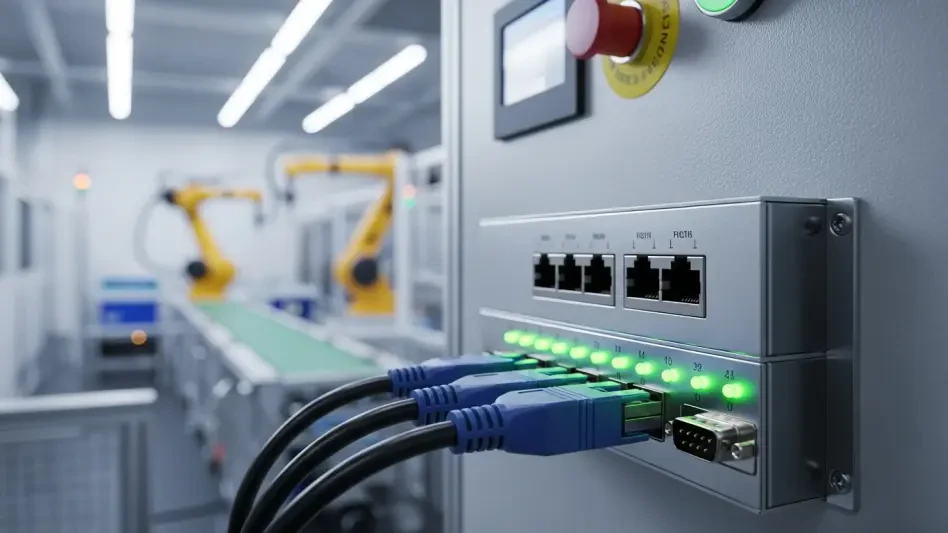
Modern industrial facilities currently operate under the precarious assumption that their legacy hardware remains isolated from the global reach of sophisticated cyber adversaries despite the rapid integration of serial-to-IP converters. The discovery of the BRIDGE:BREAK vulnerabilities marks a critical turning point in how organizations perceive the security of their aging industrial infrastructure. These flaws represent a systemic failure in the devices that serve as the connective tissue between the physical machinery of the past and the digital networks of the present. As industries race to digitize their operations, these “invisible bridges” have transformed into the primary targets for global threat actors looking to disrupt critical services.
The systemic weaknesses identified in serial-to-IP converters reveal a disturbing reality regarding the operational risks of “in-path” exploitation. These devices are not merely passive conduits; they are active translators that, if compromised, allow attackers to exert direct control over physical processes. This trend analysis examines the shift toward a “secure-by-design” industrial ecosystem, highlighting the necessity of addressing the vulnerabilities inherent in the hardware that facilitates modern industrial connectivity. The focus is no longer just on the perimeter of the network but on the integrity of every individual component that handles the flow of operational data.
The Expanding Attack Surface of Industrial Connectivity
Statistical Overview: Firmware and Device Vulnerabilities
A recent deep dive into the BRIDGE:BREAK research has uncovered 22 new zero-day vulnerabilities affecting prominent manufacturers like Lantronix and Silex Technology. This data indicates a widespread neglect of basic security protocols in the development of firmware for industrial components. Beyond the immediate zero-day threats, an analysis of firmware images shows the presence of over 2,255 known vulnerabilities within the Linux kernels utilized by these devices. Such a high concentration of unpatched flaws suggests that many industrial converters are functioning with outdated and insecure software stacks that were never intended to face the rigors of modern internet exposure.
Current scans of the public internet reveal that thousands of serial-to-IP converters are directly reachable without the protection of firewalls or private networks. These exposed gateways provide an easy entry point for adversaries to penetrate critical infrastructure sectors. The statistics highlight a clear trend where the sheer volume of vulnerable devices creates a target-rich environment for automated scanning and exploitation. This lack of visibility into which devices are connected and how they are secured has become a significant liability for organizations that rely on these converters for their daily operations.
Real-World Applications: Critical Use Cases
The significance of these vulnerabilities is amplified by the critical roles that serial-to-IP converters play in various industries. In the healthcare sector, these devices are essential middlemen that connect medical sensors and diagnostic equipment to hospital networks, ensuring that vital patient data reaches clinicians in real time. Similarly, in the utility sector, they bridge the gap between modern management systems and programmable logic controllers that manage power grids and water treatment facilities. The reliance on these “mundane” components means that a single failure or compromise can have cascading effects on public safety and essential services.
Manufacturing and telecommunications also depend heavily on legacy hardware using RS-232 or RS-485 interfaces, which are then bridged to modern Ethernet or Wi-Fi networks for remote management. These configurations are common in environments where replacing entire systems of heavy machinery is cost-prohibitive. Consequently, these converters serve as high-stakes communication conduits that handle everything from assembly line commands to environmental monitoring. The widespread adoption of these devices across diverse sectors underscores the broad potential impact of the BRIDGE:BREAK vulnerabilities, making their security a matter of national and economic importance.
Expert Perspectives: The “In-Path” Threat Model
Cybersecurity researchers have pointed out that “in-path” devices present a significantly more dangerous threat than traditional IT endpoints like laptops or servers. Because these converters sit directly in the flow of data between a controller and a physical machine, they can intercept, modify, or block commands with total transparency. Unlike an IT endpoint that might be used for data theft, a compromised “in-path” device allows an attacker to manipulate the physical world. Experts emphasize that these devices often lack the computational power for advanced security features, yet they hold the keys to some of the most sensitive processes in a facility.
Industry analysts have drawn parallels between these modern vulnerabilities and the “manipulation of view” tactics famously employed by the Stuxnet worm. In such scenarios, an attacker can alter sensor readings, such as pressure or temperature, in real time. This allows the adversary to keep an operator convinced that a system is functioning normally while they are secretly pushing the hardware toward a catastrophic failure. This specific type of deception is particularly difficult to detect through traditional monitoring, as the data arriving at the human-machine interface appears legitimate even though it has been falsified at the converter level.
Leaders in the embedded device market have expressed concern over the persistent lack of security hygiene that plagues industrial hardware. Many devices continue to ship with unpatched open-source components and hardcoded credentials that are easily discoverable by attackers. The danger of using these “black box” components is that organizations often do not know what software is running inside them or how many known vulnerabilities are being introduced into their secure zones. This expert consensus suggests that the industrial sector is currently paying the price for years of prioritizing connectivity and cost over fundamental security principles.
Future Implications: The Evolution of OT Defense
The long-term impact of these vulnerabilities will likely be seen in the rising frequency of Man-in-the-Middle attacks targeting industrial data integrity. As adversaries become more adept at exploiting the serial-to-IP bridge, the focus of defense must shift from simple access control to ensuring the authenticity of the data being transmitted. This evolution will necessitate a move toward continuous behavioral monitoring, where security systems analyze the patterns of communication between devices to identify anomalies that suggest a compromise. The goal is to detect the subtle signs of data tampering before they lead to physical damage or operational downtime.
In response to these threats, the manufacturing of industrial hardware is expected to undergo a transition toward “Secure-by-Design” principles. This includes the mandatory adoption of a Software Bill of Materials, which provides a transparent list of all software components within a device. Furthermore, the integration of asymmetric cryptography for firmware updates will become a standard requirement to prevent attackers from uploading malicious code. These changes are designed to build a more resilient foundation for industrial connectivity, ensuring that security is a core feature rather than an afterthought added late in the development cycle.
There is also a growing concern regarding the potential for future “timed” Denial-of-Service attacks that are synchronized with physical kinetic actions. For example, an attacker might disable the communication converters for a power plant’s cooling system at the exact moment they trigger a separate physical failure, preventing operators from responding to the emergency. To counter such complex threats, organizations are beginning to implement strict network segmentation, also known as micro-segmentation. This strategy limits the movement of an attacker within the network, ensuring that a compromise in one area does not lead to a total loss of control over the entire facility.
Strategic Summary: Path Forward
The analysis of the BRIDGE:BREAK report provided a stark reminder that the security of industrial operations was only as strong as the weakest link in the communication chain. The vulnerabilities found in these common serial-to-IP converters demonstrated how easily an adversary could achieve lateral movement and data tampering within supposedly secure environments. It was clear that the “mundane” components of the industrial world required the same level of scrutiny as the most advanced controllers. Organizations realized that ignoring these small bridges created a massive hole in their overall defense strategy, one that was being actively exploited.
Moving forward, the priority was placed on achieving complete visibility into every device connected to the operational network. Companies began to eliminate all unnecessary internet exposure, ensuring that management interfaces were tucked behind secure, authenticated gateways. There was a significant shift in the relationship between industrial operators and hardware vendors, with a new demand for higher security accountability and transparent patching cycles. This move toward a more proactive defense posture helped to mitigate the risks posed by legacy hardware and ensured that the transition to a digital industrial future was not undermined by the weaknesses of the past.
The path to a more secure industrial ecosystem required a fundamental change in how the digital-to-physical connection was managed. By treating these converters as critical security assets rather than simple utility devices, organizations were able to better protect the integrity of their data and the safety of their physical operations. The lessons learned from this era of vulnerability emphasized that real security was a continuous process of monitoring, updating, and segmenting. Ultimately, the industry moved toward a model where every piece of hardware, regardless of its size or function, was expected to contribute to the collective resilience of the infrastructure it supported.