
The recent digital assault on Stryker has fundamentally altered the risk calculus for global enterprises, proving that even the most sophisticated medical technology giants are susceptible to rapid, large-scale destruction. Attributed to the Iran-linked threat group Handala, the breach bypassed traditional perimeter defenses to exploit the heart of the company’s administrative infrastructure. By compromising the Microsoft Intune mobile device management (MDM) console, attackers successfully issued a global wipe command that simultaneously bricked approximately 80,000 employee devices. This incident marks a turning point where the tools designed to ensure corporate efficiency have been weaponized to facilitate total operational paralysis.
This event serves as a critical case study for the healthcare and cybersecurity industries, illustrating a terrifying evolution in digital warfare. While the medical technology giant’s IT team managed to contain the breach, the speed of the automated execution meant that the damage was largely irreversible by the time the intrusion was detected. The following analysis explores the mechanics of this MDM breach, the massive financial fallout of the cleanup, and the necessary shift in defensive strategies required to prevent similar catastrophes in an increasingly centralized digital ecosystem.
The Evolution of Wiper Attacks and Administrative Vulnerabilities
To grasp the magnitude of the Stryker incident, one must examine the shifting landscape of destructive cyber tactics. Historically, wiper attacks relied on specialized malware payloads designed to overwrite hard drives and disrupt boot sequences. However, the modern era has introduced “living off the land” techniques, where adversaries no longer require custom code if they can hijack legitimate administrative platforms. This shift reflects a strategic move toward maximizing impact while minimizing the footprint of the attack during the initial infiltration phase.
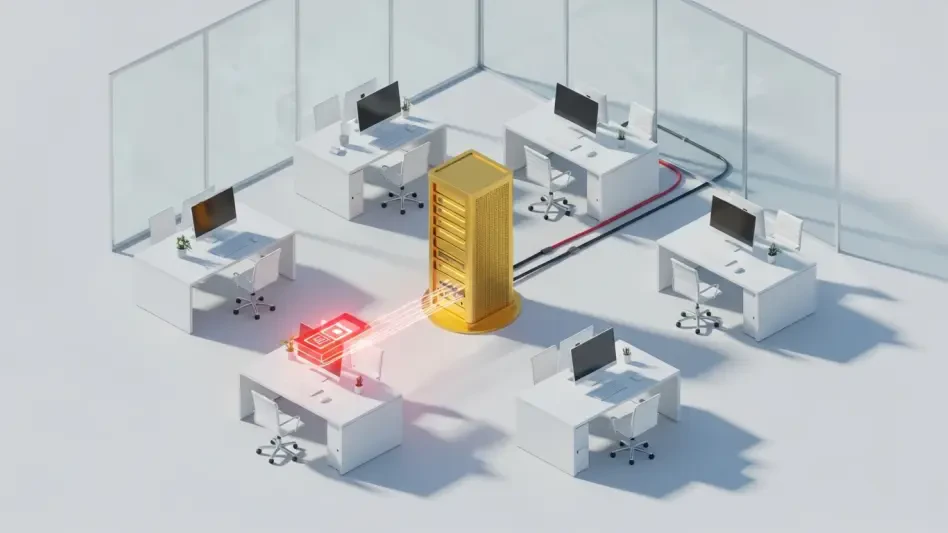
The consolidation of device management into cloud-based platforms like Microsoft Intune has created a high-stakes single point of failure. In previous years, an attacker would have needed to compromise dozens of local servers or individual subnets to achieve this level of disruption. Today, the centralization of power within a single administrative console means that a lone compromised account can trigger a global outage. This architectural vulnerability is now being viewed as a blueprint for future high-impact operations aimed at causing maximum economic and operational friction.
Dissecting the Operational and Financial Fallout
Quantifying the Direct and Indirect Costs of Remediation
The financial consequences of the Stryker breach are immense, with market analysts estimating the direct cost of re-imaging and re-provisioning 80,000 devices at between $24 million and $40 million. This initial estimate covers only the manual labor and logistics required to restore hardware to the global workforce. However, the true economic burden is significantly higher when accounting for the premium fees associated with elite incident response teams and the massive loss of employee productivity during the downtime.
The Fragility of Centralized Mobile Device Management (MDM)
This crisis exposes the inherent risks of modern enterprise IT architectures that prioritize efficiency over segmenting administrative power. MDM platforms allow small teams to push updates or wipe lost devices across the globe with a single click, but in the hands of a threat actor like Handala, that efficiency becomes a catastrophic liability. The Stryker case demonstrates that detection-focused security models often fail to account for the “blast radius” of a hijacked console, where the time to execute an attack is measured in minutes rather than days.
Impact on the Global Medical Supply Chain and Manufacturing
The ripples of the Stryker attack extended far beyond the digital realm, causing significant disruptions in order processing and supply chain logistics. Reports of manufacturing delays underscore the reality that in the medical technology sector, digital instability translates directly into physical consequences. When shipping schedules are discarded and production lines halt, the potential for downstream impacts on patient care becomes a primary concern. This reinforces the understanding that a mass device wipe is not a mere technical glitch but a broad operational crisis that destabilizes essential services.
Shifting Paradigms in Enterprise Access Control and Incident Response
As organizations digest the lessons from this breach, the cybersecurity community is identifying trends that will define the next generation of defense. There is a growing consensus that standard multi-factor authentication (MFA) is no longer sufficient for high-privilege accounts. The industry is rapidly moving toward mandatory hardware-based authentication to prevent the credential harvesting and session hijacking that preceded the Stryker incident. Furthermore, the concept of “zero-trust” is being applied to administrative actions, requiring secondary authorization for any command that affects a significant portion of the fleet.
Technological innovations are also expected to emerge in the form of automated safety triggers within MDM platforms. Future configurations will likely include “break-glass” protocols that automatically freeze administrative access if an anomalous number of destructive commands are detected within a short window. Regulatory bodies are also beginning to view these incidents through the lens of supply chain reliability, signaling a shift where cybersecurity is treated as a fundamental component of public safety and national infrastructure resilience.
Strategic Recommendations for Strengthening Infrastructure Resilience
The Stryker incident provides a clear roadmap for organizations seeking to harden their defenses against similar wiper attacks. First, companies must implement strict privilege management, ensuring that administrative access is limited to the absolute minimum number of personnel. Additionally, adopting hardware-backed security keys for all privileged accounts is essential to mitigate the risk of sophisticated phishing. Organizations should also conduct regular “blackout” drills to test their ability to maintain manual operations when the entire IT fleet is offline.
Beyond technical controls, businesses must invest in behavioral anomaly detection that specifically monitors the activity of administrative accounts. Maintaining off-network, immutable backups of critical system configurations is no longer a luxury; it is a vital necessity for any enterprise operating at scale. By establishing clear protocols for manual contingency operations and rapid hardware replacement, companies can reduce the recovery time and mitigate the staggering financial losses associated with a total device wipe.
Reevaluating Cybersecurity in an Era of Rapid Destruction
The Stryker cyberattack acted as a watershed moment for the corporate world, proving that a motivated actor could bypass traditional defenses to cause tens of millions of dollars in damage using a company’s own management tools. This event marked the definitive transition from an era of stealthy data theft to an era of blunt-force operational disruption. It highlighted that the very infrastructure designed to empower a global workforce could, if left unprotected, become the instrument of its dismantling.
To move forward, leadership teams prioritized the containment of administrative power as a core pillar of their security strategy. The incident served as a catalyst for a more resilient approach to digital infrastructure, where security was no longer viewed as a perimeter problem but as an internal governance challenge. Ultimately, the industry learned that resilience must be built into the core of administrative workflows to ensure that a single compromised account did not lead to a total collapse of global operations.