The sheer scale of modern enterprise security operations has reached a point where manual oversight is no longer sufficient to keep pace with the relentless barrage of emerging vulnerabilities and exploit chains. While security teams are successfully deploying patches in the hundreds of millions, a paradoxical reality persists: organizations are often left exposed for months despite the availability of critical fixes. This disconnect reveals that high-volume activity does not necessarily equate to high-level security, as the time elapsed between a patch release and its actual implementation remains the most significant window of risk. In an environment where attackers can weaponize a vulnerability within hours of its disclosure, the efficiency of an organization’s remediation lifecycle has become the primary metric for its overall resilience. This trend suggests that simply counting the number of vulnerabilities closed is a deceptive measure of success if the most critical business systems are left hanging in a state of perpetual risk for nearly half a year.
Building a robust security posture requires moving beyond the surface-level metrics of patch counts and diving into the operational realities that dictate how quickly a threat is actually neutralized. The current landscape is polarized between highly visible, high-frequency applications that receive near-instant updates and the deep-seated architectural components that lag significantly behind. This gap provides sophisticated threat actors with a predictable roadmap for exploitation, as they can rely on the fact that while an employee’s browser may be secure, the underlying server frameworks or virtualization tools likely remain vulnerable. Navigating this “long tail” of software remediation is the defining challenge for information technology departments in 2026, requiring a shift in strategy that prioritizes business-critical stability without sacrificing the speed necessary to stay ahead of modern cyber threats.
The Volume and Concentration of Security Updates
Prioritizing the Modern Attack Surface
The current focus of enterprise remediation is characterized by a massive concentration of effort on a handful of ubiquitous technologies that serve as the primary gateways for external threats. Data from global deployments indicates that web browsers, specifically Google Chrome and Microsoft Edge, represent the lion’s share of patching activity, with millions of updates pushed out every month to counter the constant stream of remote code execution vulnerabilities. Because these applications are the most frequent point of interaction between internal users and the open internet, security teams prioritize them to ensure that the most exposed entry points remain fortified. This high-volume approach is necessary to manage the sheer breadth of the attack surface, yet it often creates a sense of “patch fatigue” among IT staff who must manage a never-ending cycle of minor updates for these essential productivity tools.
Beyond the browser, foundational utilities such as 7-Zip, the Zoom Client, and various Microsoft redistributable packages demand a significant portion of an organization’s remediation resources due to their widespread presence across the network. These applications are often overlooked as secondary risks, yet they provide fertile ground for attackers looking to escalate privileges or move laterally within a system. The sheer density of these deployments means that even a single unpatched instance can provide a foothold for a breach, forcing organizations to adopt a “scorched earth” policy toward updating these utilities. However, the labor-intensive nature of tracking and updating these disparate tools frequently leads to inconsistencies in protection levels, where the most visible systems are kept current while obscure or headless workstations fall through the cracks of the standard maintenance schedule.
Management of Ubiquitous Utility Frameworks
The complexity of managing core Microsoft components and shared libraries further complicates the volume problem, as these elements are often dependencies for dozens of other business applications. Tools like the Visual C++ Redistributable or .NET modules require careful sequencing during the update process to avoid breaking legacy software that relies on specific versions of these frameworks. This creates a situation where security teams are caught between the urgent need to patch a known vulnerability and the operational necessity of maintaining system uptime. As a result, many organizations find themselves stuck in a loop of constant testing and re-testing, where the high volume of required updates begins to outpace the department’s capacity to validate them. This bottleneck is where most security strategies begin to falter, as the transition from a few dozen critical patches to millions of individual deployments requires a level of organizational maturity that many are still struggling to achieve.
Furthermore, the concentration of updates around communication tools like Zoom and Teams highlights the shift in how modern enterprises define their perimeter. In 2026, the endpoint is the new firewall, and the applications running on that endpoint are the primary targets for social engineering and zero-day exploits. The rapid-fire release cycle of these communication platforms means that security teams must be in a state of constant readiness, often deploying multiple updates within a single week. While this focus effectively mitigates the most common risks, it can inadvertently draw attention away from the slower-moving, more complex vulnerabilities that exist deeper within the infrastructure. This concentration of effort creates a “security theater” effect where the most visible apps are patched, but the underlying plumbing of the organization remains dangerously outdated, leaving a silent but substantial window of exposure that sophisticated actors are more than happy to exploit.
The Evolution Toward Autonomous Remediation
Reducing Exposure Through Zero-Touch Workflows
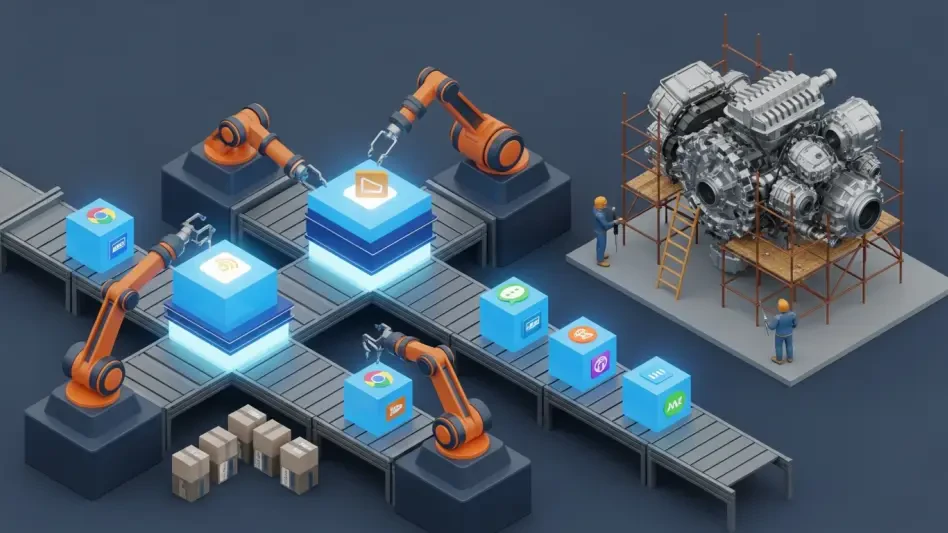
The transition toward autonomous, or “zero-touch,” remediation represents the most significant shift in defensive strategy in recent years, moving away from manual intervention for routine tasks. By utilizing automated workflows that trigger the moment a vendor releases a patch, organizations can bypass the traditional bureaucratic hurdles of change management for low-risk, high-frequency applications. This strategy is particularly effective for third-party software like web browsers and media players, where the risk of an update breaking a critical business process is relatively low compared to the risk of remaining unpatched. The implementation of these autonomous systems has allowed enterprises to handle tens of millions of patches with minimal human oversight, effectively closing the window of exposure for the most commonly targeted software. This automation acts as a force multiplier, ensuring that the bulk of the attack surface is protected without requiring a proportional increase in headcount.
This move toward autonomy is driven by the realization that human-in-the-loop processes are simply too slow to combat modern automated exploit kits. When a vulnerability is disclosed, the race between the attacker and the defender is often decided in the first 24 to 48 hours, a timeframe that most manual approval chains cannot meet. By delegating the remediation of common tools to autonomous engines, security leaders can ensure that their defenses evolve at the same speed as the threats they face. Moreover, this shift allows the internal security talent to focus on more nuanced tasks, such as threat hunting or the remediation of custom-built internal applications. The goal is to create a tiered response system where the “easy” patches are handled by machines, leaving the human experts to manage the complex, high-stakes decisions that require a deep understanding of the specific business context and technical dependencies.
Transforming Operational Roles via Automation
The integration of autonomous remediation also changes the cultural dynamic within IT and security departments, shifting the focus from reactive “firefighting” to proactive architecture management. When the burden of updating thousands of individual endpoints is lifted, the conversation shifts toward improving the overall resilience of the network and identifying systemic weaknesses. This transition is not without its challenges, as it requires a high degree of trust in the automation tools and a willingness to accept occasional, minor disruptions in exchange for a significantly hardened security posture. However, the data shows that the organizations embracing this model are seeing a drastic reduction in their overall mean time to remediation. By standardizing the update process through zero-touch workflows, these companies are effectively eliminating the “human error” factor that often leads to missed patches or misconfigured systems, creating a more predictable and defensible environment.
Beyond the immediate speed benefits, autonomous patching provides a level of consistency that is impossible to achieve through manual means alone. In a global enterprise with distributed workforces and thousands of remote devices, ensuring that every single laptop is running the latest version of Chrome or Zoom is a logistical nightmare. Automation engines solve this by continuously scanning and updating devices regardless of their location or connection type, ensuring that the security policy is enforced universally. This consistency is vital for maintaining compliance with modern data protection regulations, which often require proof of timely remediation. As the technology matures throughout 2026, the scope of autonomous patching is expanding to include more complex applications, further shrinking the available attack surface and forcing adversaries to work much harder to find an unpatched entry point.
Operational Friction and the Remediation Lag
Navigating the Five-Month Security Gap
One of the most concerning trends in the current security environment is the persistent “remediation gap” for complex enterprise software, which often exceeds five months. While browsers and utilities are patched in days, core components like Java, the .NET Framework, and VMware Tools remain vulnerable for nearly half a year on average. This delay is rarely a result of negligence or lack of awareness; instead, it stems from the inherent operational friction of managing legacy systems and business-critical infrastructure. For many IT departments, the fear of an update causing a catastrophic system failure or disrupting a production database outweighs the theoretical risk of a cyberattack. This results in a prolonged period of testing, staging, and validation that can stretch for months, during which time the organization remains a “sitting duck” for any actor capable of exploiting the well-documented vulnerabilities in these systems.
This friction is compounded by the fact that many of these complex technologies are deeply embedded in custom workflows or third-party software that may not be compatible with the latest security fixes. In these scenarios, the IT team must often wait for secondary vendors to certify the new patch before it can be safely deployed, adding another layer of delay to the process. This creates a dangerous “dependency hell” where the speed of security is dictated by the slowest link in the supply chain. Consequently, even when a patch is technically available, it is effectively non-existent for the organization until the entire ecosystem of dependent software has been validated. This five-month gap represents a significant strategic failure in modern risk management, as it provides a massive, predictable window for attackers to refine their methods and execute long-term campaigns without fear of their primary entry point being closed.
Balancing System Stability and Threat Mitigation
The challenge of closing the remediation gap requires a fundamental rethinking of how organizations approach system stability and risk. Traditional “gatekeeping” models of IT management often prioritize uptime at all costs, but in the modern threat landscape, an unpatched system is eventually a down system. To overcome this, some forward-thinking organizations are implementing more agile testing environments, using containerization and virtualized clones of production systems to rapidly validate patches. By streamlining the validation process, these teams can cut weeks or even months off the remediation timeline, significantly reducing their window of exposure. However, this transition requires a substantial investment in infrastructure and a shift in the organizational mindset toward “continuous security” rather than periodic maintenance windows. The goal is to reach a state where even the most complex frameworks can be updated with a level of confidence that matches the speed of the threat.
Moreover, the persistent delay in patching core infrastructure reveals a lack of visibility into the actual risk profile of many enterprise environments. When a security team sees a “high” or “critical” vulnerability in a framework like .NET, they may not immediately understand which business processes are at risk or how that vulnerability could be chained with others to gain full control of the network. This lack of context often leads to a “paralysis by analysis,” where the fear of the unknown prevents any action from being taken. By integrating better threat intelligence and risk-scoring metrics into the remediation workflow, organizations can begin to prioritize patches based on their actual likelihood of exploitation rather than just their raw severity score. This context-driven approach allows for a more targeted and efficient use of resources, helping to bridge the gap between the speed of the attackers and the operational realities of the defenders.
Strategies for High-Risk Environments
Custom Mitigations and Scalable Risk Reduction
In the complex landscape of 2026, many organizations find themselves facing vulnerabilities for which no official vendor patch exists, particularly when dealing with legacy systems or end-of-life software. In these high-risk scenarios, security teams must move beyond traditional patch management and adopt a strategy of “virtual patching” and custom mitigations. This involves deploying scripts to modify registry keys, disabling unnecessary services, or applying firewall rules that specifically block the traffic patterns associated with a known exploit. These bespoke interventions allow an organization to neutralize a threat without needing to change the underlying code of the application, providing a vital safety net for systems that are too old or too fragile to be updated. This proactive hardening of the environment is essential for maintaining a strong defensive posture in the face of zero-day threats and the “long tail” of unpatchable vulnerabilities.
Furthermore, the use of automated remediation scripts has become a standard tool for meeting stringent compliance requirements, such as those mandated by the CISA Known Exploited Vulnerabilities catalog. These scripts can be deployed at scale to provide immediate protection across the entire enterprise, serving as a stop-gap measure while a more permanent fix is being tested. This approach allows security teams to demonstrate “compensating controls” to auditors and insurers, proving that they have taken active steps to mitigate risk even when a standard patch is unavailable. The maturity of a security organization is increasingly defined by its ability to engineer these custom solutions, as it demonstrates a deep understanding of the network’s inner workings and a commitment to defense-in-depth that goes beyond simply clicking “update” on a vendor’s notification.
Implementation of Proactive Hardening Protocols
To truly minimize risk in an era of constant exploitation, organizations must institutionalize a culture of proactive hardening that anticipates vulnerabilities before they are announced. This involves the regular review of system configurations and the removal of “at-risk” features that are not strictly necessary for business operations. By reducing the overall attack surface through the principled application of least privilege and network segmentation, security teams can make their environments inherently more resilient to the vulnerabilities that will inevitably emerge. This strategy of “defense by design” ensures that when a new exploit is discovered, its impact is naturally limited by the existing security architecture. It moves the organization away from the reactive “chase” of individual vulnerabilities and toward a stable, defensible state where the speed of remediation is no longer the only factor standing between a secure network and a catastrophic breach.
As enterprises look toward the remainder of 2026 and beyond, the path to successful remediation lies in the integration of data-driven insights with agile operational processes. Security leaders should conduct a thorough audit of their current remediation timelines, specifically identifying which technologies are consistently exceeding the five-month gap. Once these bottlenecks are identified, the next step is to invest in the automation and testing infrastructure necessary to accelerate those specific workflows. Organizations should also establish a dedicated “rapid response” team capable of developing and deploying custom mitigations for zero-day threats. By combining the raw power of autonomous patching for routine apps with a sophisticated, engineering-led approach for complex systems, businesses can finally close the gap between the release of a fix and the elimination of risk, ensuring they remain a step ahead of the evolving threat landscape.