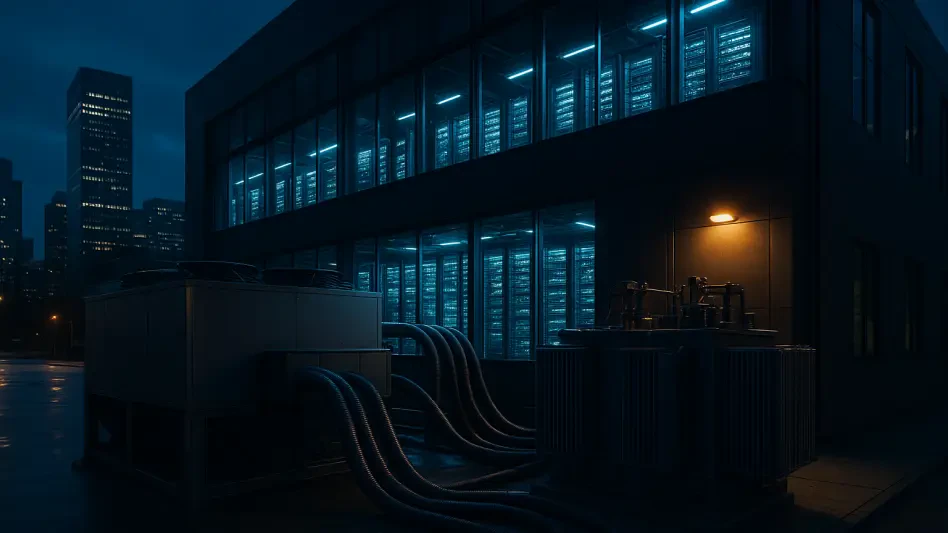
Organizational silos between facilities management and IT security often leave critical environmental controls invisible to standard vulnerability management programs and asset inventories. This disconnect has created a significant security gap as the demand for high-density computing infrastructure accelerates. Recent investigations into the operational technology landscape have identified approximately 6,300 high-confidence industrial control systems and building automation systems that are currently accessible via the public internet. These exposed devices are not isolated incidents in remote areas but are strategically located within one kilometer of at least 1,063 data centers across the United States. The hardware involved typically includes BACnet controllers, Niagara platforms, and cooling systems from major manufacturers like Vertiv and Liebert. The prevalence of these exposed interfaces suggests a fundamental failure in traditional security models, as many facilities appear to be bypassing the necessary demilitarized zones of the Purdue Model. This creates direct, unencrypted pathways from the open internet to the sensitive internal operations that maintain server health and facility stability.
1. The Expanding Scale: Industrial Exposure Metrics
The vulnerability of modern infrastructure is not just a theoretical concern but a quantifiable reality that threatens the stability of the digital economy. Research has confirmed that thousands of devices responsible for managing power and cooling are sitting on the public web without the protection of a firewall or secure gateway. Among the most common hardware identified are building automation controllers that utilize the BACnet protocol, which accounts for roughly 58% of the observed exposures. Additionally, systems running the Niagara Fox framework make up 23% of the accessible interfaces. These systems are the backbone of environmental management, and their exposure means that unauthorized actors could potentially manipulate temperature settings, airflow, or power distribution. The failure to adhere to the Purdue Model’s principles of network segmentation has left these industrial components vulnerable to reconnaissance and exploitation by anyone with a standard web browser or specialized scanning tools.
Geographic analysis shows that these vulnerabilities are concentrated in the nation’s most critical technological hubs, where data center density is at its highest. The New York Metro area, Silicon Valley, Phoenix, and Los Angeles have emerged as hotspots for exposed industrial control systems. These regions host the core infrastructure for global finance, cloud computing, and social media, making the high concentration of accessible building automation systems particularly alarming. The proximity of these exposed devices to physical data centers suggests that even if the IT networks are hardened, the physical environment remains a soft target. If a cooling system in a major Silicon Valley facility is compromised, the resulting thermal shutdown could be just as disruptive as a sophisticated ransomware attack on the server files themselves. The intersection of high-value targets and low-security industrial protocols in these specific cities highlights a systemic risk that requires immediate and localized intervention by facility operators.
2. The Paradox: Relationship Between Facility Age and Vulnerability
A surprising trend in the current landscape is the inverse relationship between the age of a facility and its security posture regarding industrial controls. Data indicates that facilities constructed before 2010 exhibit an exposure rate of approximately 4.9%, suggesting that older systems, while perhaps less technologically advanced, are often less integrated with the public internet. In stark contrast, facilities that have been permitted since the start of the massive artificial intelligence expansion in the early 2020s show a significantly higher exposure rate of 13.1%. This suggests that the rush to deploy cutting-edge AI capacity has come at the expense of rigorous security auditing for the underlying building automation systems. As companies race to bring thousands of new racks online, the focus has shifted toward speed and operational uptime, often leaving the configuration of auxiliary systems like HVAC and power monitoring as an afterthought in the broader security strategy.
The protocol dominance observed in these newer facilities further underscores the risks associated with modern building automation. While older facilities might rely on legacy, air-gapped serial connections, newer installations are almost entirely IP-based, utilizing protocols like BACnet and Fox/Niagara for ease of management. While these protocols offer incredible flexibility and data insights for facility managers, they were not originally designed with modern cybersecurity threats in mind. The 58% dominance of BACnet in the exposure data reflects a trend where convenience in monitoring has bypassed the necessity of secure connectivity. The result is a modern infrastructure landscape where the most advanced data centers, built to house the most sophisticated technologies, are paradoxically more vulnerable to simple internet-based scans than the older, more isolated facilities of the previous generation.
3. Structural Drivers: Why Modern Security Gaps Persist
The primary driver behind the increasing vulnerability of data center infrastructure is the unprecedented pressure to deploy artificial intelligence capacity at scale. In this environment, construction timelines are compressed, and facility operators are often incentivized to meet aggressive “ready-for-service” dates. This atmosphere leads to rushed setups where default configurations and factory settings are left unchanged to ensure systems are operational as quickly as possible. When complex building automation systems are brought online under these conditions, the subtle nuances of network hardening are frequently overlooked. The immediate need for GPU-heavy racks to have functioning power and cooling outweighs the long-term risk assessment of the industrial control network, creating a “security debt” that is rarely addressed once the facility becomes fully operational.
Furthermore, the physical requirements of modern high-density computing have increased the complexity of the attack surface. High-density GPU clusters generate massive amounts of heat, necessitating highly automated and reactive cooling solutions that can adjust in real-time. These sophisticated cooling systems require deep integration between sensors, controllers, and management software, often involving remote access requirements from vendors for maintenance and optimization. To facilitate this, many facilities resort to insecure port forwarding or static IP assignments instead of implementing secure VPNs or zero-trust frameworks. Coupled with the organizational silos that separate facilities teams from IT security departments, these technical requirements create a scenario where the people responsible for the facility’s physical health are operating on a completely different security plane than those responsible for the digital data, leading to blind spots that attackers can easily exploit.
4. Phase 1: Establishing Immediate Visibility and Asset Discovery
The first step in securing a facility involves gaining comprehensive insight into current vulnerabilities before malicious actors can exploit them. Organizations must prioritize the identification of their digital footprint, specifically focusing on where their industrial hardware might be leaking onto the public web. This process requires a proactive approach to vulnerability management that extends beyond the server rack and into the mechanical rooms. By understanding the external perspective of the facility’s network, security teams can begin to prioritize which systems require the most urgent remediation. This initial discovery phase is crucial for bridging the gap between what the IT department thinks is connected and what the facilities management team has actually deployed on the ground.
To facilitate this visibility, security professionals should utilize specialized search engines like Shodan to locate exposed hardware through geographic or IP-based queries. These tools allow teams to see exactly what an attacker sees, identifying specific controllers or platforms that are broadcasting their presence to the world. Complementing these external scans, operators must run internal network mapping tools and industrial-specific scripts, such as Nmap, to find controllers hiding within internal IP ranges that may have been incorrectly configured. These internal scans help uncover “shadow OT” or systems that were added during maintenance cycles without being properly logged. Establishing this dual-layered visibility ensures that every controller, from the main power switchgear to the smallest CRAC unit, is accounted for and evaluated for potential risks.
5. Phase 2: Implementing Essential Short-Term Mitigations
Once the exposed systems have been identified, the immediate priority is to take these critical systems off the public web. There is rarely a legitimate operational reason for a building automation controller to be directly reachable via a public IP address without a secondary layer of authentication. Cutting these direct internet connections is the most effective way to eliminate the vast majority of opportunistic threats. If remote access is required for off-site technicians or facility managers, the organization must mandate the use of encrypted tunnels. Implementing VPNs, SSH tunneling, or zero-trust network access frameworks ensures that any connection to the industrial control system is authenticated, encrypted, and logged, providing a secure alternative to the dangerous practice of open port forwarding.
Beyond securing the connection path, fundamental security hygiene must be applied to the devices themselves. This includes an immediate mandate to update all factory-set login information and replace default passwords on every controller and management platform. Many industrial systems are shipped with standard credentials that are well-known to the hacking community, making them trivial to compromise once found. Furthermore, in cases where firmware updates are not immediately available or would cause operational downtime, digital safeguards like intrusion prevention systems should be deployed to provide virtual patching for known vulnerabilities. Finally, it is essential to inform property managers or colocation providers about these security concerns. Open communication with landlords ensures that shared infrastructure, which might be outside the direct control of the IT team, is also being held to a higher security standard to protect all tenants.
6. Phase 3: Developing Long-Term Architectural Resilience
Achieving lasting security requires a fundamental shift in how facility management and cybersecurity teams interact. Organizations must break down the traditional silos by bringing facilities operations under the broader IT security umbrella, ensuring that building systems are treated with the same level of scrutiny as financial databases or email servers. This integration allows for a unified security policy that covers both the digital and physical aspects of the business. Long-term resilience is built on the foundation of inclusion; every building controller must be added to the official hardware logs and included in the organization’s asset inventory and monitoring programs. When the security team has a complete view of all operational technology, they can more effectively manage life cycles, patches, and threat responses.
A resilient architecture also demands a return to the fundamentals of network segmentation. Operators must separate operational networks from the main business network using robust firewalls to enforce the integrity of the Purdue Model. By creating distinct zones for building automation, power management, and corporate traffic, the risk of lateral movement is significantly reduced. This architectural rigor should be complemented by thorough threat evaluations that specifically include HVAC and power systems in regular risk assessments. Additionally, service agreements with external vendors must be updated to mandate secure remote links. By requiring in vendor contracts that all remote access occurs through secure, non-static channels rather than permanent backdoors, organizations can maintain a higher degree of control over who is accessing their critical infrastructure and how.
7. Phase 4: Strengthening Operational Oversight and Monitoring
To maintain a secure environment over time, the scope of security oversight must broaden to cover the physical plant equipment as a core part of the attack surface. This means that the security operations center must treat cooling units, power generators, and uninterruptible power supplies as potential entry points for a cyberattack. Shift the focus of the security team to recognize that a compromise of the physical infrastructure can be just as devastating as a data breach. By integrating the physical plant into the continuous monitoring strategy, organizations can detect early signs of tampering or malfunction that might indicate a coordinated digital assault. This holistic view of the operational environment is essential for defending against sophisticated actors who might target the facility’s life support systems.
Effective oversight also requires the deployment of surveillance tools that are specifically designed to understand industrial protocols. Standard IT monitoring tools often fail to interpret the nuances of traffic like BACnet, Modbus, or Fox, potentially missing anomalies that signal a breach. Specialized monitoring platforms can identify unusual patterns in industrial traffic, such as a sudden change in temperature setpoints or an unauthorized command to a power breaker. Furthermore, emergency plans and incident response procedures must be revised to specifically address the compromise or failure of building systems. Keeping track of specific industrial cyber threats through specialized threat intelligence ensures that the security team stays ahead of emerging vulnerabilities. By being prepared for a scenario where the building’s automation is compromised, organizations can respond with the speed and precision necessary to prevent physical damage or prolonged downtime.
8. Strategies for Sustaining Critical Infrastructure Integrity
The evolution of data center security reached a critical junction where the speed of AI infrastructure expansion significantly outpaced traditional protection measures. Observations made throughout the recent assessment period confirmed that physical infrastructure, including cooling and power systems, became as vital to the security perimeter as any firewall or encryption protocol. It was established that a failure in the mechanical environment invariably led to a failure in the digital network, proving that the two are inextricably linked. Consequently, the industry shifted toward a strategy where perimeter security was no longer assumed to be sufficient. Instead, a model of proactive defense and continuous monitoring of industrial control systems was adopted to mitigate the risks inherent in modern, high-density facilities.
Successful organizations moved to incorporate their building automation systems into a unified security framework, ensuring that no controller remained invisible to the central security team. The transition involved moving away from static, insecure remote access and toward zero-trust architectures that treated every internal and external connection with equal skepticism. The process of regularizing industrial protocols within the security operations center allowed for the detection of anomalies that were previously ignored. By treating the physical plant as a dynamic part of the attack surface, these organizations created a more resilient foundation for the next generation of computing. The lessons learned from the high exposure rates of the mid-2020s necessitated a permanent change in how data centers are designed, operated, and defended against an increasingly complex threat landscape.