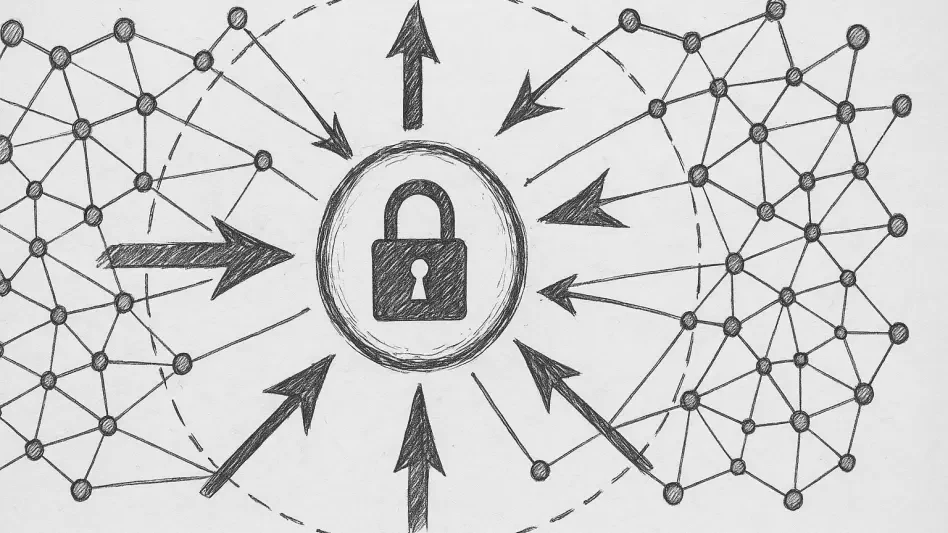

The introduction of AWS Instance Metadata Service version two was a direct industry response to the credential retrieval techniques utilized during the breach. This incident did not just expose the data of millions; it fundamentally altered the mental model that security professionals use to defend cloud-native environments. In the years following the event, the focus shifted from a binary “secure or insecure” perimeter mindset to a more nuanced understanding of complex attack paths. These paths are formed when seemingly minor misconfigurations are chained together, creating a bridge for attackers to cross from a public-facing asset to a high-value database. By 2026, the legacy of this breach is visible in every automated security scan and identity policy that prioritizes least-privilege access over administrative convenience. The event served as a wake-up call that the sheer scale of the cloud necessitates a different kind of vigilance, one that accounts for the speed at which automated tools can exploit a single oversight.
The Technical Execution: Mechanics of a Multi-Stage Intrusion
The initial point of failure involved a misconfigured Web Application Firewall (WAF) that inadvertently served as a gateway rather than a shield. By failing to properly filter and validate incoming traffic, the infrastructure allowed an attacker to execute an open reverse-proxy attack. This technique effectively tricked the WAF into making requests on behalf of the intruder, granting them access to backend resources that were never intended to be exposed to the public internet. This specific type of vulnerability, often categorized as Server-Side Request Forgery (SSRF), demonstrated how a trusted intermediary could be weaponized against the very system it was designed to protect. The attacker did not need to find a zero-day exploit in the application code; they simply utilized the existing routing logic of the misconfigured environment to gain a foothold within the internal network architecture.
Once the attacker established a presence through the compromised WAF, the focus shifted toward the AWS Instance Metadata Service (IMDS). In its original iteration, the service allowed any process running on a virtual instance to retrieve sensitive metadata via a simple HTTP request to a local IP address. Because the WAF was already under the attacker’s control, they were able to query this service and obtain temporary security credentials associated with the instance’s IAM role. These credentials essentially provided the attacker with a legitimate identity within the cloud environment, removing the need to crack passwords or bypass traditional encryption. This stage of the intrusion highlighted a critical design flaw in how cloud services provided identity tokens to workloads, as the system could not distinguish between a legitimate internal request and one forged by an external actor via a proxy.
Data Exfiltration: Identity Exploitation and Authorization Failures
With the stolen security tokens in hand, the intruder assumed the identity of the web server and began exploring the broader cloud ecosystem. The success of the subsequent data theft was largely due to excessive permissions granted to the compromised identity. The IAM role attached to the server possessed broad “list” and “read” capabilities that extended far beyond its functional requirements. This over-permissioning allowed the attacker to enumerate the contents of numerous Amazon S3 storage buckets, identifying precisely where the most sensitive customer data resided. In a properly hardened environment, a front-end server should have had no reason to “see” or interact with the vast majority of these storage units, yet the lack of granular access controls turned a minor server compromise into a massive data exposure event.
The final exfiltration phase involved the mass download of sensitive records, including Social Security numbers and linked bank account identifiers. While the data was technically encrypted at rest, this safeguard proved entirely ineffective because the attacker was using authorized credentials to access the files. In the cloud, encryption is only as strong as the identity management system that controls the keys. Because the compromised role had the authority to read the data, the system automatically decrypted the information for the attacker as if they were a legitimate user. This detail taught the industry a painful lesson: traditional data protection methods like encryption provide a false sense of security if the identities accessing that data are not strictly managed and monitored through rigorous resource-based policies.
Governance Deficiencies: Systemic Failures and Regulatory Consequences
While the technical vulnerabilities were the immediate cause of the breach, the root issues were deeply embedded in the organization’s governance and risk management framework. Regulatory bodies later noted that the company had a history of failing to remediate known security gaps in a timely manner. The transition from on-premises data centers to the public cloud requires a fundamental shift in how risks are assessed, and in this case, the internal processes did not evolve quickly enough to match the speed of migration. This organizational friction resulted in an $80 million civil penalty and forced the financial sector to recognize that cloud security is not just an IT problem, but a core component of corporate accountability. The incident proved that having the right tools is useless if the internal culture does not prioritize the rapid closure of identified security holes.
The gap between the initial intrusion and its discovery also revealed significant deficiencies in behavioral monitoring and telemetry. The attacker spent months inside the environment, listing storage buckets and exfiltrating large volumes of data, yet internal alarms remained silent. This indicated that the existing security tools were likely tuned for traditional network traffic rather than the specific patterns of cloud-native exploitation. Modern monitoring must be able to detect when a machine identity begins acting in an anomalous way, such as accessing thousands of files it has never touched before. The fact that the breach was only discovered after an external researcher provided a tip underscored the necessity for proactive, automated threat hunting within cloud infrastructures. Relying on external reporting is a high-risk strategy that no longer suffices in 2026.
Strategic Breakpoints: Interrupting the Attack Chain
The concept of “defensive breakpoints” emerged as a primary strategy for preventing similar incidents in the future. By viewing an intrusion as a chain of dependent events, security teams can identify multiple opportunities to halt an attacker’s progress. If the WAF had been correctly configured to block proxy-style requests, the attack would have ended at the first step. Alternatively, if the metadata service had required a more complex handshake, the credential theft would have been thwarted. Organizations now focus on building these “speed bumps” throughout their architecture, ensuring that a failure in one layer does not lead to a total system compromise. This defense-in-depth approach is designed to increase the cost and complexity of an attack, making it more likely that the intruder will be detected before they reach their ultimate target.
Resource-scoped authorization has become another vital defensive breakpoint that limits the “blast radius” of a potential compromise. Instead of relying solely on identity-based permissions, engineers now implement strict policies on the storage resources themselves. For example, an S3 bucket can be configured to deny access to any request that does not originate from a specific VPC or a verified IP range, even if the user has the correct credentials. This creates a secondary layer of validation that an attacker operating from an external location cannot easily bypass. By 2026, this double-gate system has become a standard architectural pattern for protecting highly sensitive datasets. It ensures that even if an identity is stolen, the data remains inaccessible because the context of the access request does not meet the strict requirements of the resource policy.
Technical Evolution: The Rise of Hardened Metadata Standards
In direct response to the credential theft techniques used in the breach, the cloud industry moved toward more secure versions of metadata services. The standard known as IMDSv2 introduced a session-oriented handshake that requires a caller to first request a token before they can access instance-specific secrets. This token must be passed in a specific HTTP header, a requirement that is significantly harder for an attacker to satisfy through a simple SSRF or proxy exploit. Furthermore, the service was updated to restrict the “hop count” of the network packets, preventing them from traveling through multiple network layers to reach an unauthorized destination. These technical refinements represent a shift toward “secure by default” configurations where the most common avenues of exploitation are closed off before a user even deploys their first server.
By 2026, the adoption of these hardened standards has become a baseline requirement for any organization seeking to achieve a mature security posture. Cloud providers have largely phased out the older, less secure versions of these services, forcing developers to build applications that are inherently more resilient to identity theft. This evolution shows how a single high-profile event can act as a catalyst for global technical change, moving the entire industry toward more rigorous security defaults. The transition was not just about fixing a bug; it was about redesigning a fundamental service to be resilient against modern attack patterns. As a result, the “keys to the kingdom” are no longer as easily accessible as they were during the initial era of cloud adoption, significantly reducing the success rate of automated credential harvesting.
Advanced Visibility: Prioritizing Attack Paths over Findings
Modern cloud security has shifted its focus from managing thousands of isolated vulnerabilities to visualizing and breaking specific attack paths. In the past, security teams were often buried under a mountain of minor alerts, making it difficult to identify which risks were truly critical. The lesson of the Capital One incident is that the most dangerous risks are those that provide a clear route from an exposed asset to a high-value target. Today, sophisticated tools use graph-based analysis to map out these connections, allowing engineers to see exactly how a misconfigured firewall could lead to a data breach. By focusing on the “critical links” in these paths, organizations can remediate the most dangerous issues first, rather than wasting time on low-risk findings that have no path to sensitive data.
This strategic prioritization allows for a much more efficient use of security resources, as it targets the specific configurations that an attacker would actually use. For example, a server with a known software bug might be a low priority if it has no access to the rest of the network, whereas a perfectly patched server with excessive IAM permissions might be considered a high-risk liability. Tools like BeVigil and other advanced posture management platforms now automate this analysis, providing real-time maps of an environment’s exposure. This shift toward “attack-path visibility” ensures that security teams are no longer working in a vacuum but are instead making data-driven decisions based on the actual reachability of their most sensitive assets. It represents the maturation of cloud security from a reactive discipline to a proactive and strategic one.
Strategic Outcomes: Lessons in Cloud Posture Resilience
The resolution of the Capital One incident established that identity must be treated as the primary security perimeter in a cloud-native world. Security architects recognized that traditional firewall boundaries were no longer sufficient when machine identities could be manipulated to bypass physical and virtual gates. Leaders found that the most effective response was to implement a rigorous “least privilege” model for every service account, ensuring that no single identity possessed more authority than was strictly necessary for its immediate task. This shift necessitated a complete overhaul of how permissions were audited and assigned, moving away from broad, administrative roles toward granular, temporary access tokens. Organizations that adopted these strategies found they were significantly more resilient to the types of lateral movement that characterized the 2019 intrusion.
Building on these foundations, the industry concluded that automated governance was the only way to maintain security at scale. It became clear that manual reviews could not keep pace with the dynamic nature of cloud environments, where thousands of changes can occur in a single day. Engineers implemented automated guardrails that would immediately flag or revert any configuration that violated core security policies, such as an S3 bucket being made public or a metadata service being downgraded to an insecure version. These proactive measures ensured that the systemic failures seen in the past could not easily repeat themselves. By the middle of this decade, the most successful companies were those that treated security as a continuous, automated process rather than a periodic check, proving that the lessons of the past had finally been integrated into the very fabric of cloud operations.