
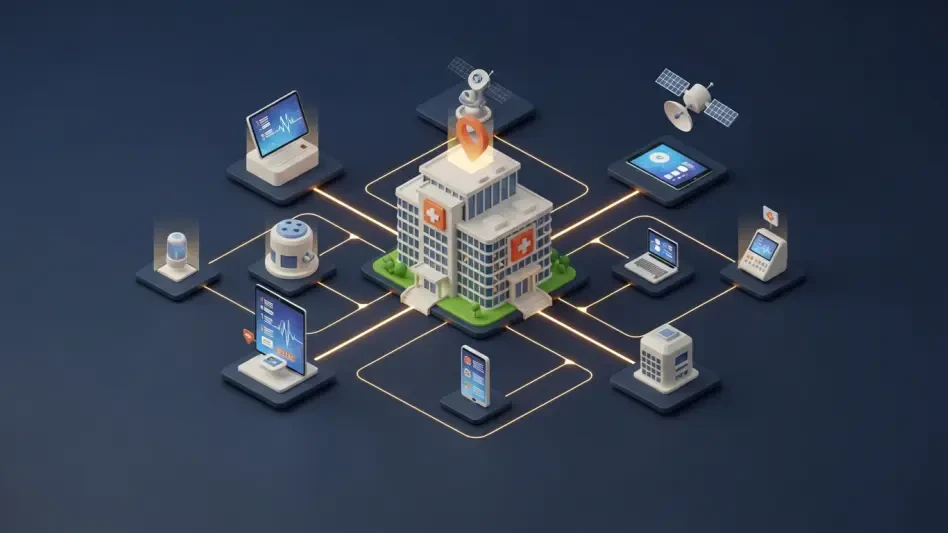
The traditional boundaries of the hospital ward no longer stop at the physical exit doors because the digital systems governing patient care are now permanently tethered to a global network of invisible threats. As the medical landscape transitions into a fully digitized ecosystem, the vulnerabilities inherent in this connectivity have become glaringly apparent. This research centers on the critical insights gained from the Health-ISAC 2025 After-Action Report, a comprehensive document that chronicles the results of simulated cyber-physical disruptions designed to push the healthcare sector to its breaking point. By utilizing these simulations, the study uncovers systemic weaknesses that could otherwise remain hidden until a catastrophic real-world event occurs.
The focus of this investigation is not merely the technical failure of servers or software, but the far-reaching impact of these disruptions on the delivery of life-sustaining services. It addresses the central challenge of maintaining clinical continuity and patient safety while responding to increasingly sophisticated ransomware and infrastructure attacks that threaten the very core of hospital operations. Through the lens of these exercises, the report provides a roadmap for shifting from a reactive security posture to one defined by resilience and durability. This shift is essential for ensuring that the healthcare infrastructure of the future can withstand the mounting pressure of a hostile digital environment.
The Critical Importance of Proactive Cybersecurity in Modern Medicine
The healthcare sector has evolved into a primary target for global cyber adversaries who recognize the immense value of medical data and the high-stakes nature of hospital operations. Unlike other industries where a data breach might only result in financial loss or brand damage, a compromise in a medical setting can lead to hospital diversions, the failure of life-critical medical devices, and the exposure of extremely sensitive personal health information. This research is essential because it frames cybersecurity as a matter of public safety rather than a niche concern for information technology departments. When a network goes down, the ripple effects are felt in the emergency room, the operating theater, and the pharmacy, making resilience a fundamental pillar of modern healthcare delivery.
Furthermore, the complexity of the medical supply chain means that a single point of failure can disrupt care across entire regions. This vulnerability is exacerbated by the legacy systems still in use at many facilities, which were often designed for accessibility rather than security. The necessity of proactive cybersecurity lies in its ability to mitigate these risks before they manifest as patient harm. By identifying the intersection between digital integrity and clinical outcomes, this research emphasizes that the protection of the network is synonymous with the protection of the patient. The findings underscore that a failure to invest in these defenses is, in effect, a failure to uphold the basic tenets of medical ethics and care quality.
Research Methodology, Findings, and Implications
Methodology: Testing Operational Durability Through Simulation
The study utilized a sophisticated series of seven regional workshops that brought together a diverse array of member organizations and strategic partners from across the global health sector. These workshops were structured as immersive resilience exercises, where participants were subjected to simulated cyber-physical disruptions that mimicked the tactics of modern threat actors. By placing decision-makers in high-pressure scenarios, the research team was able to observe real-time responses to cascading system failures. This methodology allowed for a hands-on assessment of how different organizations navigate the transition from normal operations to emergency protocols under the stress of an active intrusion.
Data collection during these exercises was rigorous and multifaceted, involving the documentation of effective response strategies and the diagnostic analysis of gaps in current incident response frameworks. Participants engaged in collaborative post-exercise reviews to share insights and refine their approaches to threat detection and containment. This diagnostic gap analysis was instrumental in identifying where existing policies fell short of the realities of a fast-moving cyber crisis. By gathering data through these live simulations rather than static surveys, the research captured the dynamic and often unpredictable nature of human and technical interactions during a large-scale security event.
Findings: The Pillars of Effective Threat Response and Containment
A primary finding of the research is that layered monitoring is significantly superior to the use of isolated security tools for early threat detection. The most successful participants utilized a combination of Security Information and Event Management (SIEM), Endpoint Detection and Response (EDR), Identity and Access Management (IAM), and Data Loss Prevention (DLP) platforms to create a unified view of their environment. This integrated approach allowed security teams to correlate seemingly unrelated anomalies, such as an unusual login attempt followed by a sudden spike in data encryption, providing the necessary context to identify an attack in its infancy. The synergy of these platforms transforms raw data into actionable intelligence, reducing the “dwell time” of attackers within the network.
The research also highlighted a critical prioritization of rapid containment over operational continuity in the event of a confirmed breach. To prevent the lateral movement of attackers across a network, organizations found that aggressive measures—such as network microsegmentation and the immediate disconnection of suspect systems—were necessary, even if they caused temporary clinical disruptions. Moreover, the study confirmed that effective response hinges on the existence of “out-of-band” communication systems. These are alternative channels, such as satellite-based messaging or encrypted secondary networks, that function independently of the compromised primary infrastructure. Without these independent systems, command and control during an incident often collapse, leading to confusion and delayed decision-making.
The human element was found to be just as critical as technical defenses, if not more so. The research identified the necessity of a designated Incident Commander who possesses the authority to make high-stakes decisions across both IT and clinical domains. Furthermore, the findings emphasized the importance of structured staffing to prevent burnout during prolonged incidents. Cyberattacks are often endurance events, and without a plan for rotating technical and administrative staff, the quality of the response rapidly diminishes. This focus on the psychological and organizational aspects of resilience marks a significant departure from traditional, technology-centric security models.
Implications: Shifting Toward a Zero-Trust Recovery Model
The implications of these findings suggest a fundamental shift toward a “zero-trust” recovery model in the healthcare sector. In this framework, every system, user account, and credential must be re-validated following an incident, rather than assuming that a cleaned network is inherently safe. This approach acknowledges that modern attackers are persistent and often leave behind backdoors that can be used for future intrusions. By adopting a zero-trust mindset during the restoration phase, organizations can ensure that they are not merely rebuilding a house on a compromised foundation but are instead creating a more hardened and verifiable environment.
There is also a clear, practical need for unified command structures that bridge the gap between cybersecurity and physical security operations. The research suggests that the Hospital Incident Command System (HICS) should be expanded to include dedicated cyber-response tracks, ensuring that clinical leadership and technical teams are speaking the same language. This unification is vital for managing the complex trade-offs between shutting down a system for security reasons and maintaining the delivery of care. Finally, the findings indicate that sector-wide resilience is deeply dependent on bidirectional, real-time information sharing. The ability of global healthcare entities to share threat indicators instantly creates a “herd immunity” effect, where a lesson learned by one hospital becomes a defense for thousands of others.
Reflection and Future Directions
Reflection: Navigating the Intersection of Technology and Patient Care
The study successfully highlighted the inherent tension between the demands of clinical operations and the necessity of cybersecurity containment. It revealed that technical solutions cannot be effectively decoupled from patient care workflows; a security measure that prevents a doctor from accessing an electronic health record in a crisis can be as dangerous as the attack itself. This realization forced a broader understanding that resilience is a cross-functional business crisis rather than a localized IT failure. The exercises illustrated that while technical defenses are the first line of protection, the ultimate success of a response is determined by how well an organization manages the human and procedural complexities of the event.
However, the research also faced challenges, particularly in overcoming organizational silos and addressing the legal complexities surrounding ransomware response. There remains a significant hurdle in coordinating between legal counsel, who may prioritize risk mitigation and privilege, and technical teams who are focused on rapid restoration. Additionally, the study could have been further expanded by investigating the specific budgetary and resource constraints faced by smaller, rural healthcare providers. These organizations often lack the capital to implement the sophisticated layered monitoring systems described in the report, leaving them as the “weak links” in the broader national healthcare infrastructure.
Future Directions: Automation and Standardization in Crisis Management
Looking toward the horizon, further research is needed to evaluate the burgeoning role of Artificial Intelligence in automating the correlation of disparate security logs. As the volume of data generated by healthcare networks continues to grow, human analysts may become overwhelmed, making AI-driven detection a necessity for reducing response times. There are also unanswered questions regarding the long-term psychological impact on technical staff who are involved in high-pressure, prolonged incident responses. Understanding the “human cost” of cyber defense is essential for building sustainable teams that can weather the storms of future digital conflicts.
Future exploration should also focus on the creation and standardization of “black site” communication templates. These universal templates would ensure that during a global healthcare crisis, organizations can communicate with clarity and consistency, regardless of their geographic location or primary language. Developing a standardized “playbook” for out-of-band communication would eliminate the need for organizations to invent their own protocols during the heat of a crisis. By formalizing these methods, the healthcare sector can ensure that when the primary systems fail, the lines of communication—and the path to recovery—remain open.
Unified Global Defense as the Path to Resilience
Improving cyber resilience within the healthcare landscape required a fundamental move away from isolated, defensive postures toward a collaborative and multi-layered ecosystem. The research demonstrated that the integration of technical detection, cross-functional leadership, and rigorous after-action reporting created a formidable barrier against digital disruption. By prioritizing patient safety as the ultimate metric of success, the sector began to treat cybersecurity with the same clinical rigor applied to medical procedures. This approach ensured that even when individual systems were compromised, the overarching mission of care delivery remained intact and functional.
The investigation into the events and simulations leading into the mid-decade mark reaffirmed that while the threats remained universal and ever-evolving, a coordinated global response acted as the most effective deterrent. The successful implementation of out-of-band communication and zero-trust recovery models provided a blueprint for other critical infrastructure sectors to follow. Ultimately, the work done to bridge the gap between IT departments and clinical staff fostered an environment where resilience was a shared responsibility. This collective vigilance allowed the healthcare industry to move forward with confidence, knowing that the digital foundations of modern medicine were finally being reinforced with the strength necessary to protect their most vital asset.