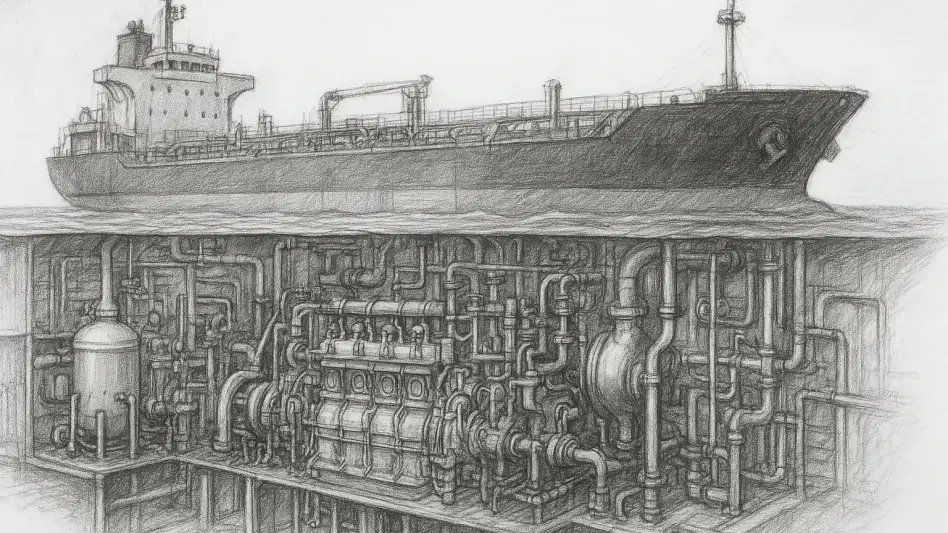
Meticulous sabotage that concealed itself behind ordinary outputs rather than smoke and sparks challenged the assumption that cyberattacks must announce their presence, and its tradecraft foreshadowed a strategy built on quiet, cumulative harm rather than headline-grabbing disruption. SentinelOne’s reconstruction of Fast16—an obscure, Lua-powered framework believed active by 2005—mapped a toolset crafted to skew scientific and engineering computations at their source. Instead of knocking over centrifuges or switching off breakers, Fast16 sought to bend numbers inside modeling suites so that designs grew brittle, experiments grew slower, and verification across machines appeared clean because every node read from the same poisoned well. That idea, unsettling in its restraint, placed the framework squarely within the lineage of state-backed campaigns that aimed to shape physical outcomes through upstream software tampering.
Origins and Strategic Context
Early clues pointed to a developer with state-scale resources and patience: modular build system, kernel-resident control, encrypted payloads, and tailored environmental checks that refused to run when specified vendor keys were present. The framework surfaced in the ShadowBrokers cache of offensive tooling, and its functional echoes with later sabotage operations made U.S. authorship plausible, even if unproven. The alignment fit a period defined by rising U.S.–Iran cyber friction, where degrading research pipelines around high-energy physics, civil engineering, or multiphase flow models offered a slower yet safer lever than direct infrastructure strikes. Notably, analysts singled out LS-DYNA 970, PKPM, and MOHID as potential targets, with LS-DYNA repeatedly linked in open sources to weapons-related simulations in Iran, strengthening the geopolitical through line.
Building on this foundation, the strategic logic favored indirection over spectacle. By corrupting computational steps that inform design tolerances and safety margins, a campaign could stall projects or embed latent defects without triggering incident response teams primed for ransomware or destructive wipers. The method also preserved plausible deniability: frayed benchmarks and inexplicable instability invite self-blame inside labs long before anyone suspects a foreign hand. Importantly, the operation did not chase broad infection. A vendor key blocklist and other gating conditions implied a mission driven by target profiles, not scale. This restraint, paired with tradecraft that cared about compiler fingerprints and file system lanes, read like doctrine: reach deeply into the development pipeline, change as little as possible, and let time do the rest.
Engineering the Attack Surface: Design, Patching, and Propagation
The framework’s carrier, svcmgmt.exe, acted as a stable shell embedding a Lua 5.0 virtual machine and dispatching encrypted payloads, notably a kernel driver named fast16.sys and an auxiliary DLL. It could install as a Windows service, ingest Lua scripts, and parse command-line cues to trigger mission modules. This separation of wrapper and tasking granted reuse across campaigns while trimming forensic overlap between operations. At execution, the driver attached itself above disk device drivers, intercepted both IRP and Fast I/O paths, disabled the Windows Prefetcher, and resolved kernel APIs dynamically. Its signature move was targeted code patching: modifying PE headers of executables compiled with Intel’s C/C++ toolchain by appending two sections that enabled stable, rules-driven runtime alteration inside precision software.
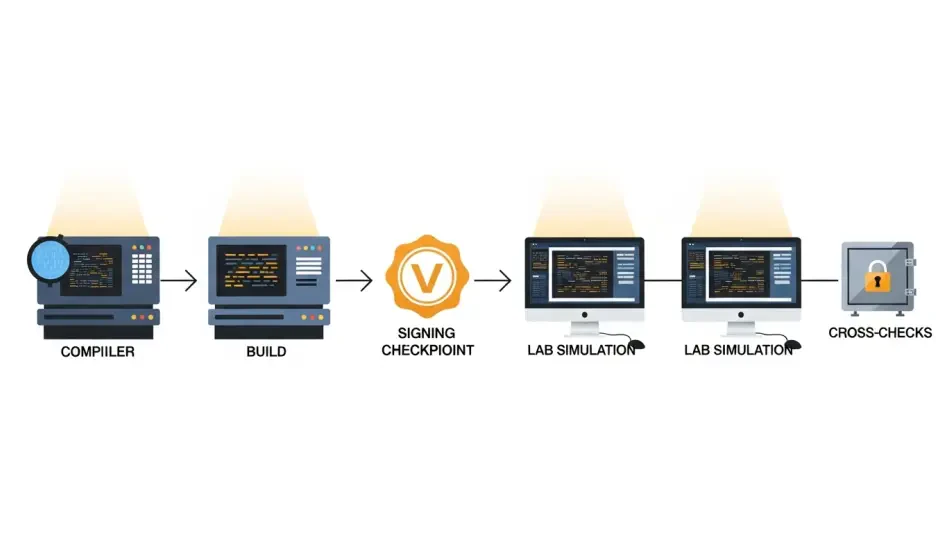
Propagation techniques matched the era’s topology. The operation wormed laterally across Windows 2000 and XP networks through weak file-share credentials and stock administrative APIs, ensuring multiple workstations and servers produced equally biased outputs that would pass cross-machine sanity checks. SentinelOne assessed that the compact rule engine examined only the bytes that mattered, minimizing crashes and noise while nudging numeric routines toward small, consistent deviations. That combination—deep I/O control, compiler-aware patching, and soft-spoken spread—proved optimized for research labs and engineering hubs that prized reproducibility. The path forward, in turn, rested on careful baselining of toolchains, signed compiler provenance, kernel driver attestation, and staged cross-checks against isolated, read-only golden images; teams that enforced these controls would have starved Fast16’s mechanics and blunted its long-horizon effects.