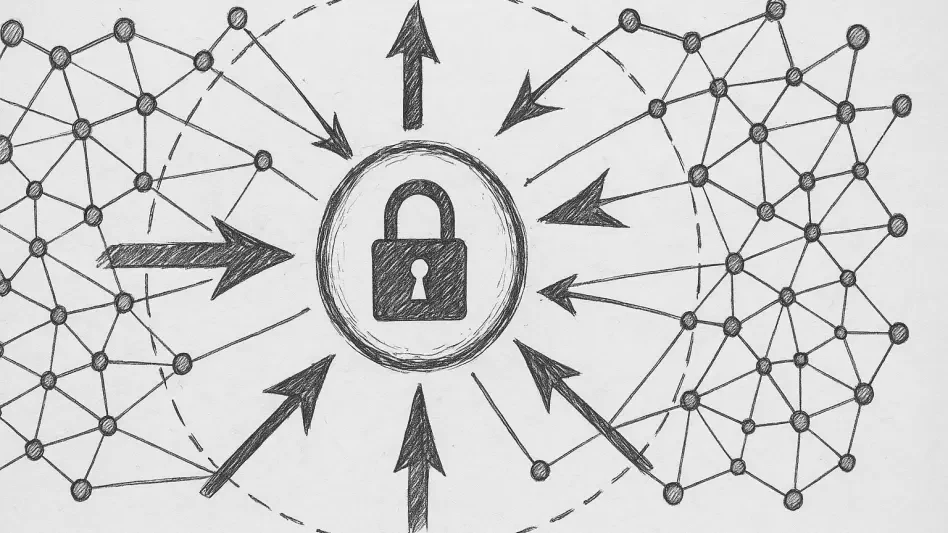

The evolution of CVE remediation platforms represents a new generation of technology that moves beyond the traditional alert-only model of software security. In the current landscape of 2026, the industry has finally recognized that identifying a vulnerability is only the first, and often the easiest, step in a much larger journey toward resilience. For years, security teams operated under the assumption that more data was always better, leading to an era where developers were inundated with thousands of critical alerts, many of which were irrelevant to their specific code execution paths. This era of vulnerability fatigue forced a fundamental redesign of security tooling, shifting the focus from simple detection to sophisticated, automated remediation. Today, the most effective security programs are not measured by how many bugs they find, but by the percentage of those bugs they can resolve without requiring significant manual intervention or risking application stability. This transition has moved security away from being a disruptive force and toward being a seamless component of the standard software development lifecycle, ensuring that protection is built-in rather than bolted-on as an afterthought during the final stages of a release.
The Strategic Pivot: Moving from Alerting to Fixing
Modern engineering teams have moved past the era where every security alert was treated with equal urgency, recognizing that such a strategy is fundamentally unsustainable. In 2026, the emphasis has shifted toward quantifying the true risk of a vulnerability within the specific context of the application it resides in, rather than relying on generic severity scores. This necessitates a move away from the traditional Common Vulnerability Scoring System (CVSS) scores, which often fail to account for whether a vulnerable function is even reachable or if the surrounding architecture provides compensating controls. By focusing on remediation efficacy, organizations are now able to streamline their workflows, ensuring that developers are only interrupted for fixes that genuinely improve the security posture of the product. This transformation is not merely about using better tools but about fostering a culture where security is seen as a contributor to code quality rather than a checklist of compliance requirements that slows down the deployment pipeline. The psychological impact of reducing alert noise cannot be overstated, as it allows developers to maintain their focus on feature delivery while trusting that the security layer is managing minor risks autonomously.
Furthermore, the economic reality of software development in 2026 dictates that developer time is the most expensive resource in the security equation. When a tool flags a vulnerability without providing a clear, safe, and automated path to resolution, it essentially transfers the cost of security research onto the engineering team. This is why the market has seen a massive surge in the adoption of platforms that prioritize the path to green—a term used to describe a clear trajectory from a vulnerable state to a secured one. These platforms analyze the potential impact of a patch before suggesting it, checking for breaking changes and API incompatibilities that could cause service outages. By automating the research phase of remediation, these tools allow a single engineer to handle a volume of vulnerabilities that would have previously required an entire dedicated security team. This efficiency is crucial as the complexity of modern software supply chains continues to grow, with a typical application now relying on thousands of nested dependencies that are constantly being updated by third-party maintainers across the globe.
Diversified Frameworks: The Four Pillars of Vulnerability Repair
To navigate the complexities of modern software, organizations have adopted four primary remediation models that provide a structured approach to security debt. The first model, backporting, has become an essential strategy for maintaining stability in legacy systems or long-term support branches. Instead of forcing a major version upgrade that might introduce hundreds of unrelated changes, backporting involves applying a surgical security fix to the exact version of the library currently in use. This approach minimizes the surface area of the change, significantly reducing the risk of regressions while still closing the security gap. It is a highly specialized technique that requires deep knowledge of the underlying codebase, but when automated through modern platforms, it allows enterprises to remain secure without the constant fear of breaking mission-critical infrastructure that has been running reliably for years. This model is particularly valued in industries where uptime is paramount and every code change must undergo rigorous, time-consuming validation processes.
In contrast to backporting, the models of upgrade automation and reachability analysis focus on the dynamic nature of modern development. Upgrade automation leverages intelligent bots to move dependencies to the minimum secure version provided by upstream maintainers, often handling the entire process from identification to the creation of a pull request. However, the true innovation in 2026 lies in reachability analysis, which filters out vulnerabilities that exist in code paths that the application never actually executes. By mapping the call graph of the entire software stack, security tools can now tell a developer that while a library is technically vulnerable, the flaw is impossible to trigger in their specific implementation. This context-aware approach eliminates a vast majority of the noise that previously plagued security reports. Finally, attack surface reduction provides a way to secure containerized environments by stripping out unused operating system packages and libraries entirely. This hardening process removes the CVEs associated with those unused components without requiring a single line of application code to be rewritten, representing a significant win for operational efficiency.
Precision Patching: Tools for Minimal Disruption
Among the specialized platforms that have defined the 2026 landscape, Aikido Libraries stands out for its unique approach to the breaking change problem. For many years, the primary deterrent to patching a vulnerability was the fear that the update would break the application’s core functionality. Aikido addresses this by providing human-verified variants of popular packages that include backported security fixes while maintaining absolute API compatibility. By offering these curated packages, the platform allows engineering teams to resolve vulnerabilities in minutes rather than days. The value of this approach is most evident when dealing with major version jumps where the upstream maintainer has moved on to a new architecture, leaving older versions exposed. Aikido’s ability to provide a safe harbor for these older versions ensures that organizations can manage their security debt on their own schedule rather than being forced into high-risk migrations by the sudden discovery of a critical flaw in a foundational dependency.
Another significant player in the precision patching space is Socket, which focuses on providing certified patches that live directly within a project’s own repository. This model is built on the principle of transparency, allowing developers to see the exact delta of the security patch and audit it with the same rigor as their own source code. Unlike traditional black-box updates, these certified patches are designed to be small, targeted, and highly auditable, which builds trust between the security tool and the engineering team. This focus on the repository level ensures that the fix is permanent and integrated into the version control history, providing a clear audit trail for compliance and security reviews. By treating security patches as minor, surgical adjustments rather than major system overhauls, these tools have successfully reduced the friction that previously existed between security mandates and development velocity. This shift has enabled a more collaborative environment where developers are empowered to take ownership of security without feeling that it is an impediment to their primary goals.
Contextual Awareness: Integration into the Development Cycle
The move toward more intelligent remediation is further exemplified by Endor Labs, which has pioneered the use of impact awareness to prioritize security tasks. In the complex web of modern software, a single vulnerability in a low-level dependency can have wildly different implications depending on how it is used by the top-level application. Endor Labs maps these relationships in detail, providing developers with a clear picture of how a vulnerable function propagates through their code. This intelligence allows teams to focus their energy on the risks that are truly exploitable in their specific environment, rather than chasing every CVE that appears in a scan. By understanding the dependency graph at a granular level, the platform can also predict how an upgrade will affect other parts of the system, acting as an early warning system for potential breaking changes. This level of foresight is essential for maintaining the high deployment frequency that defines modern software engineering, as it prevents the late-stage surprises that often derail release cycles.
Building on the theme of developer-centric security, Snyk has maintained its position as a primary standard by deeply integrating its remediation capabilities into the tools that developers use every day. Whether it is through IDE plugins, command-line interfaces, or CI/CD pipeline integrations, the platform provides actionable fix advice at the exact moment a vulnerability is introduced. This immediate feedback loop is critical for preventing security debt from accumulating in the first place. When a developer can see a suggested fix and the associated compatibility evidence while they are still working on a feature, the cost of the repair is significantly lower than if it were found weeks later by a separate security team. Snyk’s ubiquitous presence across the development lifecycle ensures that security is a constant consideration, but one that is managed with minimal effort. The platform’s ability to automate the creation of pull requests and verify them against existing test suites provides a level of confidence that has made it a foundational component of many enterprise security strategies in 2026.
Enterprise Governance: Balancing Control and Automation
For large-scale organizations, the challenge of CVE remediation is as much about governance as it is about technology. Sonatype Lifecycle has addressed this by providing a robust framework for centralized policy enforcement that scales across thousands of repositories. In an enterprise environment, it is not enough to just fix a vulnerability; the fix must also comply with legal, licensing, and architectural standards. Sonatype’s Golden Pull Request workflow automates this by generating fixes that are pre-approved by the organization’s security and legal departments. This ensures that when a developer merges a patch, they are not inadvertently introducing a license violation or a non-standard library that will cause problems later. This centralized approach provides the high-level visibility that security leaders need to manage risk across a global organization while still giving developers the autonomy they need to move fast. It represents a sophisticated balance between the need for strict control and the desire for high-velocity automation.
At the same time, platform-native solutions like GitHub Dependabot and GitLab Dependency Scanning have become the essential baseline for the entire industry. By building remediation directly into the source control platforms, these tools have made basic security maintenance accessible to every team, regardless of their budget or security expertise. While they may not offer the deep reachability analysis of specialist platforms, their ability to automatically generate pull requests for routine version bumps is a powerful force for keeping the global software supply chain secure. In 2026, these native tools serve as the first line of defense, handling the low-hanging fruit of dependency management and allowing more advanced tools to focus on the complex, high-risk vulnerabilities that require deeper analysis. This tiered approach to remediation—where native tools handle the volume and specialized tools handle the complexity—has proven to be the most effective way for organizations to maintain a clean security posture without overwhelming their engineering resources.
Hardening the Artifact: Security Beyond the Source Code
The final stage of a mature remediation strategy in 2026 involves securing the actual artifacts that are deployed to production. JFrog Xray has led the way in this area by providing an artifact-centric view of security that tracks vulnerabilities from the initial source code through the entire build process to the final binary. This end-to-end visibility is crucial for verifying that a remediation has actually been implemented in the shipped product. In many cases, a fix might be present in the repository but fail to make it into the final build due to configuration errors or build pipeline issues. By scanning the binaries themselves, Xray provides a definitive audit trail that ensures the security posture of the application is maintained throughout the delivery lifecycle. This focus on the final product is essential for compliance in highly regulated industries, where proving that a specific vulnerability has been resolved in a production environment is a mandatory requirement for operational certification.
Parallel to binary scanning, RapidFort has introduced a revolutionary approach to remediation through continuous hardening of container workloads. Rather than trying to fix every CVE in a container image, RapidFort profiles the application at runtime to identify which operating system packages and libraries are actually being used. It then automatically removes everything else, creating a slim, hardened version of the image that contains only the code necessary for the application to function. This process can eliminate a vast majority of the vulnerabilities found in standard container images without requiring any changes to the application code itself. This model of remediation through elimination is incredibly efficient, as it bypasses the traditional cycle of patching and testing for a large portion of the attack surface. By shrinking the target that an attacker can hit, organizations can achieve a higher level of security with significantly less effort, making it a cornerstone of modern cloud-native security strategies that prioritize operational speed and resource efficiency.
Strategic Realization: The Shift Toward Trust and Stability
The industry reached a critical realization in 2026 that the ultimate success of any security program depended on the trust between security teams and developers. It was discovered that developers were not inherently resistant to security, but rather to the disruption and rework that often accompanied poorly implemented security mandates. Consequently, the most successful organizations abandoned the one-size-fits-all approach to CVE management and instead implemented nuanced decision frameworks. These frameworks prioritized reachability and API stability, ensuring that every request for a code change was backed by solid evidence of both the risk and the safety of the fix. By 2026, the transition from a detection-heavy model to a remediation-first model was complete, resulting in a significant reduction in the average time to resolve critical vulnerabilities across the software industry. This shift enabled teams to spend more time on innovation and less time on the reactive maintenance of legacy vulnerabilities that had previously hindered their progress.
To sustain this progress, organizations established clear protocols for handling different types of security findings based on their operational impact. They utilized container hardening for infrastructure-level flaws, automated upgrades for low-risk library changes, and targeted backporting for critical systems that required absolute stability. The deployment of these sophisticated tools was accompanied by a cultural change where security metrics were integrated into the broader definitions of engineering excellence. The result was a more resilient software ecosystem where the discovery of a new CVE was treated as a routine maintenance task rather than a catastrophic event. Looking ahead, the focus remained on refining these automated paths to green, ensuring that as new technologies emerged, the ability to secure them would always keep pace with the speed of their adoption. This commitment to actionable security has transformed the landscape, making the dream of a secure-by-default development lifecycle a practical reality for organizations of all sizes.