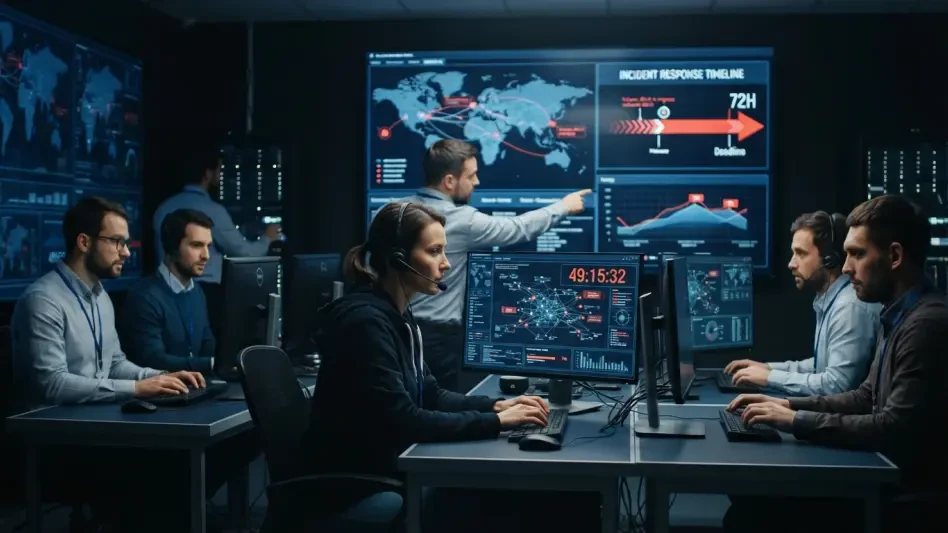
The seamless integration of physical machinery with sophisticated cloud-based intelligence has fundamentally altered the industrial landscape, making traditional perimeter security almost entirely obsolete for modern manufacturing facilities and critical utilities. As 2026 progresses, the industrial sector finds itself at a defining moment where the boundaries between information technology and operational technology have become indistinguishable. This convergence, while driving unprecedented efficiency and data-driven decision-making, has simultaneously expanded the attack surface for global threat actors. The current environment demands a radical departure from outdated security models that relied on air-gapping and simple firewalls. Instead, organizations are moving toward a comprehensive cyber resilience framework—a strategy designed not just to prevent breaches, but to ensure that critical processes continue to function even when a network is under active attack. This analysis explores the rising complexity of these threats and the emerging strategies required to maintain operational stability in an increasingly volatile world.
The shift toward cyber resilience represents a fundamental change in how corporate leadership views risk. For decades, the goal was to keep attackers out of the network at all costs, but the reality of the current threat environment suggests that some degree of compromise is inevitable. Consequently, the focus has shifted to the ability of an organization to absorb a blow and continue producing goods or providing services without compromising safety or environmental standards. This resilience-first approach requires deep integration between cybersecurity teams and floor operators, ensuring that the people who manage the physical assets are as prepared as the people who manage the digital networks. By viewing cybersecurity through the lens of business continuity, industrial leaders are beginning to treat digital risks with the same operational rigor as they do mechanical failures or natural disasters.
Rising Threats and the Evolution of Industrial Vulnerabilities
Quantifying the Surge in Industrial Cyber Incidents
The statistical reality of modern industrial operations is sobering, as demonstrated by the record-breaking increase in recorded cyber incidents throughout the current year. Data from the SANS 2026 State of ICS/OT Security Survey indicates that 34% of organizations reported a cyber incident affecting their industrial environments within the last year, a nearly two-fold increase compared to previous metrics. This surge is not merely a reflection of better reporting; it indicates a concentrated effort by threat actors to target high-value systems that control essential infrastructure and global production lines. While ransomware continues to be a dominant force, accounting for roughly 31% of these events, it is now matched by the compromise of shared credentials between information technology and operational technology systems. This parity suggests that attackers are increasingly using stolen identities to navigate through corporate networks into sensitive industrial zones, effectively bypassing traditional defensive layers.
However, the most concerning trend in the current landscape is the regression in detection speed. For the first time in recent history, the percentage of incidents identified within the first 24 hours has dropped to 41%, down from more than half in earlier reporting cycles. This slowdown in detection implies that attackers are achieving longer dwell times within industrial networks, allowing them to perform more extensive reconnaissance and move laterally toward critical control systems. This increase in dwell time is often a direct result of the growing complexity of hybrid cloud-OT environments, where security teams struggle to maintain unified visibility. Without the ability to detect and neutralize threats in their infancy, the risk of significant operational impact grows exponentially, as attackers have more time to understand the unique physical processes of a facility before launching a disruptive payload.
Real-World Applications of Sophisticated Attack Vectors
The application of cyber threats has evolved from simple disruptive scripts into sophisticated, multi-stage campaigns that target the very heart of the industrial supply chain. Supply chain compromises now account for 21% of reported incidents in 2026, marking a strategic shift where attackers target software vendors and maintenance providers to gain “trusted” access to primary manufacturing facilities. This “upstream” targeting is particularly effective because it circumvents the perimeter defenses of the target organization by exploiting the established connections of their service providers. In many cases, these breaches go undetected for months as malicious activity is masked by legitimate administrative traffic. This trend forces organizations to re-evaluate their trust in third-party software and hardware, pushing the industry toward a model of constant verification and rigorous bill of materials management.
Furthermore, the motivations behind these attacks are diversifying beyond immediate financial gain from extortion. The industrial sector has witnessed a fivefold increase in the theft of intellectual property, with industrial espionage now accounting for 31% of reported business impacts. This rise suggests that state-sponsored actors and corporate competitors are prioritizing the acquisition of proprietary manufacturing processes and design data. When intellectual property is stolen, the damage is long-term and often irreversible, affecting the competitive standing of a company for years. Additionally, the impact on physical safety has become more pronounced, with 13% of incidents now affecting safety instrumented systems or environmental controls. This physical dimension of cyber risk transforms a digital intrusion into a potential life-safety event, elevating the stakes for every asset owner and operator in the field.
Insights and Perspectives from Industry Experts
Current industry consensus suggests that the industrial sector has reached a crossroads where traditional prevention-only mindsets are insufficient for maintaining operations. Experts argue that the sophistication of modern threat actors has outpaced the defensive maturity of many industrial organizations, leading to a state where compromise must be presumed rather than feared. A prevailing professional opinion is that detection without a corresponding capability to recover and operate under pressure offers a false sense of security. Leaders in the field are now advocating for a “presumed compromise” stance, urging companies to treat cyber readiness with the same discipline as safety protocols. The general consensus among security professionals is that the greatest current weakness is not a lack of sophisticated technology, but a lack of operational “muscle memory” when it comes to manual workarounds and disaster recovery.
Professional perspectives also highlight a critical gap in the workforce, specifically the need for “human sensors” who understand both the physical and digital aspects of the production floor. Industry leaders emphasize that floor operators are often the first to notice the subtle physical anomalies that precede a full-scale digital incident, such as unexpected valve movements or strange fluctuations in pressure readings. By upskilling these operators to recognize the digital signatures of compromise, organizations can create a more resilient defensive layer that technology alone cannot provide. Moreover, the integration of artificial intelligence is being viewed not as a replacement for human judgment, but as a tool to reduce alarm fatigue among defenders. The expert view is that the future of industrial security depends on a hybrid approach that combines automated monitoring with the intuitive expertise of a trained workforce.
The Future Landscape of Industrial Cyber Resilience
The path toward true industrial cyber resilience is defined by the ability to sustain critical operations even when digital control systems are compromised. A significant challenge in this landscape is the current lack of manual operational capability; only 15% of organizations are currently confident in their ability to maintain production in “manual mode” for more than 48 hours. Looking ahead, there is an urgent need for organizations to develop and test fail-safe procedures that do not rely on centralized SCADA or DCS systems. This involves not only technical changes but also a cultural shift, where operators are trained to perform their duties using analog controls or local manual overrides. The organizations that prioritize this level of operational redundancy will be the ones that survive high-impact cyber events with minimal downtime and no safety incidents.
Furthermore, the systemic risk posed by supply chain dependency will likely force a major restructuring of industrial procurement and maintenance strategies. Currently, over half of all industrial facilities would face a total shutdown within a year if their primary automation vendor were to disappear or become compromised. This extreme dependency creates a single point of failure that can be exploited by adversaries on a massive scale. To mitigate this risk, future resilience strategies will likely emphasize vendor-agnostic systems and the development of internal expertise to manage and maintain critical infrastructure. The goal is to move away from “black box” solutions and toward a more transparent, manageable technology stack where the asset owner retains ultimate control over their operational destiny, regardless of the status of their external partners.
The role of business continuity and disaster recovery planning is also expected to evolve, becoming deeply intertwined with cybersecurity operations. Organizations that integrate their industrial cyber resilience plans into their corporate disaster recovery programs are twice as likely to restore operations within a single day of an incident. This integration ensures that the entire company, from the executive boardroom to the factory floor, understands the steps required to recover from a digital attack. As the complexity of networks continues to grow, the ability to rapidly fail over to backup systems or switch to manual processes will become a primary competitive advantage. The focus will remain on shortening the time between detection and recovery, ensuring that even if a breach occurs, the impact on the business and the public is kept to an absolute minimum.
Summary of Resilience Strategies and Key Takeaways
The evidence gathered throughout the current year confirms that the industrial sector can no longer treat cybersecurity as a secondary concern or a purely technical issue. The surge in incident frequency and the increasing severity of physical and financial impacts have demonstrated that digital resilience is a core component of operational reliability. To navigate this hostile environment, asset owners must prioritize deep visibility across both IT and OT networks, as organizations with comprehensive visibility report significantly lower rates of unauthorized access and perimeter exploitation. This visibility provides the necessary foundation for accurate threat detection and effective incident response, allowing teams to identify and neutralize attackers before they can impact critical processes.
Another essential strategy involves the empowerment of the industrial workforce through specialized training and the strategic application of automation. By treating operators as active participants in the security landscape, companies can leverage their physical intuition to catch anomalies that automated systems might overlook. Simultaneously, the deployment of AI tools can help manage the overwhelming volume of security data, allowing human experts to focus on high-level strategy and complex problem-solving. This human-centric approach, combined with a commitment to maintaining manual operational capacity, creates a robust defense that can weather even the most sophisticated attacks. The ultimate goal is to build an organization that is not just hard to breach, but one that is impossible to break.
In conclusion, the transition toward industrial cyber resilience was a fundamental requirement for survival in a hostile digital landscape. This analysis highlighted the surge in incident frequency and the critical need for organizations to move beyond traditional defensive perimeters. Industry leaders recognized that detection without the capability to recover was a false security, and they prioritized manual operations and supply chain visibility as the primary pillars of stability. Asset owners who successfully navigated this period established deep IT and OT visibility while cultivating a workforce capable of detecting anomalies through physical intuition. By acknowledging the fragility of supply chain dependencies, these organizations shifted their focus toward vendor-agnostic strategies and rigorous component management. Ultimately, the industry moved from a defensive posture to one of active resilience, ensuring that essential services remained operational even when faced with sophisticated, persistent threats. This shift fostered a new standard of operational discipline where cybersecurity served as the foundation for safety, reliability, and long-term economic stability.