The rapid escalation of automated multi-stage malware campaigns has forced security operations centers to rethink their reliance on disparate tools that often fail to communicate effectively during a live incident response phase. In a typical scenario, a tier-one analyst receives an alert, triggers a sandbox detonation, and then manually copies network signatures or file hashes into a secondary threat intelligence database for context. This manual pivot creates a significant bottleneck that attackers exploit to move laterally across a network before remediation begins. To address this friction, the landscape of security tools has shifted toward a unified approach that combines deep sandbox analysis with real-time indicator enrichment. By consolidating these functions into a single environment, teams eliminate the cognitive load associated with context switching. This integration allows for a more fluid movement from discovery to visibility, ensuring that the full scope of an intrusion is understood immediately. The convergence of these technologies provides a more holistic view of the threat.
Bridging the Gap: Real-Time Analysis and Intelligence
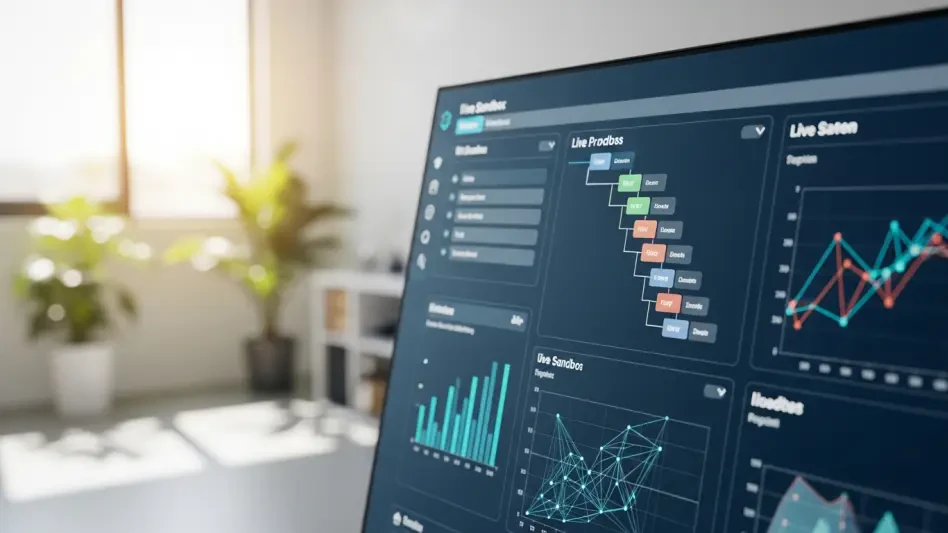
Traditional automated sandboxes often struggle with sophisticated malware designed to detect virtualized environments or remain dormant until specific user interactions occur, such as a mouse click or a login attempt. Interactive analysis tools overcome these hurdles by allowing a human analyst to engage directly with the malicious file as it runs within a protected virtual machine. When this capability is combined with a live-updated repository of threat intelligence, the results are transformative for modern security operations centers. Instead of waiting for a static report, the analyst sees communication with command-and-control servers in real-time while simultaneously viewing how those specific IP addresses have behaved in other global incidents. This immediate correlation transforms a simple sandbox run into a comprehensive investigation tool. It provides the background information needed to determine if a threat is part of a broader campaign targeting the specific industry or region of the organization.
Beyond simple file execution, the unification of sandbox and search functions facilitates a much deeper exploration of the threat landscape through behavioral indicators. Modern malware frequently uses living-off-the-land techniques, making it difficult to identify malicious intent solely based on file hashes or signatures. A unified platform tracks every process creation, registry modification, and network request, then compares these actions against a global database of known malicious patterns. This allows a security team to identify the exact strain of ransomware based on its behavior even if the specific file has never been seen before in that exact form. The ability to search across millions of historical tasks while a new analysis is in progress means that patterns of activity are identified in seconds rather than hours. This speed is critical when dealing with zero-day vulnerabilities or highly evasive threats that require immediate attention to prevent data exfiltration. Detailed behavioral maps help in understanding intent.
Strategic Evolution: Moving Toward a Proactive Defense
The administrative and operational benefits of a unified analysis environment extend to the management of human resources within a security operations center. Junior analysts, who might otherwise be overwhelmed by the complexity of managing multiple security platforms, can use a consolidated interface to learn the nuances of malware behavior more quickly. The system provides guided insights and automated tagging that explain why certain actions are flagged as suspicious, effectively acting as a force multiplier for the team. Meanwhile, senior threat hunters can leverage the combined data to perform complex pivots, using one indicator to find related files or network infrastructure that may not have been part of the initial alert. This democratization of high-level threat intelligence reduces the burnout often associated with repetitive manual tasks and allows the most skilled personnel to focus on high-impact strategic initiatives for the organization. The result is a more cohesive unit that responds to threats with greater precision.
Looking back at the evolution of incident response through the first half of this decade, the most successful organizations were those that prioritized tool consolidation and data fluidity. These entities recognized that the siloed approach to security was no longer sustainable against the backdrop of highly automated cybercrime. By adopting integrated platforms that merged interactive sandbox capabilities with vast threat intelligence archives, security leaders significantly reduced their mean time to detect and respond to sophisticated intrusions. The transition required a cultural shift toward visibility and transparency, where the output of a single analysis task could inform the defensive posture of the entire global network in near real-time. This historical progression toward unified platforms provided a clear roadmap for investments in cybersecurity infrastructure, emphasizing the need for speed and accuracy. Moving forward, the focus remained on refining these integrations to handle even more complex data streams, ensuring safety.