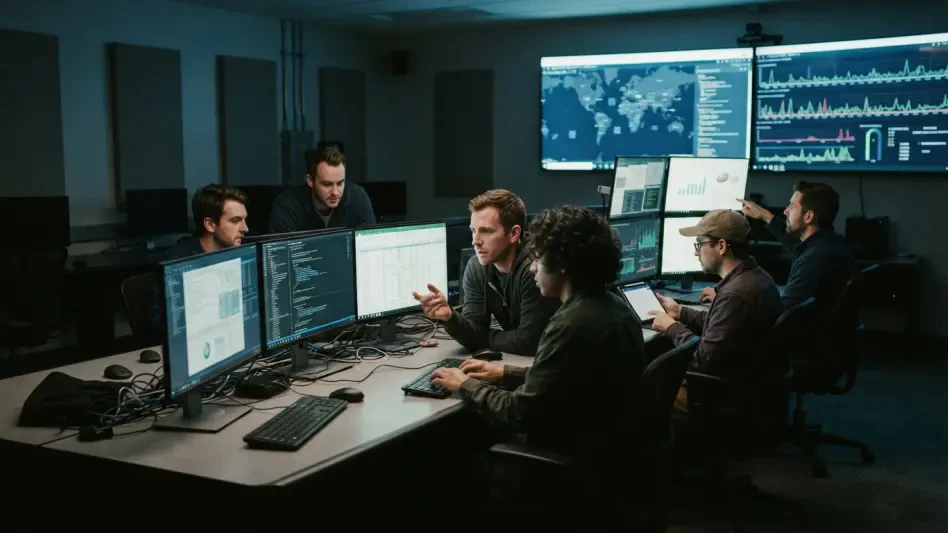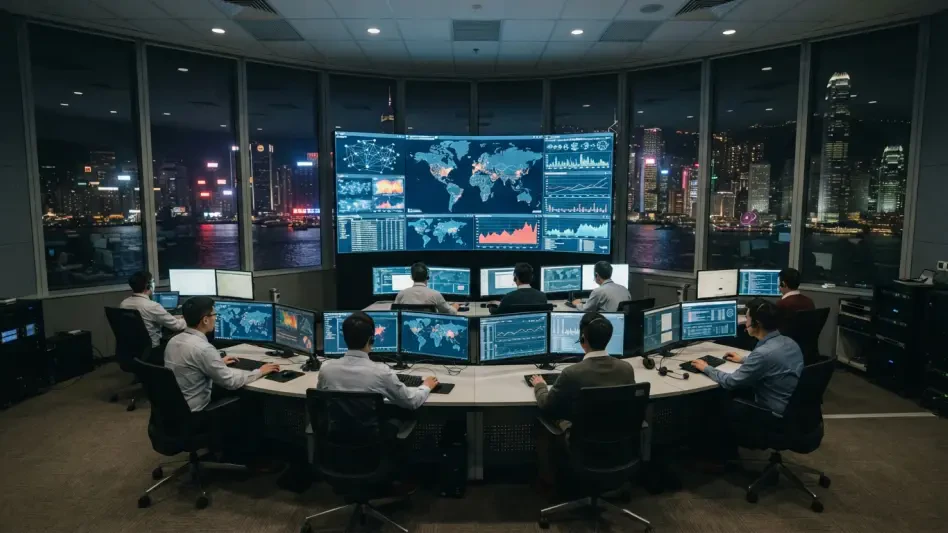
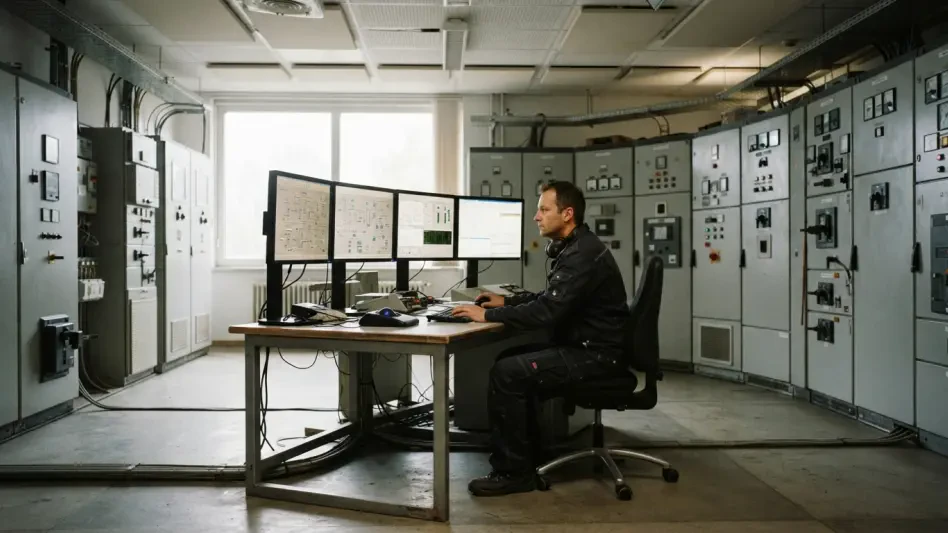
A disgruntled employee or a stressed contractor already possesses the necessary credentials to navigate complex control networks, making them a far more efficient threat than a sophisticated foreign operative. This startling realization comes from a comprehensive study conducted by researchers at Michigan Technological University and the University of Michigan-Dearborn. As the stability of the United States power grid remains a cornerstone of national security in 2026, the findings suggest that the most significant vulnerability is not a state-sponsored hacker from a distant land, but rather the individuals who have already been granted legitimate access to critical systems. The research, which utilized advanced mathematical modeling to analyze Supervisory Control and Data Acquisition (SCADA) systems, highlights a systemic blind spot in current cybersecurity protocols. While utilities across the nation frequently pass mandatory audits and comply with rigorous federal standards, these measures often fail to account for the unpredictable human element within the workforce. The study indicates that reliance on background checks and technical certifications is no longer sufficient to protect the digital brains of the electrical grid, as situational and psychological factors can quickly turn a trusted professional into a high-level security risk capable of causing widespread disruption.
The Insider Advantage: Risks of Internal Access
Mechanics: The Shortened Path of Internal Breaches
The central thesis of the researchers’ mathematical model revolves around the “insider advantage,” a concept that fundamentally changes how infrastructure security must be viewed. When an external adversary attempts to breach the power grid, they are forced to navigate a grueling and complex multi-stage process often described as a kill chain. This involves months of reconnaissance, scanning for minute software vulnerabilities, infiltrating business networks, and eventually pivoting into the isolated control network. Each of these steps creates a digital footprint, providing a window of opportunity for the utility’s defensive systems to detect and neutralize the intrusion. In contrast, a trusted insider already possesses the keys to the kingdom. They have the login credentials, the physical access badges, and an intimate knowledge of the system’s architecture. The mathematical model demonstrates that these individuals can reach sensitive controls in significantly fewer steps and with a much higher probability of success than any outside actor. By bypassing the perimeter defenses designed to stop hackers, the insider operates in a space where they are rarely questioned, allowing them to execute potentially catastrophic commands before a single alarm is even triggered.
Case Study: Exploiting Specialized System Knowledge
To ground their findings in reality, the research team pointed to historical precedents that illustrate the devastating potential of insider knowledge. A primary example is the 2000 sewage spill in Queensland, Australia, where a former contractor utilized stolen radio equipment and his deep familiarity with the wastewater control system to issue unauthorized commands. This act of digital sabotage resulted in the release of 800,000 liters of untreated sewage into local ecosystems. Although this event occurred decades ago, the researchers argued that it serves as a perfect blueprint for the threats facing the modern electrical grid. The contractor did not need to hack into the system using sophisticated exploits; he simply used his specialized knowledge to manipulate the system as if he were still an authorized operator. Despite the introduction of mandatory safety standards in the years following, the underlying vulnerability—the reliance on the integrity of those with access—remains largely unchanged. Modern SCADA environments are now more interconnected than ever, with remote access portals and vendor laptops creating even more pathways for a motivated insider to exploit their position and cause physical damage to national infrastructure.
Regulatory Limitations: Gaps in Oversight
Compliance: Why Procedural Standards Fail
One of the most critical findings in the study is the growing discrepancy between regulatory compliance and actual operational security. Since the implementation of the North American Electric Reliability Corporation Critical Infrastructure Protection (NERC CIP) standards, the industry has operated under a strict regime of background checks, mandatory training, and credential management. Utilities face staggering financial penalties for failing to meet these procedural requirements, which has led to a checkbox mentality where meeting the letter of the law is often confused with being secure. However, the researchers contended that these standards are overly procedural and static. They verify whether a worker has the right to access a system on paper but fail to evaluate the worker’s current psychological or situational state. An employee who passed a background check five years ago might now be facing severe personal or financial pressures that make them susceptible to outside influence or impulsive acts of sabotage. By focusing purely on technical credentials and historical data, current regulations leave a massive gap that can be exploited by individuals who have already cleared every hurdle required by federal oversight.
Human Behavior: Managing the Psychological Factor
The research model factors in various insider scenarios that traditional technical audits almost entirely ignore, such as employees suffering from extreme fatigue during long shifts or those facing professional demotions. The researchers highlighted that human behavior is inherently volatile, yet cybersecurity protocols treat personnel as static variables. There is also the significant risk of hybrid threats, where an outside attacker does not need to crack a password but simply leverages an insider’s momentary lapse in judgment caused by stress or distraction. For instance, an exhausted operator might neglect to follow a strict logout procedure, leaving a terminal open for an unauthorized user. The study suggests that the human element is not just a vulnerability in terms of malicious intent, but also in terms of simple error and negligence. Because current cybersecurity frameworks are designed to detect unauthorized access rather than unauthorized behavior by an authorized person, the grid remains exposed to the very people who keep it running. Transitioning to a security model that accounts for behavioral fluctuations and psychological stressors is presented as a necessary evolution for utilities that wish to go beyond mere compliance.
Strategic Defense: Evaluating Model Results
Data Analysis: Simulating Network Vulnerabilities
To provide a quantitative foundation for their theories, the research team developed a complex simulation that treated the power grid’s control system as a dynamic entity. This model allowed the system to fluctuate between states of normal operation, a weakened state, and a fully compromised state based on different attack vectors. By running 10,000 distinct simulations across various attacker profiles, the researchers were able to evaluate how specific security strategies held up against both external hackers and internal threats. One of the most prominent strategies tested was Zero Trust Segmentation, a method that restricts a user’s ability to move laterally within a network. In the simulation, Zero Trust proved highly effective at reducing the time a system spent in a compromised state, cutting the duration of an active breach by nearly 69% in the majority of scenarios. However, the data also revealed a surprising trade-off: in some emergency situations, the rigidity of Zero Trust actually increased the risk to physical equipment by 27%. This occurred because strict access controls made it difficult for legitimate operators to respond quickly to cascading failures, illustrating that even the most advanced digital defenses can have unintended consequences on the physical components of the grid.
Tactical Solutions: Implementing Hardened Controls
As the proportion of insider threats increased in the simulations, a different strategy emerged as the superior choice for protecting physical assets. The use of dedicated, locked-down administrative workstations—computers that are physically isolated and used only for sensitive administrative tasks—showed remarkable success. The researchers found that once insiders accounted for approximately 44% of the potential threat pool, these hardened workstations became the most effective tool for reducing physical equipment risk, cutting potential damage by nearly 46%. This finding suggests that hardware-based solutions, which physically limit what any single user can do regardless of their credentials, are more resilient than software-based permissions alone. The study ultimately advocated for a layered defense strategy rather than a reliance on a single silver bullet. While software measures like Zero Trust are essential for containing digital breaches, hardware controls and behavioral monitoring are required to prevent a person with legitimate access from misusing their power. By integrating these diverse defensive layers, utilities can build a system that is not only harder to penetrate from the outside but also significantly more resistant to the inherent dangers posed by internal access.
Future Outlook: Toward Human-Centric Resilience
Methodology: Integrating Behavioral Monitoring
The study’s conclusion emphasized that the current perimeter-first approach to cybersecurity is an outdated model that fails to reflect the reality of internal risk. To achieve true grid resilience, the industry must shift toward a human-centric security model that monitors the actions and states of operators as closely as it monitors the health of transformers and transmission lines. This involves the implementation of behavioral analytics that can identify anomalies in how an employee interacts with the control system, potentially flagging unusual activity before it leads to a physical failure. For example, if an operator who typically only accesses certain substations suddenly begins querying the entire network in the middle of the night, the system should be able to automatically restrict access or require additional verification. This approach does not assume that every employee is a threat, but it recognizes that the potential for misuse is always present. By moving away from a binary model of trusted versus untrusted and adopting a more nuanced view of continuous verification, utilities can create a more robust environment that accounts for the complexities of human behavior and the high stakes of critical infrastructure management.
Final Considerations: Actionable Resilience Strategies
The research provided a clear path forward for utility operators and federal regulators who sought to modernize the nation’s energy security framework. It was determined that a move toward holistic, multi-layered architectures was the only way to effectively mitigate the unique risks posed by those with legitimate access. Utilities were encouraged to transition from a purely compliance-driven mindset to an active risk-management strategy that prioritized the hardening of internal networks through administrative workstations and fine-grained segmentation. Furthermore, the findings suggested that professional well-being and stress management should be viewed as core components of a cybersecurity strategy rather than just human resource concerns. By reducing the situational factors that lead to fatigue and resentment, organizations naturally hardened themselves against the most likely source of disruption. The study successfully demonstrated that the person with the badge and login credentials remains the most significant variable in the security equation. As a result, the industry began to reevaluate the relationship between human trust and digital control. Ultimately, the shift toward a more skeptical and behavioral-based defense system served as the necessary foundation for ensuring the long-term stability and safety of the American power grid in an increasingly complex threat environment.