
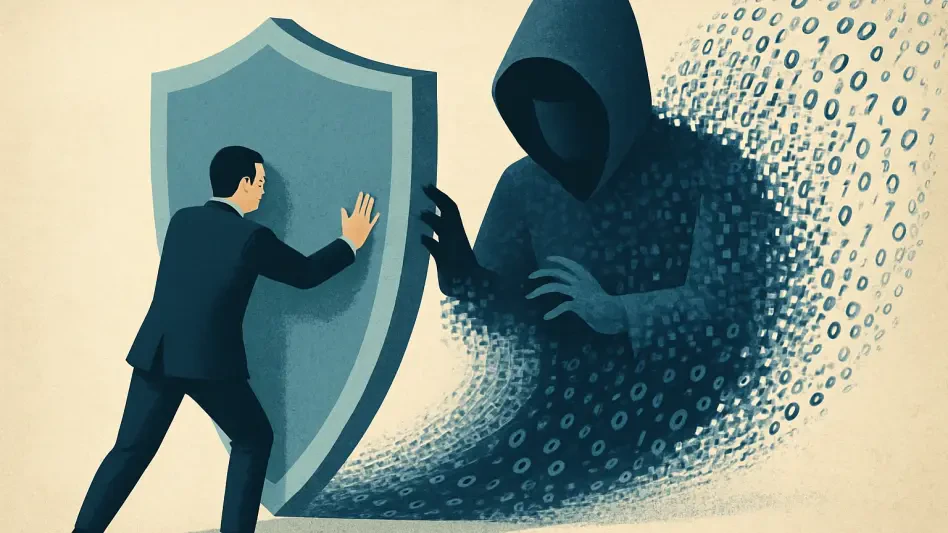
Digital fraud is no longer a localized banking issue but a systemic threat that sees one in seven citizens across OECD countries falling victim to scams. This alarming reality underscores a fundamental shift in the landscape of financial crime, where traditional defense mechanisms focused solely on the banking perimeter are increasingly outmatched by a sophisticated, multilayered criminal enterprise. As the digital economy matures in 2026, the complexity of these operations has moved beyond simple technical breaches into the realm of deep-seated psychological manipulation and ecosystem-wide exploitation. While banks have historically shouldered the primary responsibility for financial security, the contemporary threat profile suggests that no single institution can act as an island in this conflict. The migration of criminal activity to social media platforms and encrypted messaging services means that the primary origin of scams exists far beyond the reach of traditional banking monitors. Consequently, a bank-centric model is no longer a viable long-term strategy for safeguarding the integrity of the financial system. To protect the collective interests of consumers and maintain the stability of global markets, there is an urgent need to rethink how security is structured, moving toward a model of shared accountability that encompasses every digital gatekeeper. This transition involves acknowledging that the banking transaction is often the final link in a chain that begins with a fraudulent advertisement or a spoofed communication. Without a unified front, the rapid evolution of fraud tactics will continue to leave even the most prepared institutions vulnerable to systemic collapse.
The Rising Economic and Emotional Cost of Scams
The financial magnitude of digital fraud has reached alarming levels, with payment fraud in the European Economic Area climbing to approximately €4.2 billion by the end of 2024. While the statistical percentage of fraudulent transactions remains low relative to the total volume of global commerce, the absolute financial damage to individuals and small businesses is staggering. On a global scale, losses have recently soared toward the half-trillion-dollar mark, affecting a significant portion of the adult population in developed nations. These figures highlight a disturbing trend where, despite massive increases in security investments by financial institutions, the total value stolen by cybercriminals continues to grow year over year. The current environment is characterized by a high-frequency, high-impact cycle of theft that threatens to drain liquidity from the consumer market. Experts observe that the efficiency of professional criminal syndicates now rivals that of legitimate fintech startups, utilizing global networks to move stolen funds through complex webs of accounts before traditional detection systems can react. This financial bleeding represents a significant drag on economic growth, redirecting capital that would otherwise support legitimate consumption and investment into the shadows of the underground economy.
Beyond the balance sheet, the socioeconomic impact of digital fraud is profound and deeply personal, leaving scars that often outlast the financial recovery process. Victims frequently suffer from intense psychological distress, experiencing feelings of shame, anxiety, and a diminished sense of personal agency after being manipulated by scammers. This human cost is often overlooked in purely economic analyses, yet it is perhaps the most critical factor in the long-term health of the digital marketplace. Rampant fraud erodes the foundational trust required for citizens to engage with digital innovations, leading to a “defensive” stance where users become hesitant to adopt new payment technologies or online services. When citizens lose confidence in the safety of the digital environment, it creates a chilling effect on the overall economic stability of the region. This erosion of trust is a systemic risk that can slow down the progress of digital transformation across entire industries. Protecting the user is therefore not just a matter of individual reimbursement; it is a prerequisite for maintaining the social contract in a highly interconnected digital world. Without robust emotional and psychological safeguards, the digital economy risks fragmentation where only the most tech-savvy feel safe, leaving vulnerable populations behind and creating a permanent divide in financial access.
The Fraud Chain: Deconstructing Modern Criminal Tactics
The widespread implementation of Strong Customer Authentication under regulations like the Revised Payment Services Directive has made unauthorized transactions significantly harder for criminals to execute. In response to these technical barriers, fraudsters have pivoted their strategies toward social engineering, focusing on authorized push payment fraud where the victim is coerced or tricked into initiating the payment themselves. By leveraging advanced tools like Generative AI, criminals can now create highly personalized and convincing social engineering scripts at a scale that was previously impossible. This allows them to build elaborate fake relationships, impersonate trusted authority figures, or provide fraudulent investment evidence that makes it nearly impossible for the average consumer to detect the deception. The use of deepfake technology and sophisticated language models means that a scammer can now maintain hundreds of simultaneous conversations, each tailored to the specific vulnerabilities of a targeted individual. This shift from technical hacking to human hacking represents a fundamental change in the anatomy of digital crime, moving the battlefield from the server room to the victim’s messaging app and social media feed.
A digital scam rarely begins at the point of payment; instead, it follows a multistage lifecycle that starts long before a user opens their banking application. The first phase typically involves a fraudulent advertisement on a social media platform or a spoofed website designed to capture the attention of unsuspecting browsers. This is followed by a contact phase, where imposters use urgent or threatening language via SMS or phone calls to create a sense of panic and compliance in the target. By the time the final phase—the actual banking transaction—occurs, the victim has already been successfully compromised through psychological conditioning. Current regulatory frameworks, however, focus almost exclusively on this final link in the chain, placing the burden of detection and liability on the financial institution. This narrow focus ignores the critical vulnerabilities present in the earlier stages where the scam could have been disrupted. By analyzing the fraud chain as a whole, it becomes clear that preventing the final transaction is much more difficult if the preceding stages of deception are allowed to operate without oversight. Disrupting the cycle at the origin or contact phase would be far more effective than trying to catch a seemingly legitimate transaction at the very end of the process.
Technological Innovation: Defensive Banking Strategies in Action
Banks have moved well beyond simple compliance requirements to implement proactive, real-time monitoring systems powered by sophisticated artificial intelligence. These systems are designed for anomaly detection, searching for patterns that deviate from a customer’s typical financial behavior, such as a sudden transfer of life savings to a newly created account. Modern banking security now includes the identification of money mule patterns, where funds are rapidly dispersed through a series of intermediary accounts to obfuscate the trail. Furthermore, institutions utilize behavioral analytics to assess how a user interacts with their device, measuring metrics such as typing speed, touch pressure, and the angle at which a phone is held. This biometric data helps determine if an unauthorized party is operating the account or if the legitimate user is acting under extreme duress or coercion. By integrating these diverse data points into a single risk score, banks can intervene in milliseconds, either by flagging a transaction for manual review or by triggering additional verification steps. These AI-driven defenses are essential in an era where criminals use automation to launch thousands of attacks simultaneously, allowing the banking sector to maintain a high level of vigilance without human exhaustion.
One of the most critical technical tools introduced to mitigate misdirected transfers and investment scams is the Verification of Payee system. This tool works by confirming that the name of the beneficiary matches the account identifier provided by the sender before the transaction is finalized, effectively preventing “imposter” scams where the name and account do not align. While these technical measures are highly effective in specific scenarios, banks face a constant tension between the need for security and the consumer demand for frictionless, instant payments. In an era where 24/7 instant gratification is the standard, implementing cooling-off periods or extra verification steps can save significant funds, but these measures also slow down the user experience. This trade-off is one of the primary challenges facing the industry, as excessive friction can drive users toward less secure but faster alternatives. Striking the right balance requires a deep understanding of user psychology and a commitment to transparent communication. Banks must educate their customers on why certain delays exist, framing them not as inconveniences but as essential protective barriers in a high-risk environment. Ultimately, technology alone cannot solve the problem if the demand for speed overrides the necessity of caution.
Infrastructure Vulnerabilities: The Role of Non-Banking Actors
Online platforms and telecommunications operators are the missing links in the current fight against digital crime, providing the essential infrastructure that criminals use to reach and groom their victims. Currently, a significant portion of investment and romance scams begin with paid advertisements on major social media platforms, where the companies hosting the ads profit from the revenue generated by fraudsters. Despite their immense technological capabilities and data resources, these platforms often bear no financial responsibility for the scams they host, creating a massive accountability gap in the digital ecosystem. There is a growing call for mandates that would require these platforms to verify the identity of financial advertisers and proactively remove fraudulent content before it can reach a single user. By allowing scammers to operate openly in the digital public square, these platforms are effectively subsidizing criminal activity through negligence. Shifting the burden of verification to the point of origin would significantly reduce the volume of fraud by making it more expensive and difficult for criminals to find their targets. Without such mandates, the platforms have little financial incentive to invest in the rigorous moderation needed to protect the public.
Telecommunications providers also play a central role in the fraud chain through persistent vulnerabilities such as ID spoofing and the lack of secure SMS protocols. These technical flaws allow criminals to make their calls or texts appear as though they are coming from a trusted bank, a government agency, or even a family member. While the telecommunications industry has the technical capability to implement better authentication standards to disrupt these communication-based scams, they often lack the regulatory or financial incentives to prioritize these interventions over other network upgrades. The misuse of telephone networks for impersonation is a primary driver of authorized push payment fraud, yet the liability for the resulting losses remains largely with the banking sector. To close this loop, telecommunications providers must be brought into a unified liability framework that holds them accountable for the security of their own networks. Implementing technical obligations such as mandatory caller ID validation and improved filtering for fraudulent SMS messages would break the contact phase of the fraud chain. Until these digital gatekeepers are held to the same standard of consumer protection as financial institutions, the infrastructure of the digital world will remain an open playground for scammers.
Legislative Evolution: Navigating the European Regulatory Landscape
The legislative landscape is undergoing a significant transformation aimed at strengthening fraud prevention and clarifying the roles of various digital providers. The Payment Services Regulation is a primary example of this effort, designed to modernize the rules governing transactions and enhance the security obligations of payment service providers. This regulation seeks to address the rise of social engineering by providing clearer guidelines on how institutions should handle authorized fraud and customer reimbursement. Similarly, the Digital Services Act has begun to address the issue of illegal content on large online platforms, though critics argue that its current enforcement mechanisms are not specific enough to effectively curb sophisticated financial scams. The most recent addition to this regulatory suite is the Digital Networks Act, which, as of 2026, seeks to mandate cooperation between telecommunications providers and law enforcement authorities. These legislative efforts represent a significant step forward in recognizing that fraud is a multisector problem that requires a multisector solution. However, the effectiveness of these laws will depend on how well they are harmonized and enforced across different jurisdictions to prevent criminals from exploiting gaps in the legal framework.
While these individual legislative efforts are valuable, a fragmented approach where each sector operates in its own silo only benefits the criminals who specialize in crossing those very boundaries. Europe requires a truly holistic framework that connects banks, tech platforms, telecommunications operators, and law enforcement in a real-time defensive network. Cooperation alone is insufficient; there must be concrete legal requirements that ensure all digital gatekeepers are held to a high standard of consumer protection, backed by significant penalties for negligence. This includes the creation of a shared liability model where the cost of reimbursement is distributed among the parties that failed to prevent the fraud at their respective stage of the chain. For example, if a scam originated from a verified fraudulent ad on a social media platform, that platform should contribute to the victim’s recovery. Such a system would create the financial incentives necessary for all companies to invest in prevention rather than treating fraud as someone else’s problem. Moving toward a regime of collective legal accountability is the only way to ensure that the entire digital ecosystem is incentivized to work together toward the common goal of a secure and trustworthy marketplace.
Collective Accountability: Building a Secure Digital Future
The fight against digital fraud required a fundamental shift in how liability was assigned across the digital ecosystem. Historically, there was a significant imbalance where banks often bore the entire brunt of reimbursement costs, even when the fraud was facilitated by the negligence of a social media platform or a telecommunications provider. To create a true deterrent against criminal activity, the metric for success shifted from the efficiency of the reimbursement process to the actual prevention of the crime before any money left the victim’s account. This transition demanded that liability be shared among all actors who failed to meet their preventive obligations, thereby creating a financial incentive for every party in the fraud chain to prioritize consumer safety. By ensuring that tech giants and telecom operators had “skin in the game,” the industry saw a rapid acceleration in the deployment of anti-spoofing technologies and more rigorous advertiser verification protocols. This shared responsibility model not only provided better protection for the average citizen but also ensured that the financial burden of crime was not placed solely on one sector of the economy.
Ultimately, winning the fight against sophisticated fraud depended on a unified call for accountability that transcended traditional industry boundaries. This process involved the creation of harmonized information-sharing networks that facilitated the rapid movement of fraud intelligence between banks, technology companies, and law enforcement agencies across borders. These initiatives, such as the systematic exchange of data on known money mule accounts and fraudulent domains, allowed the digital community to shut down criminal operations in real-time. Banks continued to invest heavily in security and consumer awareness, but they were no longer forced to act as the sole guardians of the digital economy. The collaborative approach demonstrated that when all digital gatekeepers were held accountable, the overall volume of successful scams began to decrease for the first time in years. By fostering a secure and trustworthy digital marketplace through coordinated action, the European community successfully protected its citizens and preserved the integrity of the financial system for the future. The lesson learned was clear: in a hyper-connected world, security is a collective duty rather than an individual institutional burden.