Cyber crisis management requires converting complex technical indicators into plain-language assessments regarding insurance coverage, liquidity impact, and public relations strategy for the boardroom. In the current landscape of 2026, the disconnect between the server room and the executive suite remains a primary vulnerability for global enterprises facing sophisticated digital threats. While security analysts monitor telemetry in real-time, corporate leadership often finds itself isolated from the technical nuances of an unfolding attack, forced to make high-stakes decisions based on fragmented or overly dense data. To address this structural flaw, researchers at the Norwegian University of Science and Technology have unveiled the Cyber Crisis Chess Board, a sophisticated prototype designed to bridge this persistent divide. By transforming raw hacking alerts into strategic battle plans, the tool shifts the focus from purely technical mitigation to a comprehensive business response. This evolution is necessary because a modern breach is rarely a localized IT failure; it is a full-scale corporate emergency that demands synchronized action across legal, financial, and communications departments to preserve brand equity and operational continuity.
Addressing Strategic Blindness in High-Stakes Environments
Understanding the Impact of Information Gaps
The genesis of this development stems from a critical analysis of high-profile cyber incidents that have historically paralyzed major industry players. A notable example involved a massive ransomware strike on a global energy giant, where an infection affecting tens of thousands of employees led to losses exceeding 800 million kroner. During such events, technical teams often possess a granular view of the intrusion mechanics, yet the executives responsible for global operations and shareholder value remain essentially flying blind. This profound information gap frequently results in catastrophic delays or misaligned responses regarding whether to pay a ransom, shut down global manufacturing lines, or issue a public statement to the markets. Without a mechanism to translate “security speak” into a prioritized list of business risks, the leadership team is unable to fulfill its fiduciary duties effectively during the most critical hours of the crisis, leading to a state of reactive paralysis that emboldens attackers and complicates the eventual recovery process.
Bridging this gap requires more than just better reporting; it demands a fundamental shift in how incident data is curated for the boardroom. Currently, most security dashboards are designed for specialists who understand network protocols and malware signatures, leaving non-technical executives to wait for periodic, often simplified, briefings. This lag time creates a vacuum of leadership, where critical decisions are made without a clear understanding of the immediate financial or legal consequences. By establishing a direct pipeline from technical detection to strategic planning, organizations can ensure that the Chief Financial Officer is evaluating liquidity impacts at the same time the Chief Information Security Officer is isolating infected server clusters. This synchronization is the only way to mitigate the compounding effects of a breach, which often ripple through the supply chain and customer base long after the technical threat has been neutralized. Consequently, the ability to synthesize disparate data points into a unified strategic narrative is now a prerequisite for organizational resilience in 2026.
The Chess Analogy for Incident Response
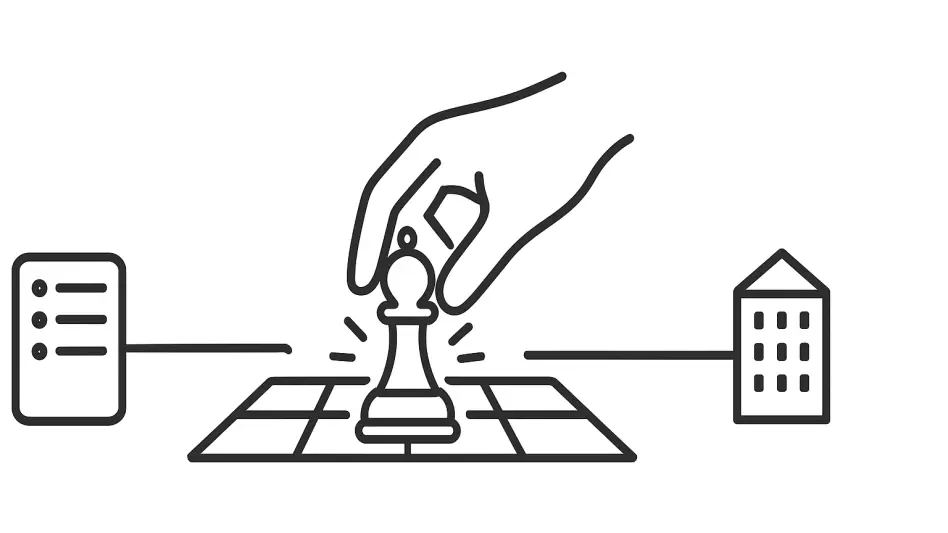
To bring structure to the inherent chaos of a cyberattack, the researchers adopted the logical framework of a chess match, categorizing the progression of an incident into an opening, a middle game, and an endgame. In the opening phase, the focus is squarely on the initial detection and classification of the threat, where the first moves made by the defense set the tone for the entire encounter. Much like a grandmaster choosing a defensive opening, the tool guides leaders to identify the nature of the attack early, ensuring that the response is tailored to the specific threat actor’s methodology. This structured approach prevents the panicked, scattershot reactions that often characterize the early minutes of a breach. By defining the parameters of the engagement from the outset, the tool allows the organization to maintain a degree of control over the narrative and the technical environment, preventing the adversary from dictating the pace of the crisis and maximizing the effectiveness of the initial containment efforts.
As the situation transitions into the middle game, the emphasis shifts toward containment and a deep assessment of which business functions are most at risk of total failure. This phase is characterized by intense tactical maneuvering, where the tool helps executives weigh the costs of shutting down specific systems against the risk of further infection spread. Finally, the endgame addresses long-term recovery, regulatory compliance, and stakeholder management, ensuring that the company’s reputation remains intact even after a technical compromise. This chronological framework allows leadership to move from a purely reactive posture to a proactive strategy, anticipating future needs as the crisis evolves rather than merely responding to the most recent technical alert. By visualizing the crisis as a series of interconnected moves, the leadership team can better understand the long-term implications of their immediate choices, ensuring that short-term technical fixes do not create insurmountable legal or financial obstacles later in the recovery process.
Technical Execution and Practical Application
Automated Classification and Task Distribution
The operational backbone of the prototype involves sitting atop existing security detection systems to monitor network logs and match suspicious activity against global databases of known hacking techniques. When a match is identified, the system performs an automated classification of the threat, distinguishing between a garden-variety phishing attempt and a sophisticated ransomware campaign. This immediate classification triggers a pre-defined alarm within a dedicated crisis management interface, bypassing the traditional chain of command that often slows down response times. By automating these initial identification steps, the tool saves precious minutes during the “golden hour” of a breach, when rapid intervention can mean the difference between a minor disruption and a total operational shutdown. This automated intelligence layer ensures that the system is not just alerting users to a problem, but is providing the necessary context to understand the severity and likely trajectory of the intrusion.
Once the threat is classified, the tool automatically identifies the specific stakeholders who must be mobilized based on the nature of the incident. In a data exfiltration scenario, the system might simultaneously alert the Chief Executive Officer, the General Counsel, and the Head of Communications, while a ransomware attack might prioritize the Chief Financial Officer and the Head of Operations. This automated role assignment ensures that no critical department is left out of the loop, and it immediately places the right people in a virtual war room with a shared set of objectives. By distributing tasks based on professional roles rather than technical expertise, the system ensures that every member of the leadership team has a clear mandate. For example, while the technical team works on decryption, the legal team is prompted to review mandatory disclosure timelines, and the public relations team is given a framework for drafting a customer advisory, creating a unified front that is far more effective than siloed departmental responses.
Translating Technical Data into Organizational Action
One of the most vital functions of the system is its ability to perform linguistic translation, turning complex technical indicators into plain-language tasks that are actionable in a corporate setting. Instead of presenting a Chief Financial Officer with reports regarding “encrypted server clusters” or “malicious lateral movement,” the tool might prompt them to “review business interruption insurance policy limits” or “assess the impact of a 48-hour shutdown on global liquidity.” This ensures that the technical reality of the hack is immediately translated into the professional language of the executive, allowing them to apply their specific expertise to the problem without needing a background in computer science. This clarity of communication reduces the cognitive load on decision-makers during high-stress situations, preventing the “analysis paralysis” that often occurs when leaders are overwhelmed by technical jargon they cannot readily interpret or prioritize.
Furthermore, this translation layer establishes a clear framework for accountability and responsibility across the entire organization. By generating specific tasks for each role, the tool ensures that every executive knows exactly what is expected of them as the crisis unfolds. The system can track the completion of these tasks in real-time, providing the CEO with a high-level overview of the organization’s response status. This level of oversight is crucial for maintaining internal order and for demonstrating due diligence to regulators and board members in the aftermath of the event. By transforming the technical metrics of a cyberattack into a series of strategic business objectives, the system allows the leadership team to manage the crisis with the same level of professional rigor they would apply to any other major business challenge. This integration of technical data into the standard corporate decision-making process is a critical step toward maturing the global approach to digital risk management.
Evaluating Effectiveness and Future Challenges
Lessons from Live Simulations and Expert Reviews
The prototype underwent rigorous testing through high-fidelity simulations that mirrored the pressure of a real-world digital emergency. In the Gjøvik Cyber-Range, participants representing the leadership of a mid-sized manufacturer were subjected to a mock ransomware attack to see if the tool could autonomously manage the technical-to-strategic conversion. While the system successfully met its technical benchmarks by detecting and classifying the threat without human intervention, the exercise revealed that the “human factor” remains a significant hurdle. Participants sometimes struggled with the interface or were frustrated by technical lag during the simulation, highlighting that even the most advanced backend logic is only as effective as the user’s ability to interact with it under stress. These findings emphasized that for a tool to be truly revolutionary, it must prioritize an intuitive user experience that can be navigated by non-experts during the frantic minutes of a live breach.
In a separate discussion session in Ålesund, senior executives from a technology cluster reviewed the “battle plans” generated by the tool, providing a different perspective on its utility. Those from organizations lacking formal crisis management plans were highly enthusiastic, viewing the system as an emergency plan in a box that provided structure where none existed. In contrast, seasoned crisis management veterans were more skeptical, arguing that established companies already have robust playbooks. For these experts, the value of the tool lay not in generating generic tasks, but in providing filtered, raw data—such as the exact percentage of the network that remained uncompromised—to help them refine their existing strategies. This divergence in feedback suggests that a one-size-fits-all approach to automated crisis management may not be sufficient. Instead, the next generation of these tools will likely need to offer tiered functionality that can adapt to the maturity level of the organization using them.
Navigating Trust and System Limitations
The research also highlighted a significant trust deficit regarding the use of automation in high-stakes decision-making. Questionnaire respondents expressed concern that an automated system might suffer from false positives, triggering a full-scale executive panic over a minor technical glitch that could have been handled by the IT department alone. Conversely, there was a persistent fear of false negatives, where a sophisticated attacker might bypass the tool’s detection rules entirely, leaving the leadership team with a false sense of security while their data is being stolen. Building trust in these systems will require a high degree of transparency in how the rules are configured and a “human-in-the-loop” mechanism that allows technical experts to verify the system’s findings before the executive alarms are sounded. Without this layer of verification, the risk of “automation bias” or “alarm fatigue” could undermine the very clarity the tool was designed to provide.
Looking ahead, the successful integration of tools like the Cyber Crisis Chess Board required a focus on continuous adaptation and manual rule refinement. The researchers noted that the current prototype was limited by its reliance on pre-defined rules, which could quickly become obsolete as hacking tactics evolved. To maintain effectiveness, organizations realized they needed to update their strategic logic as frequently as their antivirus signatures. The final assessment of the project suggested that the future of crisis management lies in the seamless flow of information—ensuring the right person received the right data at the precise moment it was needed. Organizations that moved toward this model found that they were better equipped to manage the fallout of an intrusion, treating the event not as a technical failure to be hidden, but as a strategic challenge to be mastered through transparency, speed, and coordinated leadership across all corporate functions.