
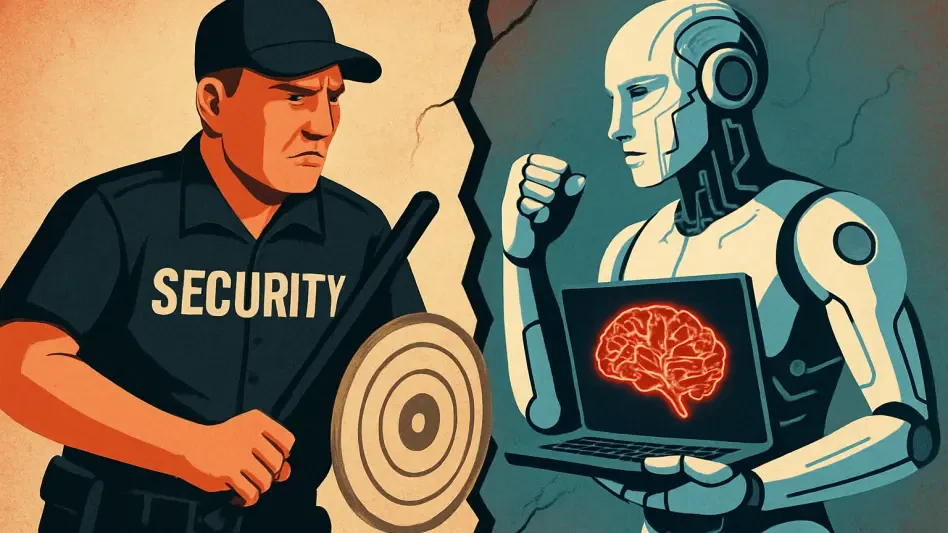
The era of identifying malicious digital activity through clumsy grammar and suspicious attachments has officially ended, replaced by a sophisticated landscape where artificial intelligence serves as the primary engine for cybercrime. For nearly two decades, corporate defense strategies have prioritized a fundamental curriculum of security awareness training that focuses on spotting obvious red flags and maintaining basic digital hygiene. This legacy approach relies on the assumption that human intuition, aided by periodic seminars and phishing simulations, can act as a reliable “human firewall.” However, as malicious actors increasingly leverage large language models and synthetic media, the effectiveness of these traditional methods is plummeting. The current reality reveals a dangerous “awareness gap” where the capabilities of AI-driven tools far exceed the recognition skills of the average employee. Instead of looking for errors, defenders must now navigate a digital environment where the most convincing communications are often the most dangerous ones, necessitating a total overhaul of modern defense.
The Arsenal: Deepfakes and Synthetic Deception
Among the most disruptive innovations in the cybercriminal toolkit is the use of high-fidelity deepfakes and synthetic media to manufacture trust on an unprecedented scale. Recent incidents involving multi-million dollar transfers have demonstrated that attackers can now simulate real-time video and audio of senior leadership during standard corporate calls. When an employee interacts with a visual and auditory representation of their Chief Financial Officer that mimics every nuance of their personality, the biological and social cues for trust naturally override any standard security training they may have received. This “manufacturing of trust” bypasses the skepticism usually reserved for emails or text messages, as the human brain is not yet evolved to distinguish between a living colleague and a generative model in a high-pressure business context. Consequently, traditional advice to “verify the sender” becomes meaningless when the sender appears as a verified, high-definition face on a computer screen, demanding immediate and urgent financial action.
Beyond the immediate deception of synthetic media, organizations must confront the more subtle and insidious threats of data poisoning and prompt injection. Data poisoning represents a long-term strategy where attackers corrupt the massive datasets used to train or fine-tune an organization’s internal AI tools, leading to skewed outputs that can compromise strategic decision-making. Because the resulting damage appears as a series of legitimate but poor business choices rather than a sudden system crash, such breaches can remain undetected for months while causing cumulative operational harm. Simultaneously, the rise of AI assistants has introduced the risk of prompt injection, where malicious instructions are hidden within documents or web content that the AI processes. This allows an attacker to hijack the tool’s output, potentially forcing it to leak sensitive internal data or bypass established security controls without the user ever realizing that the underlying software has been compromised by an external and invisible set of commands.
The Defense Gap: Velocity and Specialized Expertise
The speed at which modern compromises occur has fundamentally changed the requirements for organizational resilience, as the window for human intervention continues to shrink. In current threat projections for the period between 2026 and 2028, the average “dwell time” between an initial breach and lateral movement within a network has dropped significantly, sometimes occurring in under thirty minutes. In extreme cases involving automated exploitation, the transition from a single compromised endpoint to full network control has been observed in as little as twenty-seven seconds. This incredible velocity renders traditional human-centric detection models almost entirely irrelevant if the initial gatekeeper fails to stop the intrusion at the first point of contact. When an attack moves at the speed of optimized software, a “pause and reflect” mindset is simply too slow to be effective. Defense mechanisms must now be as automated and intelligent as the offensive tools they are designed to combat, requiring real-time response capabilities that do not rely solely on human judgment.
A secondary challenge arises from the fact that most existing cybersecurity teams are not currently equipped with the specialized knowledge required to manage AI-specific risks. Traditional expertise in firewall management, access controls, and regulatory compliance is still necessary, but it does not address the nuances of large language model manipulation or the verification of synthetic voices. There is a growing and urgent need for specialized training and certification, such as Advanced in AI Security Management, to bridge the internal expertise gap that exists within most IT departments. Without personnel who understand the technical mechanics of generative adversarial networks or the governance of machine learning models, organizations remain vulnerable to vulnerabilities that traditional scanning tools cannot see. This shift demands that security professionals move beyond generalist roles and embrace a more specialized framework of AI defense, treating machine learning security as a distinct and high-priority discipline within the broader corporate infrastructure.
Strategic Evolution: Modernizing Corporate Governance
To effectively counter these evolving threats, organizations must transition away from generic, one-size-fits-all training modules in favor of role-specific threat modeling that addresses actual vulnerabilities. A finance department requires rigorous protocols for out-of-band verification when handling high-stakes requests, while a data science team must focus on the integrity of the data pipelines feeding their predictive models. This granular approach ensures that employees are not just aware of general risks but are equipped with specific, actionable procedures to handle the most likely attack vectors they will encounter in their daily work. Furthermore, companies should adopt advanced simulations that include “deepfake phishing” and synthetic media tests to measure how staff respond to high-fidelity impersonations. These exercises provide invaluable data on organizational readiness and help to build the “muscle memory” needed to verify communications through secondary, trusted channels regardless of how convincing the primary interaction may appear to be.
The realization that the human firewall could no longer withstand the precision of AI-powered deception prompted a fundamental shift in how modern enterprises approached their digital security. Leadership teams eventually recognized that security awareness was not a static destination but a continuous process that required constant adaptation to new technology. Boards of directors began to treat AI risk as a core component of operational governance, moving past the idea that cybersecurity was merely an IT problem to be solved with software patches. Those who successfully navigated this transition focused on building robust verification frameworks and invested heavily in specialized talent capable of defending against synthetic threats. By integrating automated defense systems with role-specific training, these organizations created a layered resilience that was capable of withstanding the velocity and sophistication of the modern attacker. The proactive adoption of these new standards ultimately proved that the only way to secure the digital future was to acknowledge the limitations of the past and build a more intelligent defense.