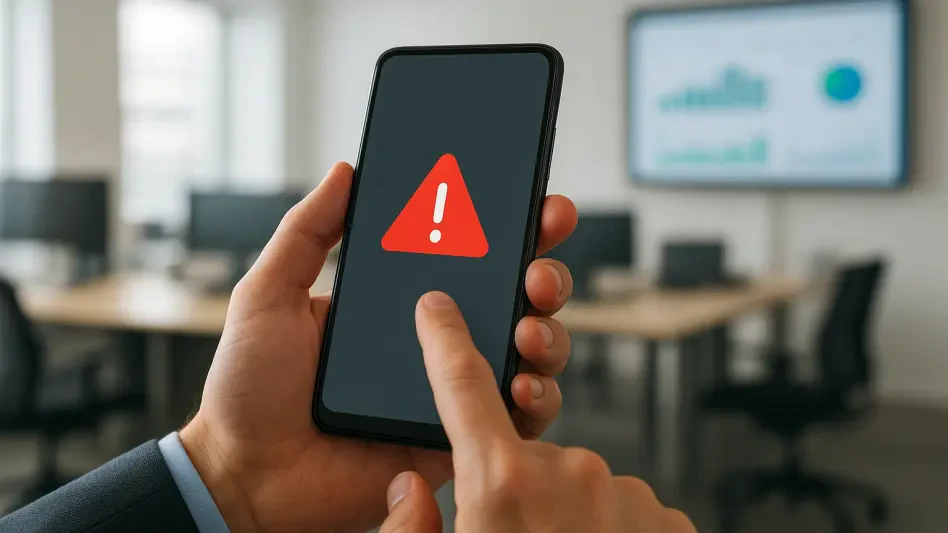
Most corporate security infrastructures are tethered to the email ecosystem, leaving mobile channels like WhatsApp and SMS largely unmonitored and unprotected from sophisticated actors. This systemic blindness has allowed cybercriminals to pivot their strategies, focusing on the high-trust environment of personal mobile devices where technical barriers are historically lower. As enterprise boundaries continue to blur between personal and professional spheres, the introduction of specialized tools like the Keepnet SMS/Call Reporter marks a significant evolution in defensive capabilities. By providing a streamlined mechanism for users to flag suspicious interactions, organizations can finally bridge the gap between isolated mobile activity and centralized security operations. This transition effectively transforms every handheld device into an active sensor, capable of feeding real-time threat intelligence into a unified defense framework. This approach is no longer optional but a necessity in a digital landscape where mobile-first attacks have become the primary entry point for large-scale corporate data breaches.
Understanding the Evolving Mobile Threat Landscape
The Shift Toward Synchronous Attacks and High Click Rates
The migration of phishing tactics toward mobile platforms is fundamentally driven by the psychological advantage that synchronous communication provides to attackers. Unlike email, which allows a recipient time to scrutinize headers and links at their own pace, a text message or a phone call demands an immediate response. This sense of urgency is exploited to bypass the natural skepticism that users might otherwise employ when sitting at a desktop computer. Recent security audits reveal that mobile phishing simulations often result in median click rates that are nearly double those found in traditional email campaigns. This disparity exists because individuals often view their mobile devices as inherently more private and less susceptible to the broad-spectrum spam that plagues corporate inboxes. Consequently, a message appearing in a personal messaging thread carries an implicit level of trust that allows malicious links to be opened with alarming frequency and minimal hesitation.
This high rate of engagement is further exacerbated by the physical limitations of mobile interfaces, which often truncate URLs and hide detailed sender information. When a user interacts with an SMS containing a shortened link, the traditional visual cues used to identify a fraudulent domain are virtually non-existent. Furthermore, the notification-driven nature of modern smartphones ensures that these attacks are viewed within seconds of delivery, catching employees during their daily routines when they are most distracted. This combination of high trust and forced urgency creates a perfect storm for social engineering, where a single tap on a malicious link can lead to credential theft or the installation of mobile spyware. By recognizing these behavioral patterns, security leaders are beginning to understand that defending the mobile perimeter requires a strategy that accounts for the unique ways humans interact with their handheld devices under pressure.
The Role of Artificial Intelligence in Deception
Technological advancements in generative models have fundamentally altered the threat landscape by enabling the creation of hyper-realistic voice and text-based deceptions. In the current environment, attackers leverage AI-driven tools to craft automated scripts that can impersonate the specific tone and vocabulary of a company’s internal communications. These AI-enhanced attacks are particularly dangerous in the context of voice phishing, or vishing, where deepfake audio can replicate the voice of a senior executive or an IT administrator with startling accuracy. This capability allows criminals to conduct high-stakes social engineering at scale, moving beyond generic phishing templates to highly personalized schemes that are difficult for even the most vigilant employees to detect. The ability to generate these lures in real time means that a single attacker can manage hundreds of simultaneous, unique conversations, each tailored to exploit the specific vulnerabilities of the target.
As these AI-powered threats become more pervasive, the necessity for a robust reporting mechanism that operates at the speed of the attack has become a top priority. Traditional methods of alerting security teams, such as manual ticketing or forwarding screenshots via email, are simply too slow to counter an automated AI script. The rapid feedback loop provided by modern mobile defense tools is essential for identifying these sophisticated patterns before they escalate into full-scale network intrusions. By integrating AI analysis into the reporting process itself, organizations can fight fire with fire, using automated systems to parse the subtle linguistic markers and metadata that often distinguish a machine-generated phishing attempt from legitimate human communication. This proactive stance is the only viable way to maintain a credible defense against a new generation of cybercriminals who no longer rely on static templates but on dynamic, adaptive algorithms.
Key Features and Functional Overview of Keepnet
User-Centric Privacy and Operational Efficiency
The design philosophy behind the Keepnet SMS/Call Reporter focuses on maintaining a strict balance between organizational security and individual privacy. This is achieved through a privacy-first architecture that operates within a secure sandbox, ensuring the application only interacts with data that the user explicitly chooses to report. This non-intrusive approach is critical for high adoption rates, especially in Bring Your Own Device environments where employees are rightfully wary of corporate surveillance. By limiting the tool’s scope to active reporting rather than passive monitoring, the platform fosters a culture of trust. Employees are encouraged to participate in the collective defense of the company without fearing that their personal messages or call logs are being indexed or reviewed by their employer. This ethical design is a cornerstone of a modern security strategy that prioritizes the human element of the defense stack.
Operational efficiency is equally vital, as any friction in the reporting process serves as a barrier to timely threat intelligence. The application streamlines the workflow by allowing users to report a suspicious text or call with a single tap, removing the technical hurdles that often discourage employees from flagging potential threats. Instead of navigating complex menus or manually describing a suspicious event, the user can instantly transmit the relevant metadata to the security team for analysis. This simplicity ensures that reporting becomes a reflex rather than an administrative burden, which significantly increases the volume and quality of data available to analysts. By reducing the time it takes to flag an incident from minutes to seconds, organizations can drastically shorten their dwell time, catching a phishing campaign in its earliest stages before it has the opportunity to spread across the broader workforce.
Integration with Enterprise Incident Response
Once a suspicious event is reported, the underlying infrastructure utilizes advanced analysis to provide an immediate verdict on the nature of the threat. This process categorizes the report as malicious, suspicious, or spam within a matter of seconds, providing the user with instant feedback and the security team with actionable data. For a modern enterprise, this information is not siloed but is piped directly into a centralized dashboard that unifies mobile threats with existing security workflows. This integration allows Security Operations Centers to apply the same level of rigor to a smishing attempt as they would to a sophisticated network probe. By treating mobile-originating incidents as first-class citizens in the security ecosystem, analysts can correlate mobile telemetry with other indicators of compromise, such as unusual login attempts or unauthorized data transfers occurring elsewhere in the network.
The centralization of this data is crucial for performing large-scale threat hunting and trend analysis across the entire organization. When a specific mobile campaign is identified, security teams can use the integrated dashboard to trigger automated responses, such as blocking the sender’s number across the fleet or alerting other users who may have received similar messages. This level of coordination ensures that the defense is not just reactive but holistic, addressing the multi-channel nature of modern social engineering. Furthermore, the ability to store and analyze historical reporting data allows organizations to identify recurring attackers and refine their defensive postures over time. By bridging the gap between individual mobile devices and the broader security infrastructure, the platform transforms a fragmented set of endpoints into a cohesive, informed, and resilient defensive perimeter that is capable of evolving alongside the threats it faces.
Strategic Benefits for Modern Organizations
Enhanced Visibility and Proactive Telemetry
Deploying a dedicated mobile reporting solution allows organizations to shift their defensive posture from a reactive model to one rooted in proactive telemetry. Historically, security teams have been blind to the interactions occurring over channels like WhatsApp and personal SMS, which are frequently used to initiate complex fraud schemes. By gaining visibility into these “black hole” channels, administrators can identify the early signs of a targeted attack long before it touches the corporate network. This telemetry is particularly valuable for detecting priming attacks, where a criminal might send a seemingly harmless text to a victim to establish rapport or verify an active phone number. Identifying these initial touchpoints allows the security department to intervene early, providing targeted warnings to specific individuals who have been singled out by an adversary, thereby preventing the more damaging phases of the attack.
This expanded visibility also facilitates a deeper understanding of the specific tactics, techniques, and procedures used by threat actors targeting the company’s specific industry or region. Instead of relying on generic threat feeds, organizations can leverage their own internal data to build a custom threat profile that reflects their unique risk environment. This intelligence can then be used to update firewall rules, refine email filters, and inform the broader cybersecurity strategy. The move toward a data-driven mobile defense ensures that resources are allocated where they are most needed, rather than being spread thin across theoretical risks. In a world where the speed of information is a competitive advantage, having access to real-world, real-time mobile telemetry provides a significant strategic edge, allowing companies to anticipate and neutralize threats with a precision that was previously impossible.
Strengthening Verification and Human Risk Metrics
The data captured through mobile reporting tools is instrumental in refining the internal protocols that govern sensitive business processes. For instance, when a vishing attempt is reported and analyzed, the findings can be used to update the verification procedures for the IT help desk or the finance department. If an attacker is found to be using a specific script to request password resets or wire transfers, the organization can immediately implement additional layers of authentication to counter that specific tactic. This iterative process turns every failed attack into a learning opportunity, hardening the organization’s human firewall against future attempts. By grounding security policies in real-world evidence, companies can ensure that their defenses are practical, effective, and directly aligned with the current methods employed by sophisticated cybercriminals who specialize in identity-based fraud.
Furthermore, the ability to track reporting behavior allows security leaders to move beyond simplistic metrics, such as who clicked a link in a simulation, to more nuanced indicators of human risk. Organizations can now measure the “reporting rate” as a key performance indicator, identifying which departments or individuals are most active in defending the company. This data provides a clearer picture of the overall security culture and helps identify areas where additional training or support might be needed. Instead of punishing mistakes, this metric-driven approach rewards proactive behavior, shifting the focus toward a positive security partnership between employees and the IT department. Over time, this focus on positive metrics builds a more resilient organization where security is seen as a collective responsibility rather than a set of restrictive rules imposed from above, ultimately lowering the overall risk profile.
Maintaining Compliance and Global Standards
Technical Rigor and Regulatory Alignment
For global enterprises, adherence to international standards is a non-negotiable requirement for any security implementation. The platform is designed to meet the rigorous demands of frameworks such as ISO 27001 and SOC 2 Type 2, ensuring that data handling and processing meet the highest industry benchmarks for security and availability. This technical rigor is matched by a commitment to ethical AI usage, aligning with emerging regulatory landscapes such as the EU AI Act. By ensuring that automated analysis is transparent and accountable, organizations can confidently deploy these tools in highly regulated sectors like finance and healthcare, where the integrity of data processing is paramount. This alignment with global standards not only protects the organization from legal and regulatory risks but also reinforces the trust that clients and partners place in the company’s ability to manage sensitive information securely.
Moreover, the integration of these compliance standards into the core functionality of the reporting tool simplifies the audit process for security teams. When auditors require evidence of proactive threat monitoring or incident response capabilities, the platform provides a clear, documented trail of all reported mobile threats and the subsequent actions taken by the SOC. This level of documentation is essential for maintaining certifications and demonstrating a mature security posture to external stakeholders. By choosing a solution that is built on a foundation of international best practices, organizations can ensure that their mobile defense strategy is not just effective in stopping attacks, but is also sustainable and compliant over the long term. This strategic alignment between technical capability and regulatory requirement is a hallmark of a sophisticated enterprise security program that is prepared for the complexities of the modern digital economy.
Supporting a Multi-Channel Defensive Strategy
As social engineering tactics have continued to diversify, the transition from an email-centric defense to a comprehensive multi-channel strategy has become the definitive standard for corporate resilience. The implementation of mobile-specific reporting tools successfully closed the visibility gap that previously left organizations vulnerable to smishing and vishing. By empowering employees to act as the first line of defense on their mobile devices, companies effectively expanded their security perimeter far beyond the traditional office walls. This collective vigilance, supported by AI-driven analysis and seamless incident response integration, provided a robust framework for neutralizing threats before they could result in a significant breach. The ability to monitor and respond to attacks across multiple communication channels ensured that no single point of failure remained for an adversary to exploit, marking a major milestone in the evolution of enterprise security.
Ultimately, the successful adoption of these mobile defense capabilities was predicated on the seamless integration of technology and human behavior. Organizations that prioritized user privacy and operational efficiency saw a dramatic increase in threat reporting, which in turn fueled more effective incident response and better-informed security policies. Leaders who took these proactive steps found themselves better prepared for the rapid shifts in the threat landscape, as their defenses were grounded in real-time telemetry rather than historical assumptions. Moving forward, the focus must remain on the continuous refinement of these multi-channel strategies, ensuring that as new communication platforms emerge, the defensive infrastructure evolves alongside them. This commitment to adaptability and the empowerment of the workforce remains the most effective way to safeguard sensitive corporate assets against the increasingly sophisticated and persistent tactics of modern cyber adversaries.