
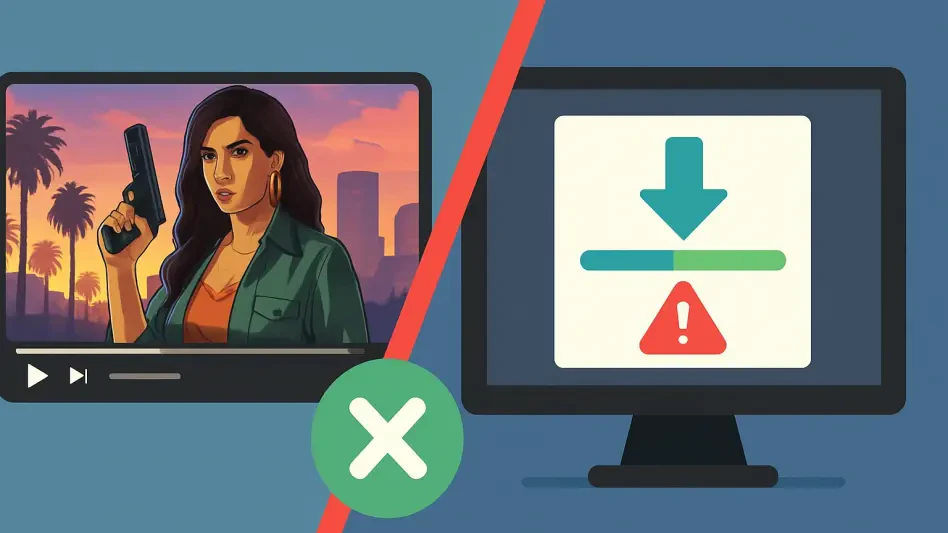
While players expect a flagship release to be enormous, security researchers have identified GTA VI-themed ISO files larger than 100 GB that use padding data to mimic legitimate software. As the gaming world reaches a fever pitch just five days before the scheduled debut of Grand Theft Auto VI, cybercriminals have aggressively stepped into the spotlight with sophisticated social engineering schemes. Security analysts at ESET have flagged an unprecedented volume of malicious downloads masquerading as the highly anticipated title, preying on the impatience and curiosity of the global gaming community. These threats are not merely isolated attempts but represent a coordinated wave of digital traps tailored to the November 19, 2026 launch date. By offering a promise of early access, scammers are effectively convincing users to bypass their own security protocols and manually install dangerous payloads. This surge in malicious activity highlights a critical intersection between pop-culture events and cybersecurity vulnerability, where the desire for entertainment often overrides technical caution. The current landscape is saturated with lures ranging from small installers to massive disk images, all designed to bypass modern security filters and gain a foothold on local systems. Because the hype surrounding this specific release has been building for years, the ground is fertile for exploits that take advantage of every unconfirmed rumor and viral clip currently circulating on social media platforms.
1. Discoveries: Analysis of the ESET and Huntress Reports
The core research presented by security firm ESET highlights a narrow but well-supported trend regarding these malicious distribution tactics. Their analysts detected dozens of malicious files specifically masquerading as GTA VI-related content, suggesting a broad and varied campaign rather than a single rogue file. This distinction is critical because it indicates that threat actors have spent months preparing diverse payloads to see which ones achieve the highest infection rates among different demographics. By using the upcoming release as a high-value lure, these attackers are able to bypass the traditional skepticism that usually accompanies random downloads. The campaign is characterized by its adaptability, with malicious scripts and executables being tweaked constantly to avoid signature-based detection by standard antivirus software. This ongoing evolution makes the situation particularly dangerous during the five-day window leading up to the official launch, as defenders must keep pace with a rapidly changing threat landscape where the payload could be anything from a simple credential harvester to a more destructive form of ransomware.
Adding another dimension to these findings, cybersecurity specialists at Huntress examined a series of disk images that took the opposite approach in terms of file size. While many malware samples are traditionally small to facilitate quick downloads, researchers identified GTA VI-themed ISO files that exceeded 100 GB. This tactic, known as padding, involves filling a file with junk data to make it appear as a legitimate, heavy-duty game installation that players would expect from a modern AAA title. By inflating the container, attackers are able to bypass a common mental check that many tech-savvy users perform—the assumption that a very large file must contain actual game assets rather than just malicious code. This creates a false sense of authenticity that can lead even experienced users to mount the ISO and execute its contents. The dual-pronged approach of deploying both tiny 1.1 MB loaders and massive 100 GB disk images shows that cybercriminals are covering all possible psychological angles to maximize their reach before the Thursday, November 19, 2026 launch date.
2. Analysis: The Impact of Vidar Malware
The file identified as gta6_installer.exe serves as a textbook example of how attackers use familiar naming conventions to disarm their targets. By labeling the executable with the name of the most anticipated game of the decade, the malicious actor ensures that the file appears relevant to the user’s goal of playing the game. However, technical analysis revealed that the file is actually a carrier for the Vidar infostealer, a robust piece of malware designed to extract high-value data from infected hosts. At a size of just 1.1 MB, the file is suspiciously small for a modern game installer, but many users are conditioned to expect small bootstrap launchers that handle the downloading of larger assets later. This expectation is exactly what attackers exploit, allowing the malicious code to run with administrative privileges under the guise of starting a legitimate installation process. Once executed, the malware begins its quiet reconnaissance of the system, searching for specific directories and configurations that contain sensitive user information without triggering immediate system warnings.
The primary objective of the Vidar sample found within this fake installer is the systematic harvesting of user credentials across multiple platforms. Reports indicate that the malware specifically targets three major categories of data: stored passwords, browser autofill records, and FTP credentials. The scope of the attack is particularly extensive, as it is designed to scrape information from 19 different web browsers, ensuring that regardless of which browser the victim uses, their data is at risk. This includes not just passwords but also sensitive autofill data, such as physical addresses and payment details that users save for convenience. The inclusion of FTP credential theft suggests that the attackers are also interested in higher-value targets, such as website administrators or developers who may have stored server access keys on their personal machines. By casting such a wide net, a single successful infection can provide a criminal with a comprehensive profile of the victim’s digital life, which can then be used for identity theft, financial fraud, or secondary attacks on larger corporate networks.
3. Tactic: The Mechanics of File Padding
To counter users who have become savvy enough to check file sizes for authenticity, attackers have adopted a technique known as padding to create an illusion of substance. By filling an ISO or executable file with massive amounts of null data or repetitive strings, they can artificially inflate a small malicious payload into a 100 GB behemoth. This strategy directly targets the logic that a massive file must be legitimate because a hacker would not want to host or distribute such a large amount of data. In reality, modern server infrastructure and high-speed internet connections make it trivial for attackers to serve these oversized files. The padding data is often highly compressible, meaning it takes up very little space on the attacker’s server but expands to its full, deceptive size once it reaches the victim’s hard drive. This trick successfully navigates the psychological barrier of skepticism, as players often associate the massive storage requirements of modern open-world games with the actual presence of high-resolution textures and complex world data.
The effectiveness of this padding tactic proves that file size has officially become an obsolete indicator of software legitimacy. When users rely on size as a sanity check, they are essentially using an easily manipulated metric to make a security decision. If an attacker knows that a victim expects a 100 GB download, providing a file of exactly that size bypasses the user’s critical thinking. This shift in tactics highlights the need for a move toward more reliable verification methods, such as checking cryptographic signatures or verifying the source of the download through official developer channels. The fact that researchers found these padded files in the wild suggests that the strategy is already working, likely leading to numerous infections among those who believed they had found a rare pre-release leak. As games continue to grow in size, the potential for padding to mask malicious code only increases, making it a persistent threat for future high-profile software releases across the entire gaming industry and beyond.
4. Formats: Diverse Scam Strategies Targeting Fans
The variety of scams circulating in the days before launch is staggering, as attackers have developed at least eight distinct formats to trap unsuspecting fans. These range from fake sign-in pages that promise exclusive rewards to fraudulent online shops claiming to sell discounted keys for the game. Many of these lures revolve around the concept of beta or early-access offers, which are particularly effective because they play on the user’s desire to be ahead of the curve. These fraudulent pages often look professionally designed, mimicking the branding and aesthetic of Rockstar Games to build a false sense of trust. In many cases, these sites require the user to provide personal information or complete human verification tasks that are actually designed to generate affiliate revenue for the scammer or install tracking cookies on the victim’s device. By the time the user realizes there is no early access code, their sensitive data has already been harvested and sold to third-party marketing firms or malicious actors on the dark web.
In addition to web-based scams, several formats involve the direct download of malicious files disguised as helpful tools for the game. These include fake game launchers, mobile APKs claiming to be portable versions of the title, and cracks that supposedly bypass digital rights management. There is also a significant rise in fraudulent preload utilities that promise to let users start their download before official storefronts allow it. Each of these formats requires the user to deviate from the official path and grant permissions to unverified software, which is a critical point of failure in digital security. Even cheat software and modding tools, which are popular in the gaming community, are being used as delivery mechanisms for Trojans and other hostile payloads. Because these tools often require users to disable their antivirus software to function properly, they provide a perfect front door for malware to enter a system without being detected. The sheer breadth of these lures ensures that attackers can target a wide variety of users, from those looking for a bargain to those looking for an unfair advantage.
5. Platform: The Risks of Unofficial PC Versions
Rockstar Games has officially confirmed only two platforms for the initial launch of the game: PlayStation 5 and Xbox Series X|S. This specific detail provides a powerful defensive tool for any player attempting to verify the legitimacy of a download. Since there is no official PC version scheduled for the November 19, 2026 release, any file ending in .exe or any installer intended for Windows is an automatic confirmation of a scam. The same logic applies to Android-based APK files, as no mobile version of the game has been announced or even hinted at by the developer. By keeping the launch exclusive to current-generation consoles, Rockstar has unintentionally created a clear boundary that scammers must try to blur. Attackers often claim that their PC downloads are leaked developer builds or internal testing versions, but these claims are consistently used to mask the distribution of information-stealing malware like Vidar. Understanding the confirmed platform list is the fastest way for a user to identify a threat before any data is even downloaded.
The reliance on rumors about a secret PC launch version serves to further complicate the security landscape for average users. Social media influencers and unverified news sites often post speculative content about a surprise PC release, providing the necessary cover for hackers to push their malicious installers. When a user sees a professional-looking website offering a PC download, they may assume the rumors are true and that they have found a legitimate way to play early. However, the technical reality is that a game of this scale cannot be ported or leaked in a playable state for a non-target platform without significant evidence from the developer. Staying grounded in the official facts provided by Rockstar Games is the most effective shield against these platform-based deceptions. Any offer that departs from the console-only reality of the initial launch window should be discarded immediately, regardless of how convincing the website or the file size might appear at first glance.
6. Understanding Digital Distribution Channels: Distinguishing Legitimate Official Stores from Potential Cybersecurity Risks and Unauthorized Sources
The primary distribution routes for these fake downloads include search engine manipulation, unverified torrents, social media platforms, and gaming forums. Search engine optimization is a favorite tool for attackers, who use it to push their malicious landing pages to the top of search results for queries such as “GTA 6 download” or “GTA 6 early access.” Users who click on the first link they see are often led to sophisticated sites that mimic official stores, complete with fake user reviews and high-resolution marketing materials. Torrents are equally dangerous, as they rely on a peer-to-peer trust system that is easily exploited by bad actors who can seed malicious files and use bot accounts to post positive comments. Social media platforms amplify this risk because viral posts can spread malicious links to thousands of people in minutes, often supported by hijacked accounts that add a layer of false credibility to the scam.
Distinguishing these dark channels from official storefronts is a matter of verifying the point of origin for the software, especially since legitimate copies of Grand Theft Auto VI will only be available through the official PlayStation Store and the Xbox Games Store on their respective console platforms. These stores are closed ecosystems that undergo rigorous security vetting for every piece of content they host, making them the only safe environments for acquiring the game. Any download link found on a third-party forum, a social media bio, or a random website is inherently untrustworthy, as it bypasses these established security protocols. Players should also be wary of third-party key resellers who claim to have early stock, as these sites are often used to process fraudulent payments or distribute inactive codes that serve as another entry point for data collection. By adhering strictly to official console marketplaces, users can ensure that they are not only getting a genuine copy of the game but also protecting their hardware and personal information from exploitation.
7. Verification: Technical Steps for Safe Downloading
For users who encounter a suspicious file and wish to verify its contents without risking their system, several technical steps can be taken to identify potential threats. One of the most effective methods is performing a hash check, which involves generating a unique cryptographic signature for the file using tools like PowerShell. By running the Get-FileHash command on a suspicious executable, a user can generate a SHA-256 string that acts as a digital fingerprint for that specific file. This string can then be compared against known malware databases like VirusTotal, which aggregates results from dozens of different antivirus engines. If the hash matches a known malware sample, or if multiple engines flag the file as malicious, it should be deleted immediately. This process allows for a level of verification that goes far beyond simply looking at a file name or its size, providing a clear technical verdict on the safety of the download before it is ever executed.
In addition to file verification, maintaining robust account security is a critical layer of defense against infostealers. Even if a user accidentally runs a malicious file, the damage can be mitigated if they have multi-factor authentication enabled on all their primary accounts, including email and gaming profiles. Infostealers are designed to harvest passwords, but they often struggle to bypass hardware-based or app-based authentication codes that change every thirty seconds. Furthermore, users should move away from relying on browser-based autofill for sensitive information, as this was a primary target for the Vidar malware identified by ESET. Using a dedicated, encrypted password manager provides a much higher level of protection, as these tools do not store credentials in plain-text or easily decodable formats that many browsers use. Combining technical file checks with a modernized approach to credential management creates a defense-in-depth strategy that can withstand even the most sophisticated pre-release scams.
8. Guidance: Protecting Home and Office Networks
Protecting a household or a corporate environment during a major software launch requires a combination of clear communication and proactive technical controls. Parents should take the lead in educating younger gamers about the specific risks associated with the GTA VI release, emphasizing that any PC-based download is a confirmed fake. Setting a simple house rule that all games must be downloaded through the official console store can prevent many common infection scenarios. On a technical level, home network administrators can implement content filtering or update their router’s security settings to block known malicious domains and unverified file-sharing sites. Ensuring that every device on the network has up-to-date antivirus software is also essential, as it provides a final line of defense if a malicious file is accidentally downloaded. By making security a topic of conversation before the launch date, families can enjoy the release without the stress of a potential data breach.
In the corporate world, IT departments must be particularly vigilant during the week of a high-profile release like Grand Theft Auto VI. Employees often use work laptops or mobile devices to search for news or downloads related to the game, which can introduce information-stealing malware into the business network. A single infected machine can lead to the theft of corporate credentials, potentially giving attackers access to sensitive internal data or cloud-based applications. IT teams should issue a timely reminder to staff about the dangers of downloading unverified software on corporate equipment and ensure that managed detection and response services are actively monitoring for behavior patterns associated with infostealers. Implementing strict endpoint protection policies that block the execution of unverified scripts and installers from untrusted sources can significantly reduce the risk of a breach. When organizations treat major pop culture events as potential security triggers, they are much better prepared to handle the surge in malicious activity that inevitably follows.
9. Comprehensive Recovery Procedures and Strategic Approaches for Effectively Addressing and Mitigating Potential Malware Infections Within Your Infrastructure
If a user suspects they have already executed a malicious GTA VI installer, immediate action is required to limit the damage and regain control of their digital identity. The first and most critical step is to disconnect the infected device from the internet to prevent the malware from transmitting any more harvested data to the attacker’s command-and-control server. Once isolated, a full system scan should be performed using a reputable offline security tool to identify and remove the malicious files. However, because information stealers like Vidar focus on data theft rather than system destruction, the removal of the malware itself is only the beginning of the recovery process. The user must assume that every password and piece of autofill data stored on that machine has been compromised and is already in the hands of a malicious actor. This requires a systematic effort to reset credentials for every affected service, starting with the most sensitive accounts such as email, banking, and primary gaming profiles.
The process of resetting passwords must be done from a separate, known-clean device to ensure that the new credentials are not immediately intercepted by the malware on the infected machine. During this recovery phase, it is also essential to review all recent account activity for any unauthorized logins or suspicious transactions. Turning on multi-factor authentication for every service that supports it should be a top priority, as it provides an immediate barrier against anyone trying to use the stolen passwords. For those who had FTP credentials or other professional access keys stored on their machine, it is vital to notify the relevant organizations or service providers so that those access points can be rotated or disabled. This proactive approach to post-infection recovery is the only way to effectively neutralize the long-term threat posed by an infostealer. By treating the infection as a comprehensive data breach rather than a simple technical glitch, victims can successfully protect themselves from the cascading effects of identity theft.
10. Summary: Key Actionable Lessons and Strategic Insights Learned Throughout the Entire Product Launch Process
The surge in malicious activity surrounding the launch of Grand Theft Auto VI served as a stark reminder of the risks inherent in high-profile digital events. Security teams observed that the most effective defenses remained rooted in user awareness and strict adherence to official distribution channels. Those who successfully navigated the pre-launch window did so by ignoring unverified leaks and focusing exclusively on verified console storefronts like those for the PlayStation 5 and Xbox Series X|S. This incident highlighted how easily psychological lures could bypass technical defenses when players were motivated by the promise of early access or free content. Ultimately, the coordinated efforts of researchers at ESET and Huntress provided the necessary visibility to mitigate widespread damage, though the threat persisted through the pivot toward cracks and cheats after the official release date arrived. The experience taught the community that vigilance must be maintained long after the initial hype begins to fade into the background.
In the aftermath of the launch week, cybersecurity professionals identified several key takeaways that influenced future approaches to threat mitigation during major software releases. It became clear that the integration of multi-factor authentication across all gaming accounts was a non-negotiable step for maintaining account integrity in the face of widespread credential harvesting. Organizations also recognized the need for more robust internal communication regarding the dangers of using work devices for personal software searches during periods of high cultural interest. For individual users, the experience reinforced the importance of verifying software origins through cryptographic hashes and trusted digital signatures rather than relying on superficial indicators like file size or community comments. These lessons contributed to a more resilient digital ecosystem, as both developers and players adopted a more skeptical stance toward third-party tools and unofficial downloads. The event ultimately catalyzed a shift toward more secure, centralized distribution models that prioritized user safety over the convenience of unverified third-party platforms.