Recent cybersecurity statistics from early 2026 indicate that even though multi-factor authentication adoption has surged by nearly forty percent, many enterprise implementations remain susceptible to sophisticated credential-stuffing attacks due to architectural oversights. The challenge frequently lies in the reliance on outdated or insecure delivery mechanisms, such as SMS-based codes, which are increasingly vulnerable to SIM-swapping and intercept-oriented phishing. Consequently, developers are turning toward Time-based One-Time Password (TOTP) systems as a standardized, offline, and highly resilient alternative for identity verification. By leveraging the RFC 6238 standard, an application can ensure that the secondary verification step does not depend on external carrier networks or third-party delivery services that might introduce latency or security gaps. Implementing a robust TOTP system requires careful attention to cryptographic storage, rate-limiting, and user experience, particularly during the initial enrollment phase when the shared secret is established. As the threat landscape evolves from 2026 to 2028, the ability to deploy internally managed, high-entropy authentication factors will become a prerequisite for maintaining user trust and regulatory compliance. A secure Flask-based implementation provides the flexibility to integrate these protocols into existing user models while maintaining the high performance required for modern web applications. This guide explores the end-to-end process of building such a system, focusing on technical precision and security best practices to ensure that the final product is both impenetrable to automated bots and intuitive for legitimate human users.
1. Project Initialization: Environment Configuration and Dependency Management
Establishing a clean and isolated project environment is the first critical step toward building a secure authentication system that avoids version conflicts and dependency vulnerabilities. It is a standard practice in 2026 to utilize a virtual environment to manage library requirements, ensuring that the development, staging, and production environments are perfectly synchronized. By creating a dedicated space for the Flask application, developers can pin specific versions of security-critical packages like pyotp and cryptography, which prevents breaking changes from upstream updates that could potentially invalidate existing user secrets. This level of control is essential when dealing with cryptographic functions where even minor changes in default parameters could result in widespread login failures. The initialization process involves setting up a directory structure that separates the core application logic from utility functions and security helpers, fostering a modular architecture that is easier to audit and maintain over long-term development cycles.
The library selection for this project is deliberate, focusing on mature and well-vetted packages that strictly adhere to international security standards. Flask 3.1.3 serves as the lightweight web framework, providing the routing and session management necessary for multi-step authentication flows. To handle the mathematical heavy lifting of the TOTP algorithm, pyotp 2.10.0 is utilized, as it implements the RFC 6238 specification with a high degree of reliability and performance. Furthermore, the qrcode library is required to render the provisioning URIs into scannable images for mobile authenticator apps, while the cryptography package provides the Fernet symmetric encryption needed to protect secrets at rest. Together, these tools form a comprehensive stack that allows for the rapid development of a second-factor authentication layer without compromising on the underlying security principles that protect user identities. Ensuring that these dependencies are tracked in a requirements file allows for reproducible builds and simplifies the deployment process across diverse server environments.
2. Cryptographic Security: Producing Robust Encryption Keys for Storage
Security at the application level starts with the generation of a high-entropy encryption key that serves as the root of trust for all sensitive data stored within the database. For a TOTP system, this key is responsible for encrypting the shared base32 secrets that are generated for each user during the enrollment phase. It is imperative to use a cryptographically secure pseudo-random number generator to produce this key, typically a 32-byte value that is then encoded into a URL-safe string. In a 2026 production environment, this key should never be hardcoded into the source code or committed to version control systems; instead, it must be managed through secure environment variables or a dedicated secret management service. Protecting this key is just as important as protecting the database itself, as any exposure would allow an attacker to decrypt all user TOTP secrets and bypass the multi-factor authentication layer entirely, rendering the additional security step useless against targeted intrusions.
Once the master encryption key is generated, it is utilized within the application through the Fernet implementation provided by the Python cryptography library. Fernet is a specific type of symmetric encryption that guarantees that a message encrypted with it cannot be read or manipulated without the key, providing both confidentiality and integrity. The implementation logic must ensure that the key is loaded into the Flask configuration during the startup sequence, making it available for the utility functions that handle secret encryption and decryption. This architectural choice isolates the cryptographic operations from the rest of the application logic, creating a narrow interface for sensitive data handling. By establishing this foundation early in the development process, the system is prepared to handle user-specific secrets with the highest level of protection, ensuring that even in the event of a database leak, the actual TOTP seeds remain obscured and unusable to unauthorized parties.
3. Secret Generation Logic: Creating Unique and Standardized TOTP Keys
The core functionality of a TOTP system relies on the generation of unique, random base32 strings that serve as the shared secret between the server and the user’s mobile device. This secret must possess sufficient entropy to resist brute-force attacks and should be generated using specialized libraries to ensure it conforms to the expected character sets and lengths defined in security protocols. When a user begins the enrollment process, the system produces this secret and immediately constructs a provisioning URI, which follows the standardized otpauth format. This URI includes metadata such as the issuer name and the user’s account identifier, allowing authenticator applications like Google Authenticator or Microsoft Authenticator to correctly label and organize the account upon scanning. This standardization is vital for interoperability, ensuring that users have the freedom to choose their preferred authenticator app without encountering synchronization or compatibility issues.
Developing the logic for URI construction involves more than just string concatenation; it requires careful encoding of parameters to handle special characters in usernames or email addresses. The pyotp library simplifies this by providing a dedicated method for generating these URIs, which prevents common formatting errors that could lead to unreadable QR codes. Furthermore, the secret generation process must be entirely unique for every user, meaning that no two accounts should ever share the same starting seed. This uniqueness ensures that a compromise of one account’s MFA credentials does not have a cascading effect on other users within the system. As the application generates these values, they are temporarily held in memory until the encryption and storage phases are completed, maintaining a strictly ephemeral existence for the plaintext version of the secret to minimize the window of vulnerability during the registration workflow.
4. Data Integrity: Implementing At-Rest Protection for User Secrets
Storing multi-factor authentication secrets in plaintext within a database is a significant security risk that can lead to catastrophic breaches if the storage layer is compromised. To mitigate this, a robust encryption layer must be implemented to scramble the TOTP secrets before they are committed to the disk. This process involves passing the raw base32 secret through the Fernet encryption utility initialized in the previous steps, resulting in an encrypted token that is safe for storage. When the user later attempts to authenticate, the system retrieves this encrypted token and decrypts it on the fly to perform the necessary verification math. This approach ensures that the actual shared secret is only available in its readable form during the brief milliseconds required for generation or verification, significantly reducing the attack surface and protecting the long-term integrity of the user’s security credentials.
Beyond simple encryption, the storage logic must be designed to handle potential issues such as key rotation and data corruption. If the master encryption key is changed, the application must have a strategy for re-encrypting existing secrets or maintaining legacy keys to avoid locking out the entire user base. Additionally, the database schema should be optimized to store these encrypted strings in a format that preserves their integrity, typically using variable-length character fields that can accommodate the overhead introduced by the encryption process. By treating the TOTP secret with the same level of care as a hashed password, the application demonstrates a defense-in-depth strategy that remains effective even when individual components of the infrastructure are compromised. This rigorous approach to data protection is a hallmark of professional-grade security systems in 2026, providing a high level of assurance to both developers and end-users.
5. The Registration Path: Building Secure API Endpoints for Enrollment
The enrollment phase of a TOTP system is a high-stakes interaction that requires a seamless transition between the backend logic and the frontend user interface. An API route must be established to handle the initiation of the MFA setup, which triggers the generation of the secret and the subsequent creation of a QR code image. This QR code acts as the bridge between the digital secret on the server and the physical device in the user’s hand, allowing for a quick and error-free transfer of complex cryptographic data. Using the qrcode library in conjunction with Python’s io module, the application can generate these images in memory and serve them directly to the client as a PNG stream. This method avoids the need to store temporary image files on the server, which improves performance and eliminates a potential source of data leakage where sensitive QR codes might persist in a cache or temporary directory.
From a user experience perspective, the enrollment endpoint must be protected by existing authentication filters to ensure that only the legitimate account holder can initiate a new MFA setup. The response from the server should not only include the image but also provide clear instructions or metadata that the frontend can use to guide the user through the process. Moreover, the backend should be prepared to handle repeated requests for enrollment, which might occur if a user refreshes the page or encounters a network error. Implementing this route with care ensures that the first touchpoint of the multi-factor system is reliable and secure, setting a positive tone for the user’s security journey. By focusing on a clean API design and efficient image rendering, the enrollment process becomes a frictionless part of the account management suite, encouraging higher adoption rates among the user base and strengthening the overall security posture of the platform.
6. State Control: Managing Pending Versus Active Verification Status
A common failure point in MFA implementations is the immediate activation of the second factor before the user has successfully confirmed they have a working authenticator app. To prevent accidental lockouts, the system must utilize a “pending” state for any newly generated MFA secret, ensuring that the existing login flow remains unchanged until the new factor is validated. This involves adding a specific column or flag in the user database to distinguish between secrets that are fully operational and those that are still in the setup phase. When a user generates a new QR code, the secret is stored in this pending state, allowing them to continue accessing their account with just a password if the MFA setup is interrupted. This design pattern respects the user’s access while moving them toward a more secure state through a controlled and verifiable transition.
Managing this state transition requires logic that can handle expired or abandoned enrollment attempts. For instance, if a user initiates enrollment but never provides a verification code, the system should eventually prune the pending secret to prevent the accumulation of stale data. This also provides an opportunity for the application to prompt the user to retry the setup during their next login session, maintaining a gentle but persistent push toward security. The transition from pending to active status is a decisive action that effectively “locks” the door, and it should only occur after a successful cryptographic handshake has been performed. By strictly controlling this state, the application avoids the support nightmare of users being locked out of their own accounts due to a failed setup, thereby increasing the reliability of the security rollout and reducing the burden on administrative teams.
7. Validation Procedures: Verifying Live Codes and Confirming Setup
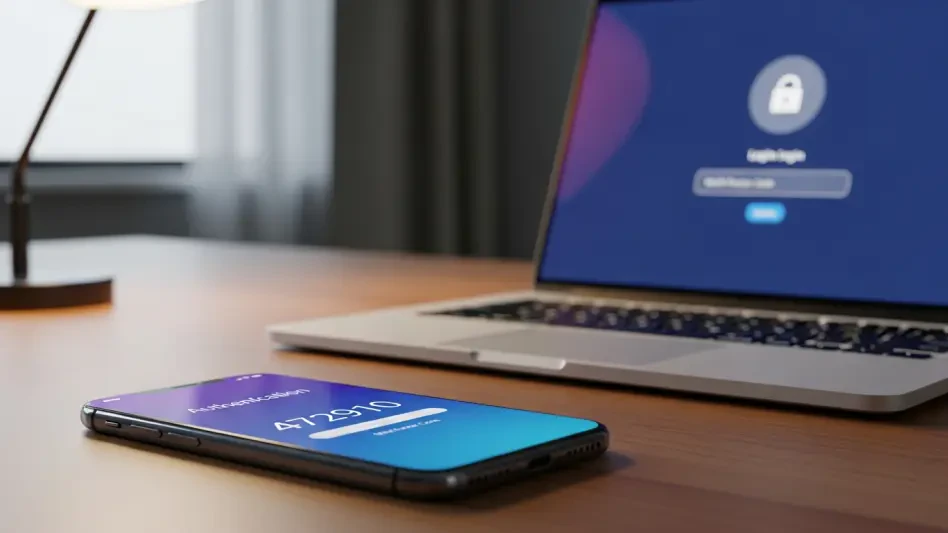
The final confirmation of the enrollment process is a critical verification step where the user enters a six-digit code generated by their mobile app to prove that the setup was successful. This verification logic must pull the pending secret from the database, decrypt it, and compare the user’s input against the current valid code produced by the TOTP algorithm. A key consideration during this phase is the “window” of validity, which accounts for minor time discrepancies between the server’s clock and the user’s device. By allowing a small margin of error—typically one thirty-second step before and after the current time—the system can accommodate slight offsets without significantly compromising security. If the submitted code matches the expected value within this window, the system can confidently promote the secret from its pending state to an active status, officially enabling multi-factor authentication for the account.
Implementing this validation procedure requires careful error handling to provide the user with clear feedback if the code is incorrect. Repeated failures during the confirmation step should not trigger a full account lockout, as the user is still in the process of setting up the feature, but the system should still monitor these attempts for patterns of abuse. Once the code is verified and the MFA is activated, the application should provide a success notification and perhaps a set of recovery codes as a final step in the enrollment workflow. This confirmation is the ultimate proof of work, ensuring that both the server and the client are perfectly synchronized and that the user is capable of producing the required codes for future logins. This meticulous verification process forms the backbone of a dependable MFA system, ensuring that once the feature is turned on, it works exactly as intended every time the user accesses the platform.
8. Login Integration: Developing the Secondary Authentication Workflow
Once multi-factor authentication is active for a user, the login process must be split into a two-stage workflow that maintains a high degree of security between the password check and the final session grant. After the initial password verification is successful, the application identifies that the user has MFA enabled and redirects them to a specialized secondary verification page. This page is responsible for collecting the six-digit TOTP code and submitting it to a dedicated endpoint for final approval. The server-side logic for this endpoint mirrors the validation used during enrollment: it retrieves the active, encrypted secret, decrypts it, and verifies the user’s input against the current time-based code. Only upon a successful match does the application issue a full authentication cookie or session token, effectively completing the login sequence.
This secondary authentication path must be designed to handle a variety of edge cases, such as users who have lost their devices or those who are attempting to bypass the MFA screen by navigating directly to protected URLs. The application must maintain a “partial authentication” state in the session, which indicates that the password was correct but the second factor is still pending. Any attempt to access sensitive resources while in this partial state should be rejected and redirected back to the MFA verification screen. This isolation ensures that the presence of a correct password alone is insufficient to gain access to the account, which is the primary goal of any multi-factor strategy. By integrating this workflow deeply into the existing authentication framework, the developer creates a cohesive and resilient defense that significantly raises the barrier for unauthorized entry.
9. Session Security: Maintaining Isolation Until Final Authentication
The integrity of the multi-factor authentication process depends heavily on the strict isolation of user sessions until all verification steps are completed. In a well-structured Flask application, this means that the standard login session should not be fully populated with user privileges until the TOTP code has been successfully validated. Instead, a temporary, restricted session or a “pre-auth” token should be used to track the user’s progress through the login stages. This approach prevents a scenario where an attacker might exploit other parts of the application using a partially authenticated session. By ensuring that the session only becomes “authorized” after the second factor is confirmed, the system maintains a clear boundary between anonymous users, partially verified users, and fully authenticated individuals, which is a fundamental requirement for modern web security.
To enforce this isolation, developers often implement custom decorators or middleware that check for the presence of a specific MFA-verified flag in the user’s session data. Any route that requires a logged-in user should also verify that this flag is set if the user has MFA enabled. This defensive programming technique provides a safety net that covers the entire application, preventing accidental leaks of sensitive information to users who have only cleared the first hurdle of authentication. Furthermore, the session should be configured with appropriate security attributes, such as “HttpOnly” and “Secure” flags, and a reasonably short expiration time to minimize the risk of session hijacking. By treating the transition from a partial to a full session as a high-stakes event, the application ensures that the additional security provided by TOTP is not undermined by weak session management or architectural oversights elsewhere in the codebase.
10. Recovery Mechanisms: Generating and Storing Secure Backup Codes
A common challenge with TOTP systems is the risk of a user losing access to their mobile device, which can lead to a permanent lockout if no recovery options are provided. To solve this, the application should generate a set of one-time-use backup codes during the initial MFA enrollment process. these codes are typically random hex strings that can be entered instead of a TOTP code to bypass the second-factor requirement. It is crucial to treat these codes with the same level of security as passwords; they should be hashed using a strong algorithm like Argon2 or BCrypt before being stored in the database. This ensures that even if the database is compromised, an attacker cannot easily retrieve and use these recovery codes. When a user uses a backup code to log in, that specific code must be immediately invalidated or deleted to prevent reuse, maintaining the “one-time” nature of the recovery mechanism.
During the enrollment flow, the application should present these codes to the user and emphasize the importance of storing them in a safe location, such as a physical safe or a password manager. Some systems go as far as requiring the user to download a text file containing the codes before allowing them to complete the MFA setup. This proactive approach ensures that the user is prepared for potential device loss from the moment they enable the feature. From a developer’s perspective, implementing a clean interface for backup code usage is essential for reducing the volume of support tickets related to account recovery. By providing a self-service way to regain access, the system empowers users to manage their own security while maintaining the high standards required for protected environments. This balance of security and usability is key to a successful long-term rollout of multi-factor authentication across a diverse user base.
11. Defensive Architecture: Applying Rate Limiting and Brute-Force Prevention
Because TOTP codes are only six digits long, they are theoretically susceptible to brute-force attacks if a verification endpoint is left unprotected and allows unlimited attempts. To counter this, the application must implement strict rate-limiting and lockout policies specifically for the MFA verification route. A common strategy in 2026 involves tracking the number of consecutive failed attempts for a given user ID and temporarily blocking further tries after a specific threshold, such as five failures within a fifteen-minute window. This approach makes it mathematically impossible for an attacker to guess a valid code before it expires, as the number of attempts they can make is far lower than the one million possible combinations. Rate limiting should be applied at both the IP level and the account level to protect against distributed attacks that attempt to bypass simple IP-based blocks.
Implementing this defensive layer can be done using Flask extensions or through custom logic that interacts with a fast storage backend like Redis to track attempt counts in real-time. The lockout mechanism should be transparent to the user, providing a clear message about why they are blocked and when they can try again. However, the system must also be careful not to reveal too much information that could be used for account enumeration. For instance, the timing of the response should remain consistent regardless of whether the user exists or has MFA enabled. By building these protections directly into the authentication flow, the developer creates a system that is resilient to both automated bots and persistent human attackers. This focus on defensive architecture ensures that the TOTP implementation remains a reliable barrier even when under heavy, coordinated assault.
12. Security Monitoring: Auditing Authentication Events and Lockout Patterns
The final component of a mature MFA system is the implementation of comprehensive monitoring and auditing to track the health and security of the authentication flow. Every successful login, failed MFA attempt, and account lockout should be logged with relevant metadata, such as timestamps, IP addresses, and user identifiers. These logs are invaluable for identifying broader security trends, such as a sudden spike in failed attempts that might indicate a credential-stuffing campaign or a targeted attack on a specific user. In a 2026 production environment, these logs are often fed into automated security information and event management systems that can trigger alerts or even adjust security policies dynamically based on observed patterns. This proactive monitoring allows administrators to respond to threats before they result in a successful breach, providing an extra layer of visibility into the system’s operational security.
Effective auditing also includes the regular cleanup of security data, such as resetting failed attempt counters after a successful login or purging old logs according to data retention policies. This ensures that the system does not become bogged down by historical data and remains focused on current threats. In conclusion, the development and deployment of a secure TOTP MFA system was successfully completed by following a rigorous, step-by-step methodology that prioritized cryptographic integrity and defensive programming. The resulting architecture provided a powerful defense against modern identity-based attacks while maintaining a user-friendly experience. Developers who integrated these practices into their Flask applications found that they could significantly reduce the risk of account takeovers and build a more resilient platform for the years ahead. By continually auditing and refining these processes, organizations ensured that their security measures evolved alongside the changing digital landscape, maintaining a steadfast commitment to protecting user data and system integrity.