
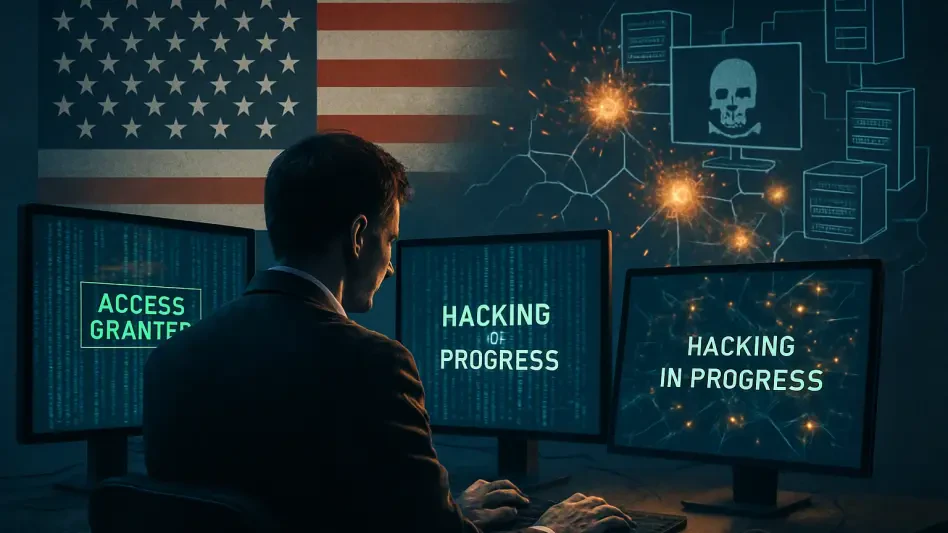
The Trump administration’s recent memorandum has effectively dismantled a long-standing federal policy by authorizing private corporations to launch offensive cyber operations. This shift represents a seismic change in how the United States conceptualizes digital sovereignty, moving away from a purely defensive stance that has defined the last two decades. By granting vetted commercial entities the legal authority to transition from passive shield-bearing to active disruption, the government aims to address a multi-billion-dollar ransomware epidemic that federal agencies alone have struggled to contain. These private-sector hack back operations are designed to penetrate the digital infrastructure of foreign criminal organizations, sabotaging their servers and monitoring their communications before they can deploy malicious payloads against American critical infrastructure. While proponents argue this leverages the agility of Silicon Valley to combat sophisticated threat actors, it marks the first time in modern history that the state’s monopoly on offensive force has been so explicitly delegated to profit-driven corporations. The move fundamentally redefines the relationship between public security and private enterprise, setting the stage for a new era of digital engagement where the boundaries between law enforcement, corporate self-defense, and international espionage are increasingly indistinguishable.
Administrative Safeguards: The Regulatory Framework of Private Offensive Action
To prevent the digital equivalent of the Wild West, the Department of Justice and the Department of Homeland Security have established a rigid administrative framework that demands unprecedented transparency from participating firms. Every proposed operation must undergo a rigorous review process, requiring dual-agency directors to provide explicit, time-limited written approval before a single packet is sent toward a foreign target. This ensures that the federal government maintains a “kill switch” over any private action, effectively keeping these companies on a short leash. Furthermore, eligibility is restricted to a select group of cybersecurity firms that have passed exhaustive background checks and demonstrated technical capabilities that rival mid-tier intelligence agencies. These companies are required to post significant financial bonds, often exceeding $1 million, which serve as a powerful deterrent against procedural violations or unauthorized mission creep. If a company deviates from the pre-approved rules of engagement, these funds are subject to immediate forfeiture, providing a financial mechanism for accountability that complements traditional legal sanctions.
The memorandum also establishes a series of operational “red lines” to ensure that private cyber actions do not inadvertently trigger physical violence or violate foundational human rights. Participating firms are strictly forbidden from targeting systems that could lead to loss of life, serious physical injury, or the destruction of essential civilian infrastructure, such as power grids or hospitals. The guidelines clarify that no operation should reach the threshold of an “armed attack” under international law, maintaining a distinction between corporate sabotage and state-led warfare. Additionally, the policy mandates immediate self-reporting; if a firm discovers that its activities have accidentally impacted a domestic server or compromised the privacy of a U.S. person, they must cease operations instantly and notify the Cybersecurity and Infrastructure Security Agency. These safeguards are designed to protect constitutional rights and minimize collateral damage, ensuring that the pursuit of foreign criminals does not come at the expense of American legal standards or global humanitarian principles.
Pragmatic Deterrence: Leveraging Corporate Agility Against Global Crime
Supporters of this policy argue that the traditional “defense-only” model of cybersecurity has failed to keep pace with the rapid evolution of transnational criminal networks. For years, American corporations have watched helplessly as foreign actors exfiltrated intellectual property and locked down critical databases with ransomware, often with total impunity. By allowing companies to strike back, the administration is effectively expanding the national defense perimeter, utilizing the specialized talent and deep technical resources of the private sector. This pragmatic approach acknowledges that federal agencies, despite their immense power, lack the manpower to monitor every corner of the dark web or disrupt every burgeoning botnet. Proponents suggest that a proactive stance creates a meaningful deterrent; once cybercriminals realize that their own infrastructure is at risk when they target American interests, the cost-benefit analysis of their operations changes significantly. This shift turns the private sector into a secondary layer of national security, capable of reacting with a speed and flexibility that is often bogged down by the bureaucracy of large military or intelligence organizations.
Furthermore, the integration of private-sector offensive capabilities is seen as a necessary response to the rise of AI-powered autonomous threats that operate at speeds far beyond human intervention. American technology companies are often at the forefront of artificial intelligence development, and empowering them to use these tools offensively allows for the rapid identification and neutralization of malicious code before it can propagate across global networks. By creating a “coalition of the willing” among top-tier tech firms, the government can facilitate a more dynamic and decentralized response to digital aggression. This strategy prioritizes the immediate protection of economic assets and personal data by allowing those most affected by cybercrime to play an active role in their own defense. Instead of waiting for a federal investigation that might take months or years to yield results, companies can now take immediate, sanctioned steps to dismantle the command-and-control servers used by their attackers, providing a tangible sense of agency to the victims of digital extortion and fraud.
The Attribution Trap: Unintended Consequences of Digital Sabotage
A primary concern among national security skeptics is the “deconfliction dilemma,” which arises when private hackers inadvertently interfere with sensitive, long-term intelligence operations conducted by the NSA or U.S. Cyber Command. Cyberspace is a crowded and opaque environment where multiple actors often target the same infrastructure for different reasons. If a private firm launches a sabotage operation against a ransomware gang’s server, they might unknowingly destroy a backdoor that federal agents spent years installing to monitor high-priority state actors. The memorandum attempts to address this by requiring coordination, but the logistics of sharing classified operational data with private contractors present a massive security risk in itself. There is a very real danger that these private actions could blow the cover of federal assets, leading to the loss of critical intelligence and potentially endangering the lives of operatives in the field. This lack of clear visibility into the overlapping digital battlefield makes the delegation of offensive power a high-stakes gamble that could undermine established national security objectives.
Beyond the logistical hurdles of coordination lies the “attribution trap,” where the lines between independent criminal groups and state-sponsored proxies are intentionally blurred. Many of the most prolific cybercrime syndicates operate out of jurisdictions where they enjoy the protection, and sometimes the direct cooperation, of foreign intelligence services. If a U.S. corporation launches a retaliatory strike against a group it believes is a simple criminal enterprise, it may actually be hitting a branch of a foreign military or an auxiliary of a hostile state. Such an incident could be interpreted as an act of state-sanctioned aggression by the United States government, leading to a rapid and dangerous escalation of geopolitical tensions. The difficulty of achieving 100 percent certainty in digital attribution means that private companies, lacking the diplomatic nuance and strategic restraint of government agencies, could accidentally ignite a major international crisis. This risk is amplified by the fact that foreign adversaries may use these private operations as a pretext for their own retaliatory strikes against American civilian and government targets.
International Law: Reviving Digital Privateering and Global Norms
The authorization of private offensive cyber operations poses a significant challenge to the established international legal order and the norms of responsible state behavior. Historically, the global community has spent centuries moving away from the era of privateering, where states issued letters of marque to private ship owners to attack enemy commerce. By reviving this concept in the digital realm, the United States risks being seen as a revisionist power that is willing to discard long-standing prohibitions against non-state actors exercising the state’s monopoly on force. This move could provide a convenient justification for other nations, including those with less transparent legal systems, to authorize their own “privateers” to target American businesses and government agencies under the guise of self-defense. Such a development would likely lead to a fragmented and more volatile internet, where the rule of law is replaced by a cycle of constant, unregulated digital skirmishes that threaten the stability of the global economy.
Under the principle of state responsibility in international law, a country is held legally accountable for the actions of private entities when those entities act under its instructions, direction, or control. This means that if a U.S.-vetted firm accidentally disrupts the critical infrastructure of an allied nation or causes significant economic harm to a neutral third party, the United States government could be held liable in international courts. The memorandum’s focus on economic mitigation for domestic companies may come at the high cost of diplomatic isolation and the erosion of international legal frameworks that the U.S. has spent decades building. Critics argue that by prioritizing the immediate needs of the private sector over the long-term preservation of global norms, the administration is undermining the very stability that American businesses require to thrive. The shift signals a move toward a more transactional and unilateral approach to cyber sovereignty, which may ultimately leave the United States more vulnerable to collective international condemnation and retaliatory legal actions.
Future Trajectories: Establishing a Sustainable Model for Cyber Engagement
The path forward required a fundamental reassessment of how digital sovereignty was managed at the intersection of public policy and private enterprise. To address the inherent risks of escalation, the industry began to implement advanced blockchain-based verification systems to ensure that attribution was not just a guess, but a mathematically verifiable fact before any offensive action was taken. These technological solutions were integrated into the DOJ’s approval workflow, creating a digital audit trail that allowed for total transparency and post-operation accountability. This move was essential because it mitigated the “attribution trap” and provided a clear record that could be shared with international partners to justify actions taken against criminal networks. The implementation of these high-fidelity tracking tools represented a significant step toward professionalizing private-sector engagement in the digital theater, moving away from the era of opaque and uncoordinated retaliation.
In the final analysis, the success of this policy was measured by its ability to foster a new culture of “responsible cyber citizenship” among major technology firms. The government eventually moved toward a model where the focus was not just on sabotage, but on the collaborative dismantling of the underlying financial and technical ecosystems that supported global cybercrime. This involved the creation of independent, multi-lateral auditing bodies that reviewed private operations to ensure they remained within the bounds of international law and humanitarian standards. By shifting the goal from individual corporate revenge to a broader objective of systemic disruption, the policy provided a blueprint for how states could leverage private innovation without sacrificing geopolitical stability. The lessons learned during this period emphasized that while the private sector brought much-needed speed and technical depth, the ultimate responsibility for national security remained a collective endeavor that required constant oversight, rigorous ethical standards, and a commitment to global cooperation.