
The Digital Transformation: Navigating Industrial Vulnerability
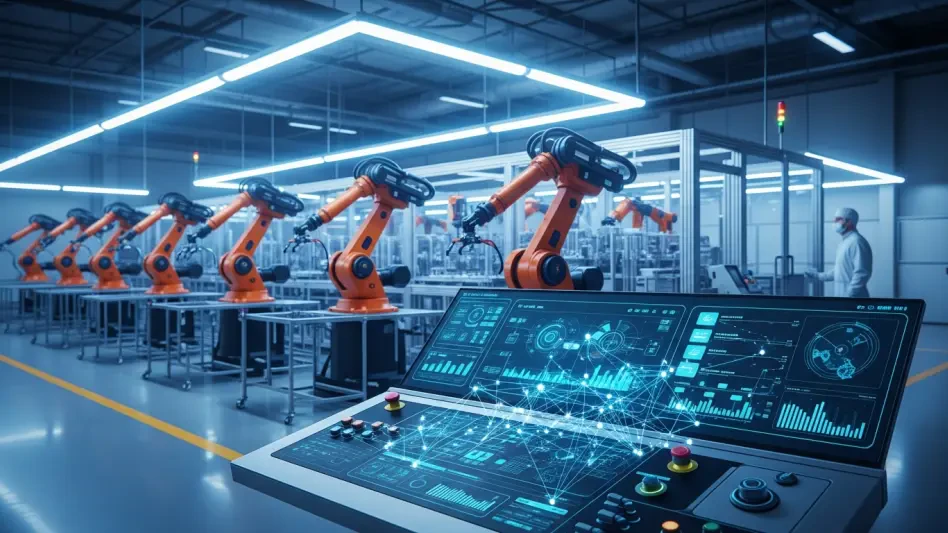
The rhythmic hum of a modern factory floor once represented the undisputed heartbeat of global economic stability, but today that sound is increasingly overshadowed by the silent, invisible threat of digital sabotage. As the manufacturing sector accelerates its integration of interconnected technologies to maximize throughput and efficiency, it has inadvertently repositioned itself as a central theater in the theater of modern cyber warfare. The risk profile for industrial organizations has undergone a fundamental transformation, shifting away from the localized theft of intellectual property and toward the direct, remote manipulation of physical machinery. This evolution indicates that the factory floor is no longer a protected island but a vulnerable node in a vast, global digital network where every sensor, controller, and robotic arm serves as a potential entry point for hostile actors.
The escalating risks facing the manufacturing industry are fueled by a dangerous convergence of geopolitical maneuvering and relentless criminal opportunism. Nation-state actors now view industrial disruption as a strategic tool for exerting pressure during times of tension, while criminal syndicates recognize that the high cost of downtime makes manufacturers ideal targets for high-stakes extortion. This analysis examines the current state of industrial vulnerability, tracing the path from legacy isolation to the modern, interconnected environment. By exploring the specific mechanics of nation-state campaigns and the persistence of ransomware, this discussion provides a comprehensive view of the threats that now endanger the global supply chain. Protecting the future of production requires a deep understanding of these shifting dynamics and a commitment to new, resilient defensive strategies.
From Traditional Assembly: The Shift to Digital Target Practice
Historically, the manufacturing sector relied on a concept known as “air-gapping” to protect its most sensitive operations. Operational Technology and Industrial Control Systems were physically separated from the internet and standard corporate IT environments, creating a perceived barrier that was difficult for remote attackers to bridge. During this era, industrial security focused primarily on physical safety and the prevention of unauthorized on-site access. The systems governing assembly lines, chemical processing, and heavy fabrication were designed for longevity and reliability rather than digital resilience, often running on proprietary protocols that were largely unknown to the broader world of cybercriminals.
The arrival of Industry 4.0 and the Industrial Internet of Things dismantled these historical protections in favor of unprecedented connectivity. To remain competitive, manufacturers integrated their factory floors with cloud-based analytics, remote monitoring systems, and real-time supply chain management tools. While these advancements revolutionized productivity and reduced operational costs, they also exposed legacy hardware to the modern threat landscape. Many of the controllers still in use today were installed decades ago and lack the foundational security features necessary to defend against sophisticated exploits. This bridge between digital code and kinetic action means that a vulnerability in a corporate email system can now lead to a physical shutdown of a production facility halfway around the world, making the legacy of industrial isolation a relic of the past.
Mapping the Landscape: The Architecture of Modern Cyber Threats
The Geopolitical Pivot: Nation-State Ambitions and Operational Control
Manufacturing has emerged as a primary target for nearly half of all tracked Advanced Persistent Threat campaigns, signaling a strategic shift in how nation-states approach cyber conflict. Countries like China, Iran, and North Korea have moved beyond simple espionage and are now actively probing industrial networks for structural weaknesses that can be exploited for strategic advantage. These actors are less interested in temporary financial gain and more focused on establishing “host-level” access. Such access allows an adversary to remain dormant within a system for months or even years, waiting for a moment of geopolitical tension to trigger a coordinated shutdown of essential production capabilities.
Recent intelligence highlights a surge in activity from groups such as the Iran-linked CyberAv3ngers, which have demonstrated a specialized ability to target thousands of exposed industrial devices simultaneously. These campaigns often focus on critical infrastructure and specialized manufacturing nodes that are essential to the broader economy. By gaining control over the devices that regulate pressure, temperature, or motion, these state-sponsored entities can cause lasting damage to physical equipment that is expensive and time-consuming to replace. This represents a new era of warfare where the objective is to degrade a nation’s industrial capacity from a distance, turning the efficiency of the modern supply chain into a significant strategic liability.
The Ransomware Siege: Financial Extortion and Operational Persistence
While nation-states look toward long-term strategic goals, criminal syndicates are engaged in a relentless campaign of financial extortion that has made manufacturing the second most targeted industry globally. Groups like Akira and Qilin have developed a sophisticated understanding of the manufacturing business model, specifically targeting the industry’s extreme intolerance for operational downtime. For a factory, every hour of lost production can equate to millions of dollars in liquidated damages and lost revenue. Attackers exploit this pressure by deploying ransomware that encrypts critical operational data and shuts down production management systems, forcing companies into a desperate position where paying a ransom seems like the only path to survival.
Current data suggests a sustained elevated baseline of ransomware activity, with over twelve percent of all global victims coming from the manufacturing sector. These criminal groups are no longer just casting wide nets; they are performing detailed reconnaissance to identify the most critical points of failure within a specific organization’s network. Subsectors such as food and beverage production and heavy machinery fabrication have been particularly hard-hit, as their complex supply chains mean that a single disruption can have a massive ripple effect. The professionalization of these criminal enterprises, which often operate as “ransomware as a service” providers, has lowered the barrier to entry for attacking sophisticated industrial targets, creating a constant state of siege for manufacturing IT and OT teams.
Technical Vulnerabilities: Boundary Devices and Global Risk Expansion
The technical landscape of industrial risk is increasingly defined by vulnerabilities in “boundary devices” that sit at the intersection of office networks and the factory floor. These pieces of hardware, such as firewalls and remote access gateways, are designed to protect the production environment but often become the very gateway that attackers exploit. Recent campaigns have targeted flaws in widely used appliances to harvest millions of credentials, providing attackers with a “golden ticket” to bypass traditional security perimeters. Once an attacker gains access to these credentials, they can move laterally from a compromised corporate account into the highly sensitive systems that control industrial robotics and fabrication equipment.
This risk is not confined to a single geographic region but is expanding across the global manufacturing landscape. While the United States remains a primary focus for many threat actors, there is a notable increase in sophisticated attacks targeting industrial hubs in Germany, the United Kingdom, and Turkey. This global expansion is partly driven by the discovery of flaws in specialized software such as Robot OS, which is used to manage industrial robots in countless facilities worldwide. As attackers refine their techniques for interacting with these specialized operating systems, the potential for “physical” cyber-attacks grows. Misconceptions that industrial systems are too obscure to be hacked are being rapidly dispelled by the reality of a globalized threat economy that values any access to the backbone of production.
Projecting the Horizon: The Next Phase of Industrial Conflict
Looking toward the immediate future, the manufacturing sector must prepare for a period where the volume and sophistication of attacks will continue to rise. Current trends suggest that hundreds of new industrial organizations will be targeted every quarter, as the tools once reserved for elite nation-state hackers become accessible to a wider range of criminal actors. This “democratization” of cyber weaponry means that even smaller manufacturers, which may lack the robust security budgets of multinational corporations, will find themselves in the crosshairs. The focus of these attacks will likely shift further toward the permanent destruction or “bricking” of hardware, where digital exploits are used to cause physical failures that cannot be repaired through software updates alone.
The regulatory environment is also expected to undergo a significant shift as governments recognize the link between manufacturing stability and national security. We will likely see the introduction of mandatory cybersecurity standards for industrial operators, similar to those seen in the energy and financial sectors. These regulations may require manufacturers to demonstrate a certain level of resilience and to report all significant digital incidents to central authorities. Additionally, the role of artificial intelligence in both launching and defending against attacks will become more prominent. While attackers will use AI to automate the discovery of vulnerabilities in complex industrial code, defensive systems will increasingly rely on machine learning to identify the subtle anomalies in machine behavior that signal a compromise in progress.
Strengthening the Shield: Actionable Resilience for Modern Manufacturers
To survive in this high-pressure environment, manufacturers must abandon the traditional “castle-and-moat” security model in favor of a more dynamic and layered approach. The most effective strategy for the modern factory is the adoption of Zero Trust principles specifically adapted for Operational Technology. Under a Zero Trust framework, no user or device is granted automatic access to the network; instead, every request must be continuously verified based on identity, location, and device health. This prevents an attacker who has compromised a front-office workstation from easily moving into the controllers that manage a multi-million-dollar assembly line. Segmenting IT and OT networks remains a top priority, ensuring that even if one part of the organization is breached, the infection can be contained before it impacts physical production.
Beyond technical controls, manufacturers must prioritize the lifecycle management of their edge devices and legacy hardware. Regular patching of firewalls and remote access systems is no longer optional but a core requirement for operational uptime. For legacy equipment that cannot be patched, businesses should implement compensating controls such as industrial intrusion detection systems that monitor network traffic for signs of unauthorized commands. Furthermore, building a culture of cybersecurity awareness among shop-floor workers is essential, as human error remains a primary vector for initial access. By integrating cybersecurity into the broader framework of workplace safety and operational excellence, manufacturers can build a resilient infrastructure that is capable of withstanding the complexities of modern digital warfare.
Final Assessment: A New Reality for Global Production
The comprehensive evaluation of the industrial landscape confirmed that manufacturing transitioned into a primary front line for global cyber warfare. This analysis established that the convergence of nation-state strategic ambitions and aggressive criminal extortion created a permanent baseline of risk that threatened the stability of the global supply chain. It was observed that the historical isolation of factory systems became an obsolete concept, replaced by a reality where digital vulnerabilities translated directly into kinetic disruption. The evidence demonstrated that the most significant threats originated at the intersection of corporate and industrial networks, where boundary devices often failed to provide the necessary protection against credential harvesting and remote code execution.
The investigation into the ransomware crisis revealed that the industry’s low tolerance for downtime was systematically exploited by sophisticated syndicates, leading to a sustained period of operational instability. Furthermore, the expansion of these threats into new geographic markets signaled that no manufacturing hub was immune to the reach of modern attackers. It was determined that the only viable path forward involved a fundamental shift in how industrial security was managed, moving toward the adoption of Zero Trust models and rigorous network segmentation. This assessment highlighted that the survival of global production now depended on the ability of manufacturers to treat digital resilience as a strategic necessity. Ultimately, the lessons learned from this period of intense conflict provided a clear mandate for the future: the protection of the factory floor was no longer just a technical task, but a foundational requirement for economic and national security.