
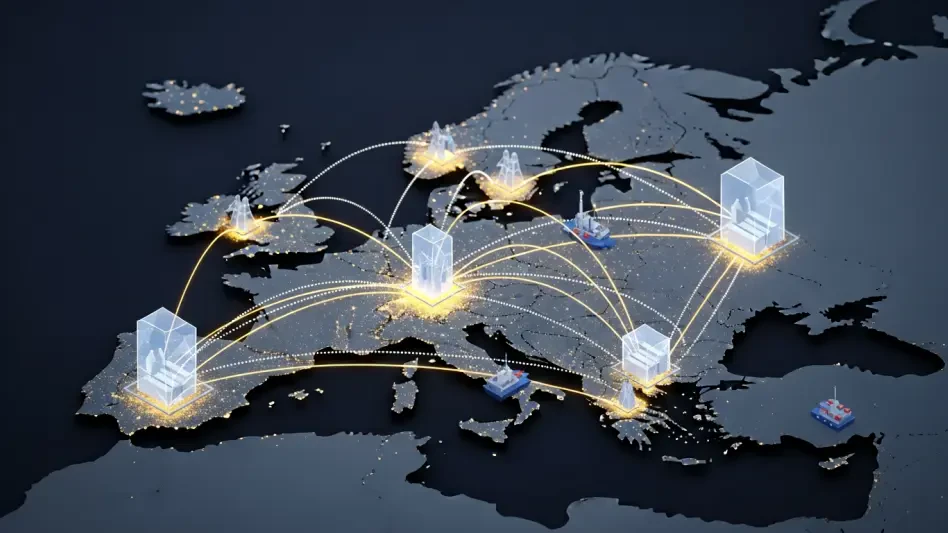
The rapid transformation of cyber conflict from stealthy intelligence gathering to the direct sabotage of essential services has forced European nations to rethink their entire defensive posture. This new era of hybrid warfare moves beyond traditional borders, specifically targeting the digital foundations of energy, logistics, and healthcare systems across the continent. By exploiting the architectural differences between nations, these maneuvers aim to disrupt the daily operations of modern society and test the collective resilience of the European Union. Adversaries are no longer content with merely stealing secrets; they now seek to hold the functional mechanics of civilian life hostage. Whether through the manipulation of power grids or the freezing of financial clearinghouses, the objective is to create a state of perpetual instability that undermines public confidence in democratic institutions. As these threats evolve, the distinction between a technical glitch and a state-sponsored attack has blurred, making the readiness of regional infrastructure the primary focus of national security experts.
Centralized Vulnerabilities: The British Model
Digital Concentration: Addressing High-Stakes Hazards
In the United Kingdom, the primary security challenge stems from a highly integrated digital framework that consolidates vital sectors into a few dominant platforms. This concentration risk creates national points of failure, where a single breach of a major cloud provider or service management entity can paralyze everything from financial markets in London to the National Health Service. The efficiency gained through centralization has inadvertently created a massive surface area for attackers to exploit with a single, well-placed strike. If a core identity management system or a primary database hosting sensitive citizen records is compromised, the ripple effects extend far beyond the immediate target, potentially halting government operations for weeks. Security analysts have observed that this architecture allows for a cascade of failures, where the collapse of one system triggers a domino effect across interconnected services. Consequently, the reliance on a handful of tech giants for core infrastructure has become a strategic liability that requires a radical shift.
Infrastructure Security: Protecting National Data Hubs
Recent surges in significant incidents have prompted the British government to officially classify data centers as critical infrastructure, reflecting the high stakes involved in protecting military programs and public administration. This designation allows for stricter oversight and the implementation of mandatory security protocols that were previously voluntary for private operators. By treating these facilities with the same level of priority as water or power plants, the state can mandate higher tiers of physical and digital shielding. Furthermore, the focus has shifted toward securing the soft underbelly of public service, such as the logistics chains that supply hospitals and the communication links between local government offices. Protecting these assets involves not just firewalls, but also deep behavioral analytics to detect anomalous patterns that suggest a sophisticated actor is moving laterally within the network. As the digital landscape becomes more volatile, the integration of military-grade encryption and real-time monitoring has become essential to ensuring that the state remains operational.
Decentralized Risks: The Mediterranean Front
Fragmented Networks: Navigating Italian Infrastructure
Italy presents a contrasting vulnerability through its fragmented network of thousands of public and private entities, many of which lack mature security protocols. The maritime sector has become a particularly sensitive target, as the interdependence of port systems in Trieste and Genoa allows attackers to use minor digital platforms as entry points for lateral movement across the logistical chain. Unlike the centralized British model, the Italian risk is distributed across a multitude of small-scale operators who often lack the resources for comprehensive defense. By disrupting gate controls or cargo documentation rather than physical assets, adversaries can trigger massive economic congestion and stall both commercial trade and military mobility. This method of attack exploits the weakest link in a chain where every participant is connected, meaning a breach at a small trucking company can eventually lead to the shutdown of a major shipping terminal. The complexity of these networks makes attribution difficult and recovery slow, as investigators navigate a labyrinth of systems.
Transnational Defense: Coordinating Integrated Responses
As Europe diversified away from Russian energy supplies, Moscow pivoted toward cyber-sabotage as a primary tool for geopolitical leverage and energy blackmail. While major operators often possessed robust defenses, the true danger resided in the periphery, such as local distributors and maintenance contractors using legacy industrial systems. These targeted strikes, along with ransomware attacks on regional hospitals and municipalities, were designed to drain state resources and erode public trust, effectively weakening the social fabric of European nations from within. To counter these threats, European nations initiated a move toward phishing-resistant authentication and stricter supplier vetting processes. Collaborative efforts between NATO and the European Union were strengthened to close operational gaps that previously provided state-sponsored actors the space to maneuver. These integrated responses ensured that the transnational operating systems underpinning security and economic stability were shielded by a unified and proactive defense strategy.