By pooling technical indicators from various carriers, the proposed interagency group aims to pinpoint the unusually frequent card swapping associated with Russian sabotage operations. This initiative emerged as a direct response to a persistent security vulnerability where hostile actors utilize Ukrainian SIM cards within GSM and LTE modems to facilitate the remote guidance of equipment and coordinate precision drone strikes. Currently, individual service providers operate within silos, seeing only the data traffic that crosses their specific infrastructure, which makes it nearly impossible to detect sophisticated patterns where cards are rotated across multiple networks to evade suspicion. The Internet Association of Ukraine recognized that without a unified view, these micro-anomalies would continue to slip through the cracks of national defense. By centralizing this data, the state can transform isolated digital breadcrumbs into a coherent map of enemy activity, effectively blinding the remote operators who rely on the local commercial cellular network to conduct their clandestine missions across the territory.
Collaborative Monitoring: The New Standard for Digital Sovereignty
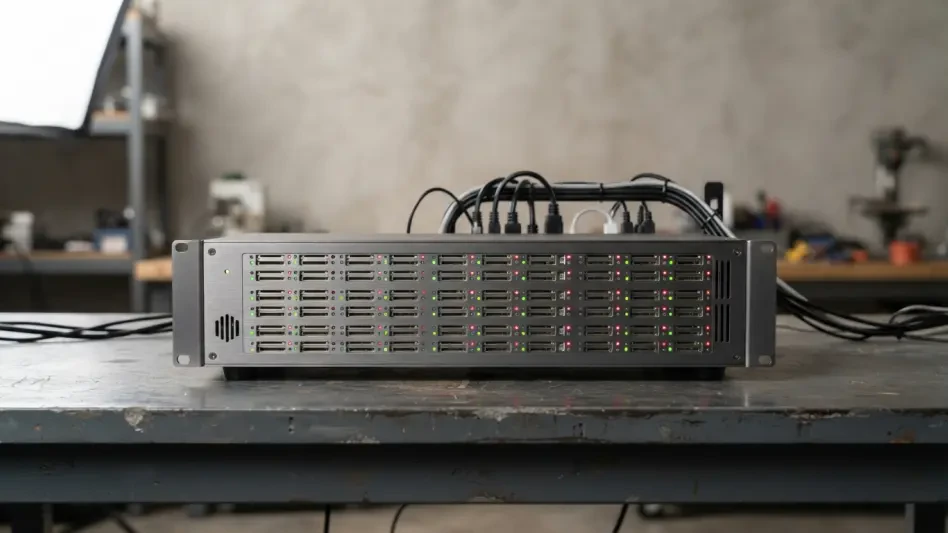
The proposed architecture for this security framework centers on a high-level interagency working group that brings together the Ministry of Digital Transformation, the Security Service of Ukraine, and the country’s primary mobile network operators. This group functions as a clearinghouse for technical indicators that, when viewed in isolation, might appear benign but take on a different character when aggregated across the national spectrum. For instance, the system monitors for the simultaneous activation of large batches of subscribers in sensitive geographic zones or the physical presence of dozens of different SIM cards within a single hardware device. These behaviors are hallmark signs of a “SIM box” or a remote-controlled relay station used by saboteurs to mask their communications. By establishing a shared repository of these technical fingerprints, the defense community can respond with surgical precision, allowing for the rapid identification of compromised hardware without the need for broad, indiscriminate network shutdowns that could hinder the civilian population.
A critical challenge in refining this surveillance model involves the precise differentiation between legitimate machine-to-machine traffic and the malicious signals sent by hostile actors. In the current landscape of 2026, millions of automated systems, ranging from agricultural sensors to municipal energy grids, utilize Internet of Things connections to maintain essential services. The interagency group developed sophisticated algorithms designed to filter out these predictable, low-bandwidth business processes, ensuring that the wheels of the domestic economy continue to turn without interruption. By analyzing the frequency of data bursts, the duration of connections, and the specific signaling protocols used, the system can distinguish a smart meter from a military-grade drone controller. This technological nuance is vital for maintaining the trust of the private sector, as it guarantees that security measures do not morph into unintentional economic friction or broader systemic failures. Consequently, the defense strategy becomes an enabler of resilience.
Strategic Integration: Balancing National Security and Civil Liberties
Ukraine’s strategy intentionally pivots away from the heavy-handed, restrictive tactics often seen in authoritarian regimes, such as mandatory allowlisting or the complete shutdown of encrypted messaging services. Instead, the framework emphasizes a targeted, data-driven approach that prioritizes technical anomalies over the mass surveillance of individuals. One of the most significant aspects of this proposal is the explicit rejection of mandatory ID registration for all prepaid subscribers or the imposition of arbitrary caps on SIM card ownership for the general public. This allows citizens to maintain their privacy and freedom of movement while the state focuses its resources on the highly specific signatures of sabotage. Furthermore, the initiative maintains a strict separation between technical indicators and personally identifiable information. Access to the latter still requires specific legal warrants and judicial oversight, ensuring that the battle against foreign interference does not come at the cost of fundamental democratic rights.
The establishment of this pilot program among major carriers provided a vital blueprint for how modern nations can secure their telecommunications during active conflict. Security experts emphasized that this model transitioned from a reactive posture to a proactive defense mechanism, successfully dismantling enemy communication channels before they could be used for coordinated strikes. Moving forward, the integration of real-time data sharing between the private sector and national intelligence agencies became a permanent fixture of the defense landscape. This collaborative environment encouraged the development of even more sophisticated detection tools, such as AI-driven behavior analysis that identified threats with even higher accuracy. The strategy demonstrated that national security in the digital age required an ongoing, adaptive process rather than a static set of rules. By fostering this deep level of cooperation, the state ensured that its cellular networks remained a tool for national connectivity, setting a new global standard for infrastructure protection.