
The Vanishing Act: Why Modern Phishing Is Invisible to the Gateway
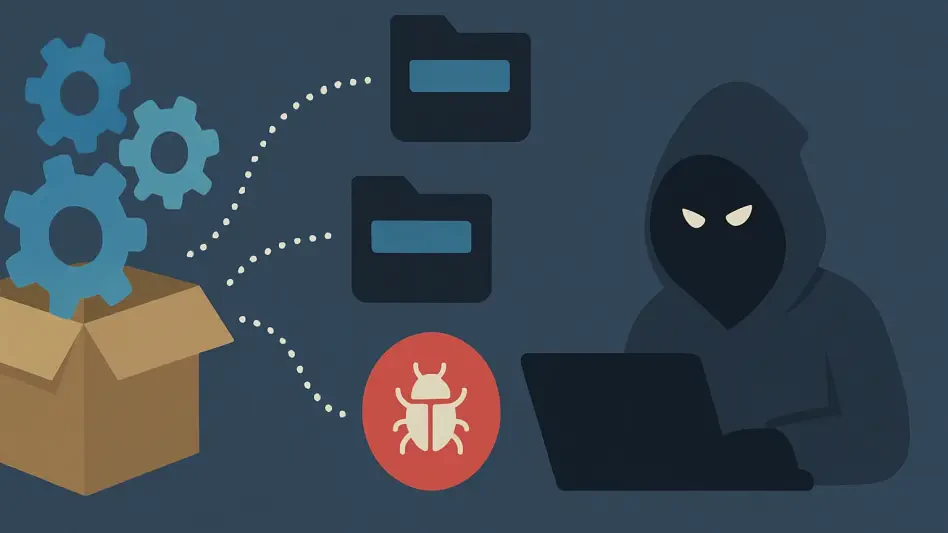
Security perimeters that once stood as impenetrable fortresses are now being bypassed by a sophisticated new breed of silent digital predators known as ghost phishing kits. This transformation marks the end of an era where security gateways could reliably filter out threats by scanning for known bad domains or suspicious HTML structures. These attacks represent a fundamental shift in the cybercrime landscape, moving away from simple deceptive URLs and toward a model where malicious content remains dormant until it is safely inside the user’s browser. Today, a phishing email can look perfectly benign to every automated system in the enterprise stack, only to materialize into a dangerous interface the moment a victim clicks a link.
This “ghost phishing” approach exploits the inherent blind spots of traditional network security. Because the malicious elements are not present in the initial email or the server response in a readable format, the visibility gap allows these messages to reach their targets with alarming frequency. Attackers have recognized that enterprise defenders are increasingly adept at blocking credential-harvesting forms; consequently, the focus has pivoted toward hijacking active authentication sessions. By intercepting these tokens, threat actors can bypass the need for passwords entirely, making traditional multi-factor authentication strategies look increasingly fragile in the face of modern session-based attacks.
Understanding the Visibility Gap: Enterprise Account Security
The fundamental problem plaguing modern enterprise security is the reliance on network-level controls that lack the ability to inspect client-side execution in real time. When a security gateway looks at a link, it sees a static entity, but the modern web is dynamic and interactive. This discrepancy creates a massive visibility gap where corporate accounts are left exposed for hours or even days because the initial delivery was marked as safe. In a typical Microsoft 365 environment, this means that a sophisticated script can run inside the browser of a high-level executive, while the security operations center remains unaware of the breach until data starts flowing out of the network.
Real-world consequences of this gap are becoming increasingly severe as attackers refine their craft to exploit the trust inherent in cloud environments. Traditional static URL reputation checks are fundamentally incapable of identifying a page that generates its malicious content on the fly. This leads to extended exposure windows, where an attacker can maintain persistent access to corporate communications and internal documentation. The risk is compounded by the fact that many organizations still treat the email gateway as the primary line of defense, failing to realize that the battleground has shifted to the internal memory and Document Object Model of the endpoint browser.
The Mechanics of EvilTokens: AES-GCM Encryption and Device Code Hijacking
At the heart of the EvilTokens campaign is a technical masterpiece of obfuscation involving Advanced Encryption Standard with Galois/Counter Mode (AES-GCM). By delivering the malicious payload in an encrypted state, the attackers ensure that no gateway scanner can decipher the true intent of the page during transit. The decryption key and the routine are only activated once the page is fully loaded in the victim’s browser, causing the “ghost” payload to manifest within the Document Object Model. This clever use of client-side cryptography turns the user’s own hardware into a tool for the attacker, bypassing security filters that expect cleartext threats or simple JavaScript obfuscation.
Furthermore, EvilTokens distinguishes itself by exploiting the Microsoft Device Code flow, a feature originally intended to help users log in on devices with limited input capabilities. Instead of using a traditional credential-harvesting form, the kit triggers an API-driven session theft that is much harder to detect. The victim is directed to a legitimate Microsoft authentication page and prompted to enter a provided code, which many users do without hesitation. Because the interaction happens on an official domain, many security protocols fail to recognize the danger. Once the code is entered, the attacker successfully hijacks the session token, granting them immediate and full access to the target’s Microsoft 365 environment.
Analyzing the Impact: Industry-Specific Vulnerabilities and Exposure Rates
Recent threat intelligence data from ANY.RUN sheds light on the sheer scale of this campaign, highlighting concentrated efforts against Western corporate sectors. The data suggests that attackers are no longer casting a wide, indiscriminate net but are instead focusing on high-value targets where the potential for financial gain or intellectual property theft is greatest. Consulting firms have seen a staggering 75.6% exposure rate, while financial services and manufacturing sectors are not far behind, with rates of 72.8% and 71.9% respectively. These numbers indicate that the technical complexity of ghost phishing is being matched by a highly strategic selection of victims across the globe.
The risk profile for Managed Security Service Providers is particularly alarming, with an exposure rate of 66.1% recorded in recent months. Because these providers manage the security of dozens or hundreds of other companies, a single successful account takeover within their infrastructure can trigger a massive supply-chain catastrophe. Expert consensus points toward a rising complexity in investigations following these breaches, as the lack of initial visibility makes it nearly impossible for response teams to reconstruct the timeline of the attack. The shift toward API-driven theft means that the traditional breadcrumbs left by credential harvesters are absent, leaving forensic analysts struggling to find indicators of compromise.
Defeating the Ghost: Real-Time Detection and Response Frameworks
Defeating a threat that refused to reveal itself until it reached the end user required a fundamental shift in defensive strategy. Security teams discovered that prioritizing interactive browser-level analysis was the most effective method for neutralizing the threat. This transition involved the use of interactive sandboxing environments that allowed for the monitoring of background XHR and Fetch requests in real time. By observing how a page communicated with its command-and-control server, analysts were able to identify the specific API calls that signaled a device-code hijacking attempt. This proactive stance allowed organizations to intercept malicious scripts before the decryption process was finalized.
The implementation of Document Object Model snapshots proved to be a turning point in making the invisible visible. These snapshots captured the exact moment of decryption, providing defenders with the evidence needed to block malicious infrastructure. To streamline operations, AI-supported summaries were introduced to assist analysts in quickly identifying the unique signatures of the EvilTokens campaign. This automation was crucial for shrinking the exposure window and ensuring that containment decisions were made in minutes rather than hours. These advancements ensured that the invisible threats of the past were finally brought into the light of active defense, protecting sensitive corporate environments from further exploitation.