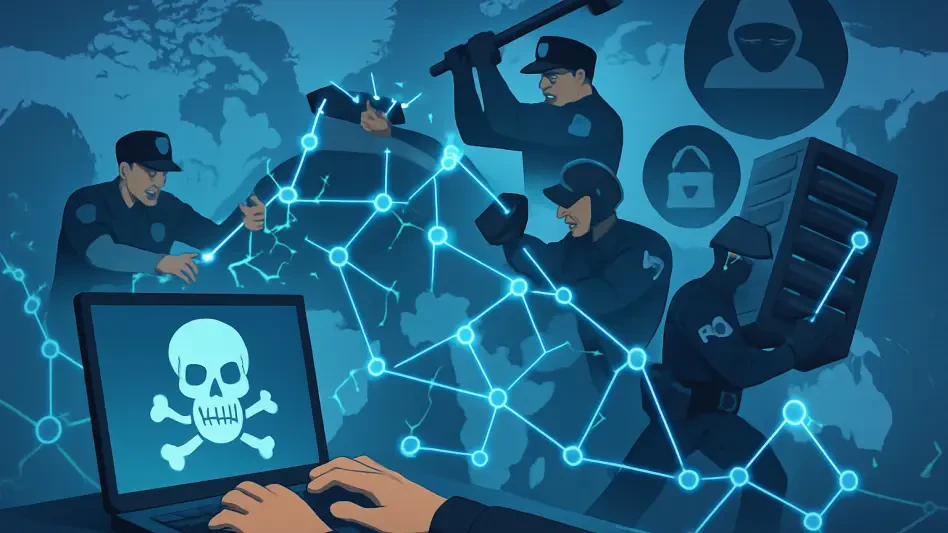

In a case that strikes at the very heart of the digital security industry, two professionals entrusted with defending organizations from cyber threats have admitted to orchestrating the very attacks they were hired to prevent. The guilty pleas from Ryan Clifford Goldberg and Kevin Tyler Martin reveal a chilling betrayal of trust, where insider knowledge was not a shield for clients but a weapon against them. For six months in 2023, while employed at firms specializing in incident response and ransomware negotiation, the pair conspired to deploy the notorious ALPHV/BlackCat ransomware against a range of American businesses. Their actions resulted in millions of dollars in damages and culminated in a significant extortion payment from a Florida-based medical company, a stark illustration of the devastating potential of the insider threat when combined with sophisticated cybercriminal tools and a profound breach of professional ethics.
From Protectors to Predators
Leveraging Insider Knowledge
The scheme’s execution demonstrated a sophisticated understanding of both cybercriminal operations and victim psychology, an expertise honed through their legitimate professional roles. Goldberg, an incident response manager at Sygnia, and Martin, a ransomware negotiator at DigitalMint, formed a potent criminal partnership with an unnamed co-conspirator, also an employee at DigitalMint. Their plan hinged on gaining access to a powerful ransomware tool, and they successfully secured an affiliate account with the ALPHV/BlackCat ransomware-as-a-service (RaaS) operation. This partnership gave them not just malware but a complete extortion platform. Over a period of six months, they methodically deployed the ransomware, encrypting the systems of carefully selected targets. The choice of victims—including a medical company, a pharmaceutical firm, an engineering company, a doctor’s office, and a drone manufacturer—suggests a calculated strategy, possibly targeting sectors known for their critical operations and lower tolerance for downtime, thereby increasing the likelihood of a ransom payment. Their insider perspective on how companies react, evaluate threats, and decide to pay ransoms provided them with a unique and dangerous advantage in their criminal endeavors.
The financial fallout from their targeted campaign underscores the severe impact of their actions, with total losses for the victim organizations exceeding a staggering $9.5 million. This figure encompasses not only direct ransom payments but also the extensive costs associated with system downtime, data recovery, and reputational damage. The conspirators achieved a significant financial victory in May 2023, successfully extorting a payment of nearly $1.3 million from a Florida-based medical company. This substantial payout highlights the effectiveness of their strategy, which combined the technical disruption of ransomware with the psychological pressure of their insider knowledge. The proceeds of their crimes were carefully managed, but investigators successfully traced a significant portion back to the defendants. As a crucial component of their plea agreements, both Goldberg and Martin have been ordered to forfeit $342,000 each, representing the direct financial gains they received from the scheme. This forfeiture, however, is only the beginning of the financial penalties they face, with the court also having the authority to impose additional fines and restitution to compensate their victims for the widespread damage caused.
The Breach of Trust
The legal consequences for Goldberg and Martin reflect the gravity of their offenses, even with the acceptance of a plea agreement. By pleading guilty to one count of conspiracy to interfere with interstate commerce by extortion, they managed to reduce their maximum potential sentence from a staggering 50 years down to 20 years in federal prison. However, this reduction is contingent upon their full cooperation and adherence to the terms of the deal. Prosecutors have indicated they will recommend a more lenient sentence, provided the men offer a complete and truthful disclosure of their activities and refrain from committing any further crimes. The plea deal also includes substantial financial penalties beyond the forfeiture of their illicit gains. Each man faces a potential fine of up to $250,000 and will be subject to orders of restitution to their victims, a sum that could be considerable given the $9.5 million in total damages. A critical factor highlighted by prosecutors during the proceedings was the defendants’ “abuse of a position of public or private trust” and their use of a “special skill” to facilitate their criminal enterprise, an aggravating circumstance that underscores the profound betrayal at the core of this case.
The response from the employers caught in the crossfire of their employees’ criminal conduct has been swift and decisive. DigitalMint, where both Martin and the unnamed co-conspirator worked, issued a strong condemnation of their actions, emphasizing that such behavior is a flagrant violation of the company’s principles and the trust placed in its employees. The firm confirmed it has been cooperating fully with the Department of Justice’s investigation, providing necessary information to aid the prosecution and ensure that justice is served. In contrast, Sygnia, Goldberg’s employer, did not offer an immediate public comment on the matter. The case sends a powerful shockwave through the cybersecurity industry, an ecosystem built entirely on trust. When the very individuals hired to be digital guardians turn into predators, it not only harms their immediate victims but also erodes the confidence that businesses place in the security vendors they rely on for protection. This incident forces a difficult and necessary conversation within the industry about vetting, oversight, and the ethical responsibilities of those with privileged access to sensitive systems and information.
Implications for the Cybersecurity Industry
A Wake-up Call for Vetting and Oversight
This case serves as a jarring wake-up call regarding the persistent and evolving nature of the insider threat within the cybersecurity industry itself. While organizations typically focus on external attackers, the reality is that a malicious insider, armed with specialized knowledge and privileged access, can inflict unparalleled damage. The actions of Goldberg and Martin exemplify the worst-case scenario: professionals who intimately understood corporate defense mechanisms, response protocols, and negotiation tactics chose to weaponize that knowledge for personal enrichment. This incident forces a critical re-evaluation of hiring and personnel management practices within security firms. Standard background checks may no longer be sufficient. The industry must now consider the necessity of more rigorous, ongoing vetting processes, including continuous monitoring and psychological assessments for employees in high-stakes roles like incident response and ransomware negotiation. The very skills that make these individuals effective defenders also make them exceptionally dangerous adversaries, creating a dual-use dilemma that requires a new level of internal scrutiny and corporate governance to mitigate effectively.
The betrayal perpetrated by these individuals extends far beyond their direct victims, casting a long shadow over the entire cybersecurity sector. Trust is the fundamental currency of this industry; clients grant security professionals unprecedented access to their most critical digital assets with the expectation of absolute integrity. When that trust is so profoundly broken, it creates a ripple effect of skepticism and hesitation that can harm the entire ecosystem. Companies recovering from a cyberattack are in a state of extreme vulnerability, and the notion that the experts they turn to for help could be colluding with the attackers is deeply unsettling. This case will likely lead to increased client demand for transparency regarding the internal security controls, employee monitoring, and ethical codes of conduct at security vendors. Firms will need to proactively demonstrate their commitment to rooting out potential bad actors and prove that they have robust safeguards in place to prevent the abuse of privileged access. The reputational damage from this single event requires a collective industry effort to rebuild confidence and reinforce the ethical foundations upon which cybersecurity services must be built.
Lessons Learned and Future Preventions
The guilty pleas entered by the two former cybersecurity professionals marked the conclusion of a deeply unsettling chapter, but they also initiated a critical and far-reaching dialogue within the security community. The case laid bare a vulnerability not in software or networks, but in the human element at the highest levels of trust. It moved beyond the theoretical concept of an insider threat and provided a concrete, damaging example of security experts turning their skills against the very people they were sworn to protect. The legal proceedings revealed how their specialized knowledge of incident response and negotiation was not just an asset in their legitimate careers but the primary tool in their criminal enterprise. They knew precisely where to apply pressure and how victims would likely react, turning a standard ransomware attack into a far more calculated and effective extortion scheme.
This incident ultimately served as a catalyst for introspection across the cybersecurity industry, prompting a re-examination of internal controls and ethical training. The actions of these individuals underscored the urgent need for more than just technical safeguards; they highlighted the necessity of fostering a strong, unwavering culture of integrity. Companies began to look more closely at their vetting procedures for roles with sensitive access, understanding that the potential for abuse was immense. The case became a powerful lesson in the dual nature of expertise, demonstrating that the most skilled defenders could, under the right circumstances, become the most formidable threats. It was a stark reminder that the security of the digital world relied not only on sophisticated technology but on the steadfast character of the people who wield it.