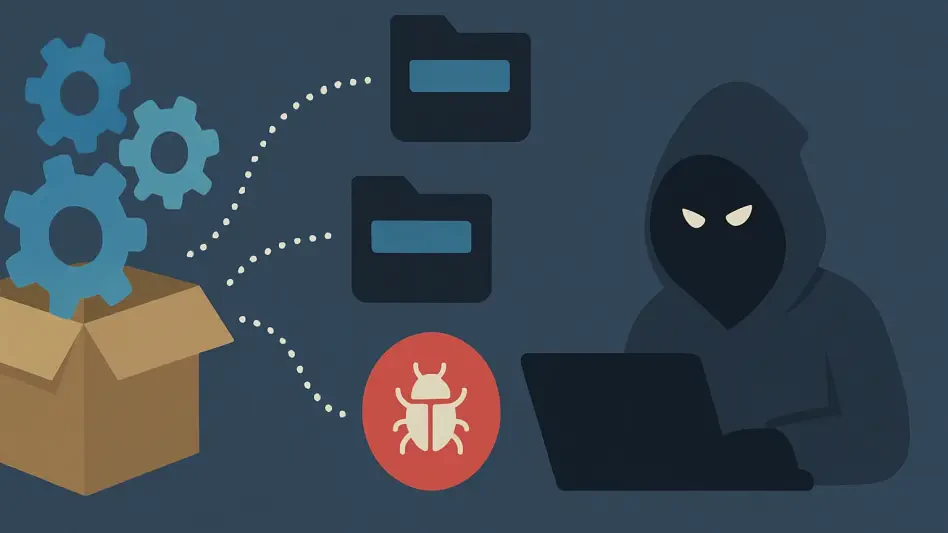

The silent operation of a modern economy relies on an invisible web of data and power that remains largely unnoticed until a sudden disruption ripples through a major city’s transport network or energy grid. When a power grid flickers or a freight line halts, the impact is felt instantly at every dinner table and in every storefront across the country. In today’s interconnected world, the threat to these essential services has shifted from physical tampering to sophisticated, AI-enabled cyberattacks that can bypass traditional defenses in seconds. As digital and physical systems become indistinguishable, the question is no longer if a system will be targeted, but whether the national framework is agile enough to withstand an automated onslaught.
This transition from analog to digital vulnerability marks a turning point in how a nation must define its safety. Advanced persistent threats now leverage machine learning to scan for vulnerabilities at speeds no human operator can match. These automated agents do not just steal data; they seek to degrade the functionality of water treatment plants, telecommunications hubs, and healthcare systems. Consequently, the reliance on legacy security protocols has created a dangerous gap between the capabilities of modern saboteurs and the defensive posture of essential service providers. Closing this gap requires a fundamental rethink of what it means to be a “secure” asset in a landscape dominated by software-driven risks.
The Hidden Fragility of Modern Life: How AI-Driven Sabotage Redefines Infrastructure Risk
The fragility of modern life is often masked by the seamless convenience of technology, yet the underlying infrastructure is increasingly exposed to invisible pressures. Sophisticated attackers are moving toward a model of sabotage that prioritizes systemic paralysis over simple data theft. By utilizing AI to identify the most critical nodes within a complex network, adversaries can now engineer outages that cascade from one sector to another, turning a minor software glitch into a national emergency. This new form of digital warfare treats every internet-connected sensor and control valve as a potential entry point into the country’s core nervous system.
Furthermore, the rise of automated sabotage has shortened the window for response, making traditional incident management cycles obsolete. When an attack is executed at processor speed, the delay between detection and mitigation can mean the difference between a minor annoyance and a total system collapse. Infrastructure operators must contend with threats that are not only faster but also more deceptive, often mimicking legitimate system traffic to avoid detection until it is too late. The resulting risk landscape is one where the perimeter no longer exists, and the interior of every critical system must be treated as a contested zone.
The Evolution of Risk: Why Australia’s 2018 Security Framework No Longer Suffices
The Security of Critical Infrastructure Act (SOCI Act) was originally designed in 2018 to establish a baseline of security, but the rapid pace of technological change has quickly outstripped its initial provisions. At that time, the primary focus was on physical ownership and basic cyber protections for a limited number of sectors. However, global instability and the weaponization of artificial intelligence have since transformed the threat landscape from a manageable set of risks into a volatile environment of constant digital probing. Australia’s Cyber and Infrastructure Security Centre (CISC) recognizes that a foundational set of rules is no longer enough; the nation requires a responsive, high-performance regulatory regime to protect the economic productivity and safety of its citizens.
Moreover, the interconnected nature of modern assets means that a vulnerability in a seemingly minor logistical company can now bring a major energy producer to its knees. The 2018 framework did not fully account for the complex web of dependencies that defines the current economy. As the lines between different infrastructure classes blur, the rigid definitions of the past have become a liability. The government has identified that maintaining a static list of protected assets is insufficient when new technologies, such as edge computing and decentralized energy grids, are constantly redefining where the “critical” parts of the system actually reside.
The Architecture of Reform: Reducing Red Tape While Strengthening Strategic Oversight
The proposed “Tranche 2” reforms introduce 21 specific measures designed to transform the SOCI Act from a rigid legislative pillar into a flexible security shield. Central to this modernization is the concept of “de-duplication,” which aims to strip away the overlapping bureaucratic requirements that often force businesses to prioritize paperwork over actual risk mitigation. By simplifying the reporting process, the government intends to allow security teams to focus on the actual threats facing their systems rather than navigating a maze of conflicting agency demands. This shift represents a move toward a performance-based regulatory model rather than a checklist-based one.
To manage this complexity, the reforms utilize a sophisticated three-tiered asset identification model. This structure begins at the broad sectoral level, moves through specific asset classes, and concludes with technical rules that can be updated as technology evolves. This layered design allows the government to adjust security thresholds to meet emerging threats without needing to rewrite primary legislation every time a new version of AI software is released. By embedding flexibility into the law, the CISC can target specific vulnerabilities with precision, ensuring that the regulatory burden remains proportionate to the actual risk posed by an individual asset.
Insights from the Slay Review: Addressing Enforcement Gaps and the Partnership Model
Independent analysis by expert Jill Slay has highlighted that while the SOCI Act has strengthened Australia’s posture, significant vulnerabilities remain in enforcement and supply chain management. The review found that existing laws often lacked the “teeth” necessary to ensure compliance, particularly regarding third-party vendors and complex global logistics chains. Many operators were found to be treating security as a secondary concern, assuming that the government would provide a safety net in the event of a major breach. This perception created a moral hazard that undermined the collective resilience of the national infrastructure.
In response, the CISC is pivoting toward a collaborative defense model that treats national resilience as a shared responsibility between the public and private sectors. This partnership model moves away from a top-down mandate and toward an environment where information and threat intelligence are shared in real time. The Slay Review emphasized that the government must act not just as a regulator, but as a strategic partner that provides the tools and insights necessary for private entities to defend themselves. By closing enforcement gaps and tightening supply chain oversight, the reforms aim to create a cohesive defense that extends from the smallest service provider to the largest government department.
Navigating the New Compliance Landscape: Essential Strategies for Infrastructure Operators
To align with the shifting regulatory expectations, entities must move beyond basic compliance and toward a culture of “cyber hygiene” that prioritizes material risk management. Organizations should focus on institutionalizing robust patch management, strict access controls, and network segmentation to blunt the effectiveness of AI-driven breaches. These fundamental practices serve as the first line of defense against the automated tools used by modern adversaries. Furthermore, businesses must prepare for the Mandatory Cyber Incident Reporting (MCIR) and Critical Infrastructure Risk Management Program (CIRMP) rules by mapping their supply chain dependencies and ensuring that security outcomes are measurable, verifiable, and integrated into daily operations.
The move toward a more resilient future required a shift in how risk was perceived across all levels of the corporate hierarchy. Regulators and industry leaders moved toward a state of constant readiness, where the mapping of supply chains and the institutionalization of cyber hygiene provided the necessary friction to slow down sophisticated adversaries. This transition ensured that security became a core component of business strategy rather than a peripheral technical concern. The legislative journey toward a more secure nation reached a pivotal milestone as stakeholders recognized that static defenses were no longer viable in an era of machine-speed warfare. Ultimately, the successful integration of these reforms provided the foundation for a more durable and productive economic landscape.