
In the hyper-digitized landscape of modern security, the most profound lessons about protecting critical data come not from the latest malware strain but from the dusty case files of Cold War-era traitors. Decades after their acts of treason, the stories of spies like CIA officer Aldrich Ames and FBI agent Robert Hanssen offer a chillingly relevant blueprint for understanding the gravest threats organizations face today. Their betrayals force a critical question that echoes in boardrooms and security operations centers alike: Is the greatest risk a flaw in the code or a flaw in human character?
The answer increasingly points toward the latter. While technical vulnerabilities can be patched and firewalls fortified, the psychological and organizational dynamics that foster betrayal remain remarkably consistent. The core of the insider threat is not a technological failure but a human one, rooted in motivations, grievances, and institutional blind spots. Understanding these timeless human factors is paramount for securing everything from national secrets to corporate intellectual property in an age of unprecedented access and connectivity.
The Enduring Paradox of the Analog Spy
It seems counterintuitive that espionage cases from a bygone era of dead drops and microfilm could offer more insight than a contemporary cybersecurity breach report. Yet, the Ames and Hanssen cases strip the problem down to its essential components, free from the distraction of sophisticated hacking tools. Their betrayals were not driven by zero-day exploits but by a slow erosion of loyalty, a sense of entitlement, and a perceived lack of appreciation. They exploited trust, not software vulnerabilities.
This paradox reveals that technology often serves merely as the method of exfiltration, while the motive remains deeply human. The mechanisms for stealing data have evolved dramatically, but the reasons individuals choose to do so have not. By studying these historical cases, security leaders can move beyond a purely technical focus and begin to address the behavioral precursors that signal an employee is on a path toward causing harm.
From Technical Gaps to Behavioral Cracks
The central argument for re-examining these cases is that insider risk is fundamentally a behavioral challenge. It sits at the intersection of psychology, human resources, and organizational culture. Breaches orchestrated by insiders are rarely impulsive; they are the culmination of a journey that often begins with disengagement and frustration long before any malicious action is taken. The same drivers that pushed Ames to sell secrets for financial gain—personal debt, professional stagnation, and a belief that he was owed more—are mirrored in modern cases of employees stealing trade secrets for a new employer or selling customer data.
This connection highlights the need to shift focus from monitoring network traffic for anomalies to understanding the human signals that precede a breach. Contemporary insider threat programs must bridge the gap between cybersecurity and human resources, integrating technical data with behavioral indicators. The goal is to identify and intervene when an employee shows signs of distress or disaffection, addressing the root cause rather than just the eventual symptom of data loss.
The Anatomy of a Self Made Traitor
A pervasive myth surrounding high-impact insiders is that they are actively recruited and coerced by external adversaries. The reality, as demonstrated by Ames, is often the opposite. The most dangerous insiders are typically “self-made traitors” who volunteer their services. This process is gradual, fueled by a potent cocktail of financial pressure, personal grievance, and a sophisticated capacity for rationalization. Ames did not suddenly decide to betray his country; he embarked on a slow, calculated path, justifying each step until the moral line had been crossed irrevocably.
These individuals frequently share a distinct psychological profile that serves as a collection of modern-day red flags. Key indicators include a powerful sense of entitlement, frustration over a perceived mismatch between their skills and their status, and a tendency to externalize blame for their personal or professional failings. They often believe the standard rules do not apply to them, a trait common among high-performing specialists whose identities are deeply intertwined with their expertise and access. When this mindset combines with a personal crisis, the risk of betrayal escalates significantly.
When Organizational Culture Becomes an Accomplice
Individual psychology alone, however, does not create an insider threat; the organizational environment plays a critical role as an enabler. One of the most significant institutional failures is temporal bias—the assumption that past trustworthiness guarantees future loyalty. Organizations often place immense, unverified trust in tenured employees with high-level access, ignoring the fact that, according to behavioral science, context and circumstance are far more powerful predictors of behavior than a person’s perceived character.
Furthermore, siloed organizational structures can inadvertently foster the conditions for betrayal. Compartmentalization, designed to protect information, can also obscure warning signs and breed complacency among managers. It creates an environment where an individual can engage in moral disengagement, transferring personal responsibility for their actions to the institution itself. For insiders, this reduces the “moral friction” that might otherwise deter them, making it easier to rationalize their actions as a justifiable response to an impersonal and uncaring system.
Shifting from Reactive Pursuit to Proactive Resilience
An effective modern defense strategy required a fundamental reframing of the mission. Instead of focusing exclusively on catching malicious actors after the fact, leading programs began to prioritize proactive identification of employee distress. This represented a shift from suspicion to support, positioning the insider threat function as a tool for identifying organizational strain and individual risk factors like burnout, isolation, or ethical drift long before they could manifest as a security incident.
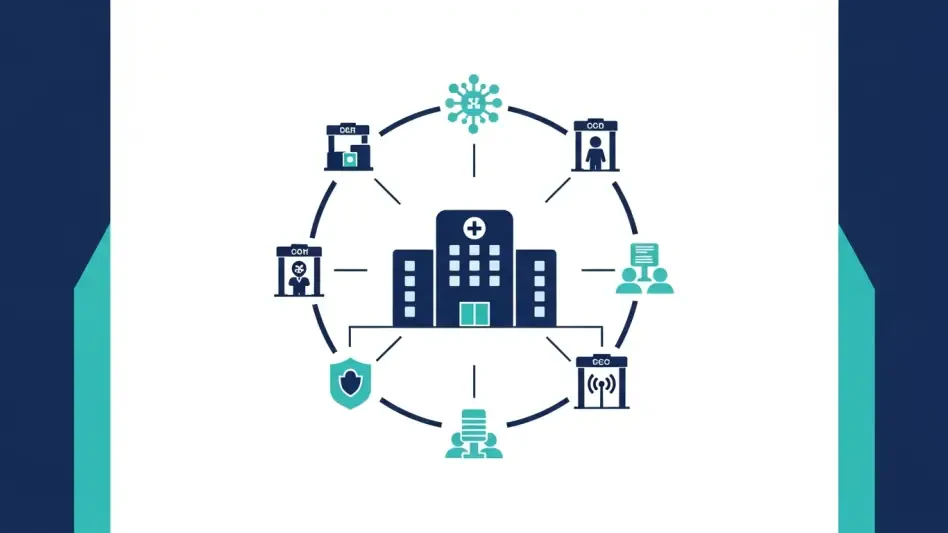
This proactive stance was built upon a holistic framework. It began with establishing clear, cross-functional ownership of the problem, breaking down the silos between security, HR, and legal departments. Success depended on aligning human and technical signals—integrating performance reviews and HR data with cybersecurity alerts to create a comprehensive view of risk. This was coupled with the disciplined enforcement of the principle of least privilege to minimize opportunities for harm and the development of clear response playbooks to ensure coordinated action when a potential threat was detected.
Ultimately, the complex lessons drawn from these decades-old betrayals moved the industry beyond reactive investigations and ad hoc controls. The realization was that managing insider risk could not be treated as a siloed compliance exercise but demanded a mature, integrated approach. This evolution in thinking became the cornerstone of building true organizational resilience against the most enduring of all security threats: the one that comes from within.