
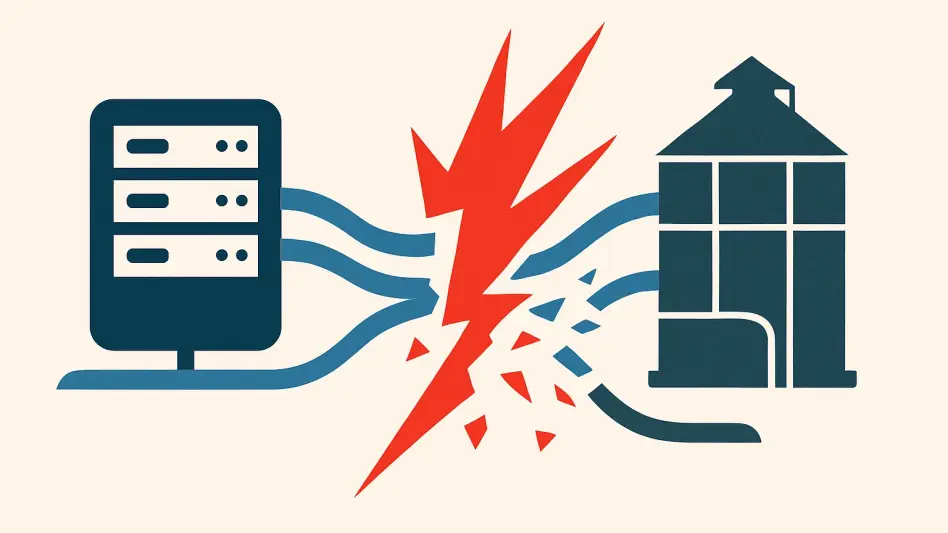
A new wave of digital extortion has intensified across critical industries, with recent data revealing that ransomware attacks escalated dramatically in 2025, fueled by threat actors who are now deploying more sophisticated and efficient tactics than ever before. This alarming trend is not a uniform assault but rather a calculated campaign with divergent strategies, as criminal syndicates have made a deliberate, strategic pivot to compromise the information technology sector while simultaneously treating the food and agriculture industry as a fertile ground for opportunistic attacks. The sheer scale and velocity of these incidents underscore a critical shift in the cyber threat landscape, where attackers are consistently outmaneuvering defensive measures. This evolution demands a deeper understanding of the motivations, methods, and key players behind this latest surge, as the integrity of global supply chains and digital infrastructure hangs in the balance. The increasing complexity of these operations signals a new chapter in cybersecurity, moving beyond simple extortion to highly coordinated campaigns aimed at maximizing disruption and profit.
A Strategic Assault on the Digital Backbone
The information technology sector found itself squarely in the crosshairs of ransomware gangs, experiencing an unprecedented and targeted onslaught. In 2025 alone, the industry suffered nearly 750 significant incidents, a figure that more than doubles the 300 attacks recorded just a year prior. This dramatic spike propelled the IT industry to become the third most-targeted sector globally, trailing only manufacturing and commercial facilities, and accounted for nearly 12% of all tracked ransomware events. This was not a matter of random chance but the result of a deliberate strategic shift by cybercriminals aiming to exploit the intricate and often fragile digital supply chain. By compromising a single IT service provider, attackers can gain access to a multitude of downstream clients, creating a powerful ripple effect of disruption. Geographically, the United States remained the primary target, enduring the highest concentration of these attacks and highlighting its critical role and inherent vulnerabilities within the global technology ecosystem. This focused campaign reveals a sophisticated understanding of modern business dependencies.
The surge in attacks was matched by a significant evolution in the methods used to execute them, as threat actors refined their techniques to counter improving defensive capabilities with record speed. A key tactical advancement has been the rapid weaponization of critical zero-day vulnerabilities, with attackers developing and deploying exploits within hours of a flaw’s public disclosure, leaving security teams with virtually no time to patch their systems. Furthermore, there has been a marked increase in the use of living-off-the-land techniques, where assailants leverage legitimate, pre-installed system tools and administrative software to carry out their malicious activities. This approach allows them to operate stealthily, blending in with normal network traffic and evading traditional detection tools. These technical innovations have been complemented by more effective and personalized social engineering schemes, which continue to be a reliable method for gaining initial access to corporate networks, demonstrating that the human element remains a crucial battleground in cybersecurity.
The Shifting Landscape of Cyber Adversaries
The hierarchy of the most dangerous ransomware groups underwent a significant reshuffle, with new leaders emerging to dominate the threat landscape. The Qilin and Cl0p gangs ascended to the top, displacing previously prominent groups like RansomHub and Akira as the most active and impactful operators. Qilin, in particular, has gained a formidable edge through its use of a sophisticated encryption tool developed in the Rust programming language. This technical advantage allows the group to efficiently create malware that can target multiple operating systems, including Windows, Linux, and VMware ESXi, with a single codebase, vastly expanding its potential victim pool and operational efficiency. Meanwhile, Cl0p has maintained its top-tier status by perfecting a different, yet equally devastating, strategy focused on the high-volume exploitation of zero-day flaws in widely used software. This approach enables the group to compromise thousands of organizations in a single, sweeping campaign, as seen in its past successful attacks on file transfer applications.
While the IT sector faced a highly targeted campaign, the food and agriculture sector experienced a different, though no less damaging, form of attack. This industry saw a substantial rise in ransomware incidents, with 265 attacks recorded in 2025. However, analysis suggests that the primary motivation behind most of these intrusions was opportunistic rather than strategic. Threat groups, led by the same Qilin and Akira gangs prominent elsewhere, appeared to be casting a wide net and attacking vulnerable entities within the sector as they were discovered. In fact, five prominent ransomware groups were responsible for nearly half of all attacks on this industry, indicating a concentrated effort by major players who view it as a target-rich environment. A notable exception to this trend was the Cl0p gang, which demonstrated a specific and disproportionate interest in food and agriculture. The group directed over 9% of its total attacks at the sector, a figure more than double the industry-wide average of roughly 4%, suggesting a calculated focus on this critical infrastructure vertical for reasons that may extend beyond simple financial gain.
A Reckoning with Evolved Threats
The events of the past year underscored a critical turning point in the fight against digital extortion, revealing adversaries who were not only more aggressive but also more adaptive and strategically astute. The dual-front assault on the IT and agriculture sectors demonstrated a sophisticated understanding of economic vulnerabilities, with one campaign targeting the central nervous system of the digital economy and the other exploiting the less-defended, yet equally vital, food supply chain. The tactical innovations, from the near-instant weaponization of zero-days to the stealth of living-off-the-land techniques, confirmed that defensive strategies must evolve at an even faster pace. The rise of groups like Qilin and Cl0p, with their specialized tools and focused methodologies, marked the end of a monolithic view of ransomware and ushered in an era where tailored defenses are paramount. Ultimately, the surge was a stark reminder that cybersecurity is a dynamic and relentless arms race, one where past successes offered no guarantee of future security.