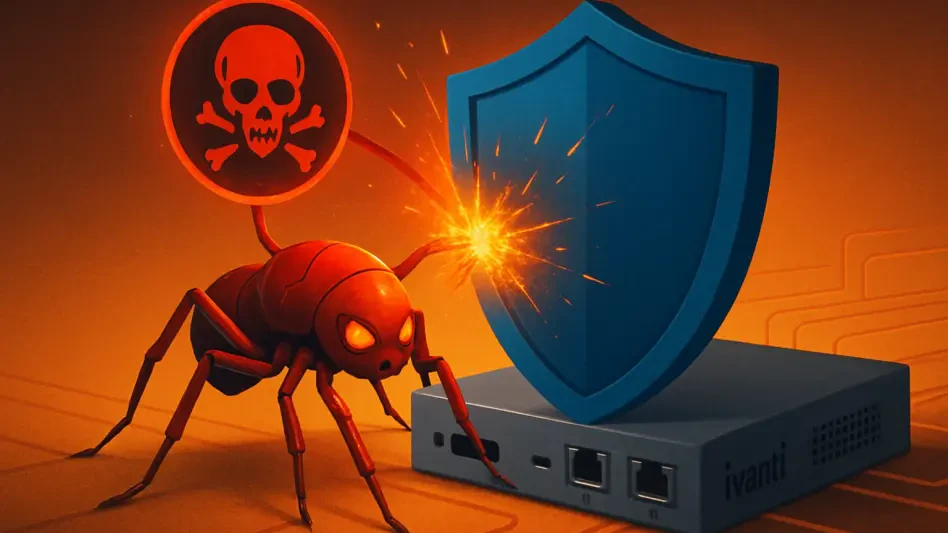

The rise of sophisticated, state-sponsored hacking groups has long been a concern for security professionals, but the recent wave of attacks attributed to collectives known as “Typhoon” hackers marks a definitive turning point. These actors, believed to be operating on behalf of the Chinese state, are not merely another threat; they are a catalyst exposing the deep, systemic failures of a cybersecurity model built on voluntary standards and loose partnerships. Their ability to exploit the foundational components of our digital world—from cloud infrastructure to the software supply chain—has demonstrated the inadequacy of self-regulation. This article will explore how these advanced persistent threats (APTs) have fundamentally altered the risk landscape, compelling a global shift from corporate goodwill to government-mandated resilience.
A History of Hope: The Decades-Long Experiment with Self-Regulation
For the past three decades, the prevailing approach to cybersecurity has been a hands-off one, guided by the principle of public-private partnership. Governments encouraged industries to develop their own security standards, share threat intelligence, and adopt best practices voluntarily. This model was built on the belief that the private sector, being the primary innovator and operator of technology, was best positioned to secure its own digital assets. While this framework fostered collaboration and information sharing, it was heavy on promises and light on enforcement. The absence of clear accountability and legal liability created an environment where security was often a business cost to be minimized rather than a core operational imperative, leaving critical infrastructure dangerously exposed to organized and persistent adversaries.
The Anatomy of a Paradigm Shift
The Typhoon APTs: A New Breed of Cyber Adversary
The hacking collectives identified by names like “Volt Typhoon,” “Salt Typhoon,” and “Silk Typhoon” represent the new frontier of cyber warfare. Unlike traditional cybercriminals focused on financial gain, these state-sponsored groups are characterized by their extreme sophistication, strategic patience, and focus on compromising critical national infrastructure. Their targets are not random; they systematically infiltrate government agencies, telecommunications networks, and IT supply chain providers. The goal is not just data exfiltration but the potential to disrupt or disable essential services, laying the groundwork for what some fear could be a “total war” on an adversary’s digital backbone. Their success has forced a global re-evaluation of defensive strategies, proving that the old rules no longer apply.
Exploiting the Cracks in Our Digital Foundation
A chilling reality of the Typhoon threat is that its success is as much a result of inherent weaknesses in our digital infrastructure as it is the attackers’ own advanced capabilities. A Joint Cybersecurity Advisory from the U.S. Cybersecurity and Infrastructure Security Agency (CISA) highlighted that these groups thrive on “avoidable weaknesses” embedded within widely deployed network hardware from major vendors like Cisco, F5, and Fortinet. By exploiting hidden software flaws in core infrastructure components like routers and firewalls, attackers gain initial access and then perform lateral movements through an organization’s network, often remaining undetected for extended periods. This strategy turns the trusted, foundational elements of corporate and government networks into liabilities.
The Compounding Risks of Modern IT Architecture
The modern technology landscape, defined by its reliance on cloud services and open-source software, has further complicated the threat matrix. The migration to Software-as-a-Service (SaaS) applications has dissolved traditional network perimeters, rendering older security models obsolete and creating significant blind spots. As noted by JPMorgan Chase’s CISO, our dependence on cloud infrastructure and “opaque fourth-party vendor dependencies” creates a vast and poorly understood attack surface. This risk is magnified by the open-source ecosystem, a foundational building block for nearly all applications. A 73% increase in malicious open-source packages in 2025 highlights a critical vector for attacks, with bad actors compromising influential code maintainers to inject malware into widely used libraries—a threat poised to explode with the rise of AI-powered coding agents.
A New Era of Mandates: The Global Regulatory Response
The systemic failures exposed by Typhoon hackers have catalyzed a definitive shift toward government-mandated security. The long-standing era of voluntary compliance is ending, replaced by a wave of international regulations designed to enforce security by design, mandate vulnerability management, and assign clear liability for breaches. The European Union is leading the way with its Cyber Resilience Act (CRA) and Digital Operational Resilience Act (DORA), which impose strict security requirements on software producers. In the United States, the Department of Defense has launched its Software Fast Track (SWFT) Initiative to embed security deep within its acquisition process. Similarly, the United Kingdom’s proposed Government Cyber Action Plan aims to centralize oversight and use government contracts to enforce accountability. This global trend signals a new reality where security is no longer optional.
Actionable Strategies for a Regulated World
The transition to a regulated cybersecurity environment demands a proactive and fundamental change in how organizations operate. The first major takeaway is that visibility is paramount; businesses can no longer afford blind spots in their software supply chain. Adopting tools like the Software Bill of Materials (SBOM)—a detailed “list of ingredients” for software—is becoming a baseline requirement for transparency and risk management. For deeper assurance, organizations must invest in advanced solutions like complex binary analysis to uncover hidden malware, tampering, and critical flaws that an SBOM might miss. Ultimately, security must be integrated into every stage of the development and procurement lifecycle, shifting from a reactive, incident-response posture to a proactive culture of resilience.
Conclusion: The Storm Has Passed, Leaving a New Landscape
The sophisticated and persistent campaigns waged by Typhoon hackers have served as a powerful and painful wake-up call. They have proven that a voluntary, partnership-based approach to cybersecurity is insufficient to protect the critical infrastructure that underpins modern society. These attackers exploited the very fabric of our digital world, from network hardware and cloud services to the open-source software we all depend on. The resulting global pivot toward robust, enforceable regulation is not just a trend but a necessary evolution. This new era of mandated security finally assigns responsibility where it belongs, demanding accountability from those who build and sell technology. While the transition will be challenging, these much-needed mandates offer the best hope for creating a more resilient and secure digital world.