
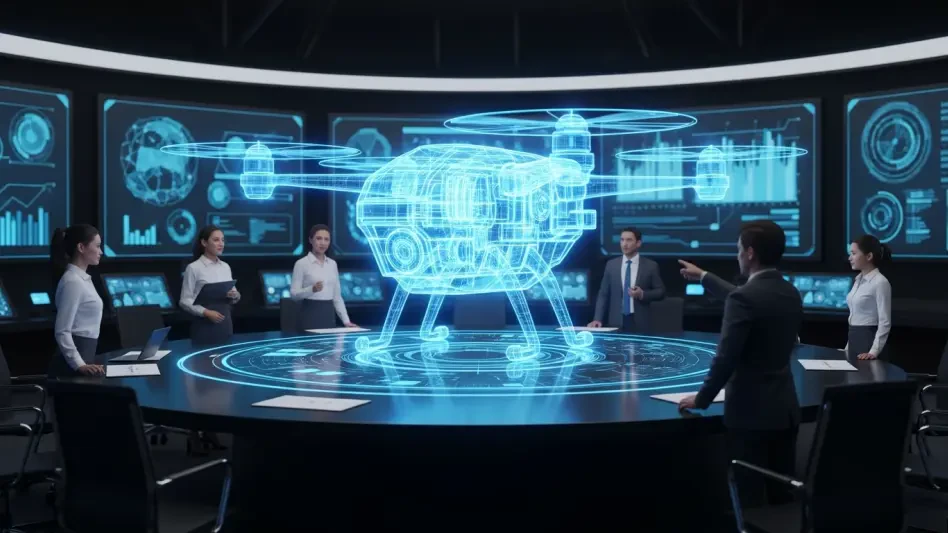
The digital blueprints for tomorrow’s military hardware are now the primary targets in a relentless, undeclared war being waged in cyberspace against the global defense industrial base. Under a state of sustained, multi-vector cyber pressure from sophisticated state-sponsored groups, cybercriminals, and hacktivists, this escalating campaign targets not just siloed military systems but the entire interconnected ecosystem of contractors, personnel, and sprawling supply chains. This constant barrage of digital attacks poses a direct and accelerating threat to national security, technological superiority, and the operational readiness of armed forces worldwide. This analysis examines the key trends shaping this contested domain, detailing the tactics of primary state actors, the vulnerabilities they exploit, and the strategic imperatives for building a more resilient defense posture.
The Primary Threat Vectors State Sponsored Espionage and Sabotage
Russia Nexus Actors Integrating Cyber with Kinetic Warfare
Russia-nexus actors have increasingly and deliberately blurred the line between digital intrusion and physical conflict, consistently targeting defense entities whose technologies are directly employed on the battlefield in Ukraine. This trend represents a clear strategic doctrine where cyber operations function as a direct extension of military objectives, aiming to degrade enemy capabilities and gain tactical advantages. The focus of these campaigns has been exceptionally sharp, concentrating on organizations that develop and supply unmanned aircraft systems (UAS), sophisticated anti-drone technologies, and critical battlefield management systems like Delta and Kropyva, which are essential for coordinating troop movements and targeting.
The tactics used to achieve these goals demonstrate a high degree of operational maturity. Threat actors employ meticulously crafted phishing campaigns using lures themed around specific military equipment, increasing their credibility and success rate among highly specialized targets. For example, groups linked to Russian intelligence services have been observed using the CANFAIL malware in operations that leverage Large Language Models (LLMs) to enhance their capabilities. These advanced AI tools are used to accelerate reconnaissance, craft more persuasive and grammatically perfect social engineering lures, and even help attackers overcome technical hurdles during post-compromise activities, effectively lowering the barrier to entry for conducting highly sophisticated attacks.
China Nexus Actors High Volume Espionage and R and D Theft
In contrast to Russia’s focus on immediate battlefield impact, China-nexus groups remain the most active by sheer volume, conducting widespread and persistent espionage intrusions against the defense industrial base. Their primary motivations are geared toward the long-term strategic goals of intelligence gathering and intellectual property theft. By siphoning off sensitive research and development data, Beijing aims to accelerate its own domestic military modernization programs, close technological gaps with Western powers, and establish deep-rooted network access for potential future sabotage or intelligence operations.
A signature tactic that has become a hallmark of these campaigns is the exploitation of network edge devices and appliances for initial access, a method expertly demonstrated by groups such as UNC3886 and UNC5221. These devices—including firewalls, VPN concentrators, and routers—are often under-monitored compared to traditional endpoints and servers, making them ideal beachheads for attackers to gain a foothold into a target network. Campaigns such as APT5’s spearphishing efforts in recent years heavily targeted the personal email accounts of defense contractor employees. The lures were not generic; they were highly tailored using reconnaissance on professional histories and personal interests, proving that for these actors, every individual in the supply chain is a potential gateway.
North Korean and Iranian Actors The Pervasive Exploitation of Personnel
Threat actors from North Korea and Iran have refined a different but equally effective approach, increasingly focusing on the human element as the weakest link in the security chain. These groups have turned the hiring process itself into a weapon, targeting employees directly with sophisticated social engineering schemes designed to bypass traditional enterprise security controls and gain access from within. This method relies on deception and manipulation rather than purely technical exploits, making it uniquely challenging to defend against.
North Korean groups like APT45, APT43, and UNC2970 have become particularly adept at impersonating corporate recruiters and leveraging employment-themed social engineering. They deploy malware such as SMALLTIGER through fake job applications to steal intellectual property vital to Pyongyang’s domestic weapons programs. Similarly, Iranian actors like UNC1549 and UNC6446 create spoofed job portals and send fraudulent employment offers to harvest credentials or deploy malware. Their operations have successfully compromised organizations by targeting their third-party suppliers and remote access services, demonstrating a keen understanding of the interconnected nature of the modern defense ecosystem.
The Expanding Attack Surface Beyond State Sponsored Espionage
Supply Chain Vulnerabilities and Ransomware Risks
The threat to the defense industrial base extends far beyond the calculated espionage of nation-states. Since the early 2020s, the manufacturing sector has consistently been the most frequent victim on ransomware data leak sites, a trend that poses a profound and often underestimated risk to defense supply chains. Countless manufacturing firms supply dual-use components—parts and technologies with both commercial and military applications—that are essential for producing everything from munitions to advanced fighter jets. These suppliers may not consider themselves direct defense contractors, leaving them with less stringent security postures.
This vulnerability creates a critical point of failure. An intrusion into the IT network of a component supplier, even if financially motivated and not state-sponsored, can have devastating consequences. A successful ransomware attack could halt production, disrupt logistics, and significantly impede the ability to surge defense manufacturing during a national crisis. This highlights a major strategic vulnerability where the operational readiness of the military is dependent on the cybersecurity of small, obscure companies deep within the supply chain.
The Resurgence of Ideological Hacktivism
Concurrent with state-sponsored and criminal threats, a global resurgence in hacktivism presents a tangible and disruptive risk to defense organizations. Motivated by political or ideological agendas rather than financial gain or state directives, these groups engage in hack-and-leak operations, distributed-denial-of-service (DDoS) attacks, and other forms of digital disruption aimed at embarrassing, discrediting, or damaging defense firms.
While often less sophisticated than state-sponsored actors, the impact of hacktivism should not be dismissed. The public disclosure of sensitive data from these attacks can lead to the immediate loss of proprietary information and expose the personally identifiable information (PII) of employees. This exposed data, in turn, becomes a valuable resource for more advanced threat actors. State-sponsored espionage groups can leverage leaked PII to craft highly convincing spearphishing campaigns or profile high-value targets for future recruitment or coercion, turning a disruptive hacktivist attack into a stepping stone for a far more dangerous intrusion.
Expert Analysis Key Findings on Converging Threats
Recent threat intelligence analysis confirms that the security of the defense industrial base has become more critical to national security than ever before, especially as governments around the world increase defense spending and accelerate technological development in an era of renewed geopolitical competition. The sector is now facing a dangerous convergence of threats that attack it from every possible angle, demanding a far more holistic and integrated approach to security.
The modern threat landscape is defined by this convergence. It includes direct cyber support for kinetic warfare, where digital attacks have immediate real-world consequences on the battlefield. It also features the pervasive exploitation of the human element, where employees are targeted not as an afterthought but as a primary vector of attack. Added to this are the high-volume espionage intrusions from persistent actors and the ever-present disruptive potential of both organized cybercrime and ideologically motivated hacktivism. This multi-vector pressure calls for a fundamental shift in the industry’s security posture, moving from a reactive, perimeter-based defense to one built on proactive intelligence and inherent resilience.
Future Outlook Navigating an Era of Persistent Cyber Conflict
As geopolitical tensions persist and escalate, the frequency, sophistication, and audacity of cyber attacks against the defense industry will almost certainly increase. Threat actors are in a constant state of innovation, continuously refining their tactics and adopting new technologies to bypass defenses. The leveraging of AI and LLMs to enhance the speed and effectiveness of their operations is a trend that is still in its infancy, while the exploitation of unmonitored edge devices and complex, opaque supply chains will remain a primary challenge for defenders.
The broader implications of this trend are profound. The once-clear line between cyber operations and kinetic warfare continues to blur, meaning a compromise in the digital domain can have immediate and severe real-world consequences on military effectiveness and national security. Protecting the defense industrial base is no longer just a matter of safeguarding proprietary data or preventing financial loss. It is now fundamentally about ensuring the operational readiness of the armed forces and maintaining the strategic military advantage necessary to deter and, if necessary, win future conflicts.
Conclusion The Imperative for a Proactive and Resilient Security Posture
The analysis of recent trends painted a clear picture of a defense industry confronting a complex and rapidly evolving threat landscape. This environment was dominated by highly capable state-sponsored actors from Russia, China, North Korea, and Iran, each employing distinct but equally dangerous tactics tailored to their strategic objectives. These advanced persistent threats were compounded by significant and growing risks from sprawling supply chain vulnerabilities, opportunistic cybercriminals, and disruptive hacktivist groups, creating a security challenge of unprecedented scale.
To maintain a technological and strategic edge in this contested environment, it became evident that organizations across the defense industrial base had to move beyond traditional, reactive security models. The path forward required a strategic pivot toward proactive defense. By integrating detailed threat intelligence into continuous threat hunting activities and fundamentally redesigning network architectures for greater resilience, the sector could better protect the vital systems that underpin national security. This proactive stance ensured that critical technologies and capabilities were secured long before they ever reached the battlefield, safeguarding the foundations of military power in the digital age.