
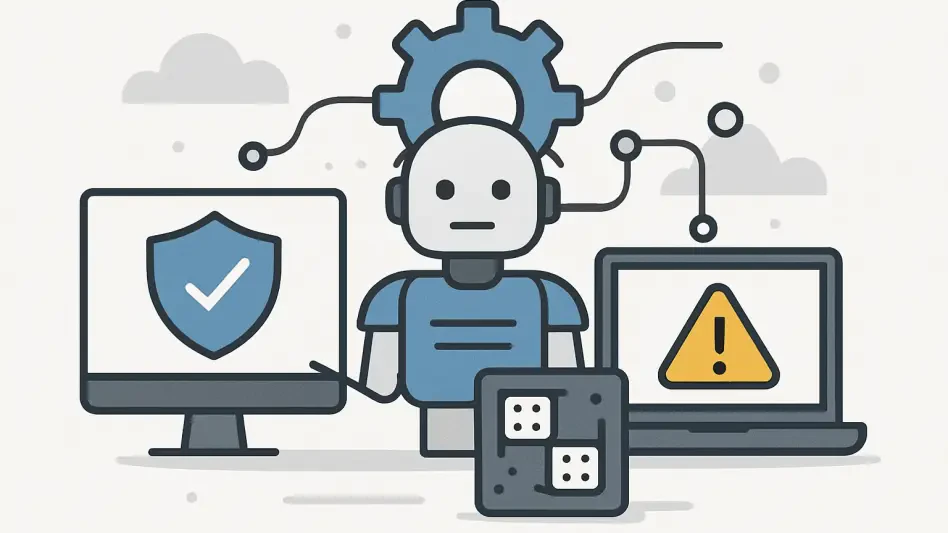
A ticking clock of unpatched vulnerabilities silently counts down within the digital infrastructure of nearly every organization, creating a persistent and often invisible threat to business continuity. In an environment saturated with constant cyber threats, operational resilience has shifted from a best practice to a strategic imperative. Yet, many organizations remain fundamentally vulnerable due to a single, persistent point of failure: traditional patch management. This analysis examines the rise of autonomous patch management, exploring how it is evolving from a technical upgrade into a foundational pillar of security and business continuity. The market drivers, real-world applications, expert consensus, and future impact of this transformative trend will be explored in detail.
The Accelerating Shift Towards Automation
Market Drivers and Adoption Data
The reliance on manual patching has become demonstrably unsustainable. Its operational cost is staggering, with recent reports indicating that an overwhelming 98% of IT professionals find manual patch deployments disruptive to their primary responsibilities, often delaying critical strategic initiatives. This constant state of reactive maintenance creates a significant drag on productivity and fosters an environment where remediation is perpetually deprioritized until a crisis forces action. This reactive cycle is not only inefficient but also dangerous, as it institutionalizes delays in addressing known security flaws.
This inefficiency is compounded by powerful market forces that are driving the demand for automated solutions. Chronic staffing shortages across the cybersecurity sector mean that teams are already overstretched, lacking the human capital to keep pace with the deluge of new vulnerabilities. Simultaneously, the corporate attack surface is expanding at an exponential rate, fueled by tool sprawl, the proliferation of endpoint devices, and the increasing complexity of hybrid infrastructures that span both on-premises data centers and multiple cloud platforms. Manual processes, with their inconsistent coverage and tendency toward configuration drift, inevitably create exploitable “windows of exposure” that attackers are quick to leverage.
Autonomous Patching in Action a Paradigm Shift
Autonomous systems represent a fundamental paradigm shift, reframing patching from a disruptive, reactive task into a continuous, intelligence-driven security function. Unlike the sporadic and labor-intensive nature of traditional patching cycles, an autonomous approach operates as an always-on process that integrates seamlessly into the security ecosystem. It functions not as an intermittent project but as a proactive and predictable system designed to maintain a constant state of security readiness, thereby strengthening an organization’s overall operational resilience.
In a real-world application model, these automated systems continuously scan the entire IT environment to detect emerging vulnerabilities. More importantly, they validate these findings against real-world exploit intelligence to prioritize threats that pose a genuine and immediate risk. Once a threat is confirmed, the system can deploy targeted, tested remediations across the entire ecosystem—from operating systems and third-party applications to cloud instances and on-premises servers. This intelligent and precise approach prevents isolated vulnerabilities from cascading into catastrophic service outages, widespread data breaches, or crippling ransomware events that can halt core business operations for days or weeks.
Expert Consensus Why Manual Patching Is Obsolete
There is a clear consensus among industry professionals that the sheer scale and complexity of modern IT have rendered manual patching not just ineffective but actively dangerous. The speed at which new threats emerge and propagate has far outpaced the capacity for human-powered intervention. This growing gap between vulnerability disclosure and manual remediation creates a permanent state of risk that is no longer acceptable for any organization reliant on its digital infrastructure.
Experts consistently point to several core benefits of automation that directly address these shortcomings. First, autonomous systems are designed to minimize disruption. By using policy-based automation, they deliver constant and predictable remediation without causing the operational chaos associated with emergency, all-hands-on-deck patching events. High-risk vulnerabilities are addressed as they arise, preventing them from escalating into crises that require unplanned and costly downtime.
Furthermore, automation is the only viable method for ensuring consistency at scale. It applies uniform, centrally managed policies across every asset, regardless of its location or type. This comprehensive approach eliminates the coverage gaps and configuration drift that are hallmarks of manual processes, thereby strengthening regulatory compliance and simplifying audits. By automating these repetitive and error-prone tasks, organizations also reduce the risk of human error and free their most skilled personnel from tedious remediation duties. This allows them to refocus on high-value initiatives like stability engineering, recovery planning, and strategic incident response preparation.
Future Outlook The Strategic Impact on Operational Resilience
The future trajectory of autonomous patch management points toward even deeper integration with artificial intelligence and machine learning. These advanced capabilities will transition the practice from proactive remediation to predictive threat analysis, allowing systems to anticipate and neutralize vulnerabilities based on global threat intelligence and internal environmental patterns before they can be widely exploited. This evolution will further shrink the window of exposure, moving security ever closer to a real-time, preventive model.
This technological shift carries profound implications for the business at large. As autonomous systems become standard, operational resilience will transform into a significant competitive advantage. Organizations that can proactively prevent disruptions, rather than just reacting to them, will be better positioned to ensure service continuity, protect brand reputation, and maintain customer trust. This capability enables a business to operate with greater confidence in a volatile digital landscape, turning a robust security posture into a key enabler of growth and innovation.
However, the path to adoption is not without its challenges. The initial complexity of implementing an autonomous system within fragmented or legacy IT environments can be substantial. It requires a clear strategy, careful planning, and a deep understanding of existing dependencies. Moreover, a significant cultural shift is often necessary to build trust in automated systems empowered to make critical changes to production infrastructure. Overcoming this inertia requires strong leadership and a clear demonstration of the technology’s reliability and value.
Despite these hurdles, the long-term benefits are transformative. Organizations that successfully embrace this trend will achieve a vastly enhanced security posture, simplified audit and compliance processes, and a more resilient operational framework. Ultimately, it facilitates the transformation of IT and security teams from reactive firefighters, constantly battling the latest crisis, into strategic enablers who proactively support overarching business goals by ensuring the stable, secure, and continuous delivery of services.
Conclusion Embracing Automation as a Core Business Imperative
This analysis demonstrated that traditional, manual patching has become a significant source of organizational fragility, actively undermining the operational resilience it is meant to protect. Its processes were slow, inconsistent, and incapable of scaling to meet the demands of the modern enterprise, leaving dangerous security gaps that attackers readily exploit. In stark contrast, autonomous systems provide the speed, intelligence, and comprehensive coverage required for building and maintaining resilience in a complex digital world.
The central argument that emerged was that the shift to autonomous patch management is a transformative trend that systematically closes security gaps and hardens the attack surface against modern threats. It replaces error-prone human intervention with a continuous, policy-driven workflow that aligns security remediation directly with real-world risk, thereby preventing vulnerabilities from becoming business-crippling incidents.
The adoption of this technology should not be viewed as a mere technical decision but as a strategic necessity for survival and growth. For organizations committed to the stable and continuous delivery of critical business services, embracing automation has become a core business imperative. It represents a foundational investment in building an enterprise that is not only prepared to recover from disruptions but is engineered to prevent them from occurring in the first place, ensuring a secure and resilient future.