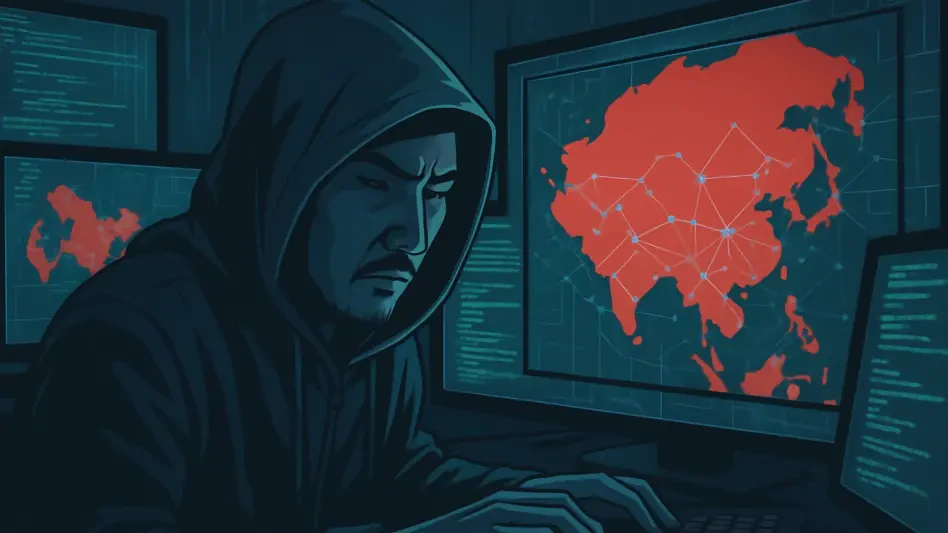

What happens when a seemingly innocent email from a government colleague turns into a gateway for espionage? In the shadowy digital landscape of Central Asia, a sophisticated cyber operation known as Tomiris is striking with precision, targeting diplomats and officials in a region already rife with geopolitical tension. This isn’t just another tech story—it’s a high-stakes game of data theft that could tip the balance of power in an instant. Let’s explore the chilling reality of this silent threat and why it demands urgent attention.
The Stakes of a Digital Battlefield
Central Asia’s strategic importance, bridging Europe and Asia, makes it a prime target for cyber espionage, particularly for state-sponsored groups aiming at government entities in Russia and neighboring nations. The region’s expanding digital infrastructure, while fostering connectivity, also widens the window for attackers to exploit sensitive information. Tomiris exemplifies a worrying shift: rather than fleeting, disruptive hacks, these actors prioritize sustained access to critical systems. Such breaches risk destabilizing governments, straining diplomatic ties, and even affecting global economies. The urgency to address this threat extends beyond IT departments—it’s a matter of safeguarding regional stability.
Inside the Mind of a Cyber Predator
Tomiris has sharpened its arsenal since early 2025, focusing on stealthy, long-term infiltration of government networks across Central Asia. Their methods reveal a calculated approach, blending technical prowess with psychological manipulation to bypass even robust defenses. Dissecting their playbook shows just how far cyber espionage has evolved.
The operation often begins with phishing emails crafted to mimic official government correspondence, frequently themed around economic deals or diplomatic affairs. These messages, embedding malicious files in password-protected archives disguised as routine documents, exploit the trust and haste of busy officials. Once opened, the trap springs, granting attackers a foothold in highly sensitive environments.
Beyond initial access, Tomiris deploys a Rust-based tool to quietly harvest system details and file lists, relaying them through private Discord channels. This clever misuse of a trusted platform dodges conventional security scans, highlighting their knack for turning legitimate tools into weapons. Meanwhile, Telegram bots handle remote command execution, further cloaking their activities within everyday digital chatter, a tactic that challenges even seasoned IT teams.
For high-value targets, the group escalates its efforts with open-source frameworks like AdaptixC2 and Havoc. These enable deep penetration, allowing data theft, screen monitoring, and persistent network access. This isn’t just a smash-and-grab; it’s a patient, deliberate effort to gather intelligence over extended periods, signaling a dangerous new era of digital spying.
Voices from the Frontline
Cybersecurity experts at Kaspersky have raised serious concerns about Tomiris’s relentless focus on espionage over disruption. One researcher warned, “Their exploitation of platforms like Discord and Telegram for covert operations shows how even trusted services can be weaponized. No network traffic is safe from scrutiny.” Data backs this up: phishing attempts targeting Central Asian diplomats have surged since 2025. This threat isn’t isolated—parallel campaigns like the Bloody Wolf APT’s Java exploits in Uzbekistan and North Korean hackers’ OtterCookie malware distribution underscore a broader wave of sophisticated attacks. These insights paint a stark picture: defenders must adapt to a battlefield where stealth trumps brute force.
A Wider Web of Threats
Tomiris isn’t operating in a vacuum; its tactics mirror a global uptick in cyber warfare complexity. Take, for instance, the Bloody Wolf APT group, which recently expanded its reach in Central Asia with Java-based exploits to deploy remote administration tools. Similarly, North Korean actors unleashed nearly 200 malicious npm packages, infecting over 31,000 downloads with OtterCookie malware. Even financial cybercrime intersects here, as seen in the dismantling of Cryptomixer, a hybrid service laundering ransomware proceeds, by Swiss and German authorities. Together, these incidents reveal a multifaceted threat landscape where espionage, malware, and illicit finance intertwine, demanding a holistic response.
Building Defenses Against the Invisible Enemy
Countering a threat as elusive as Tomiris requires more than reactive measures; it calls for proactive, layered strategies tailored to the nuances of cyber espionage. Organizations, especially in vulnerable regions like Central Asia, must rethink their security posture. Email systems need tighter filters and authentication to catch phishing attempts, while staff training should emphasize spotting suspicious attachments. Monitoring must extend to platforms like Discord and Telegram, using advanced tools to detect odd data flows. Endpoint protection solutions are critical to neutralize stealthy tools, and regular security drills can keep employees alert to evolving risks. Finally, regional collaboration among nations can amplify threat intelligence sharing, creating a united front against cross-border operations like these.
Reflecting on a Battle Fought in Shadows
Looking back, the stealth and persistence of Tomiris carved a daunting chapter in Central Asia’s cyber history, exposing vulnerabilities at the heart of government systems. The parallel threats from Bloody Wolf and OtterCookie only deepened the sense of urgency, revealing a world where attackers adapted faster than defenses could keep pace. Yet, this struggle also sparked vital lessons. Moving forward, the path lies in fostering international partnerships to pool expertise and resources, alongside investing in cutting-edge detection technologies. Only through such united, innovative efforts can the digital realm be shielded from predators who thrive in the unseen corners of the internet.