
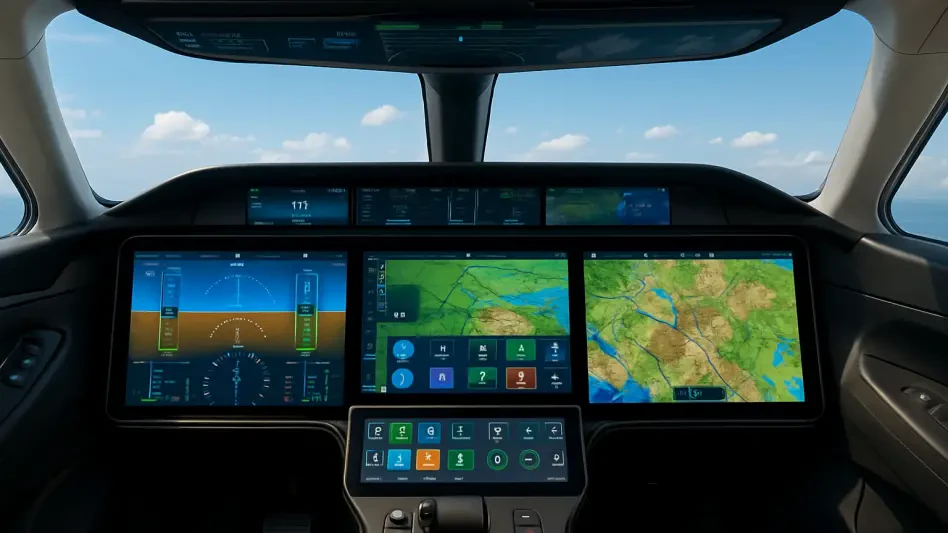
A fundamental transformation is reshaping the aviation industry’s technological core as the long-standing paradigm of hardware-centric flight decks gives way to a dynamic, software-defined avionics (SDA) architecture. This pivotal year marks the inflection point where software is no longer viewed as an ancillary component layered onto complex systems but is now understood to be the avionics itself. This evolution represents a complete re-imagining of how cockpits are designed, certified, valued, and maintained throughout an aircraft’s operational life. The new model effectively decouples an aircraft’s capabilities from its fixed, physical hardware, treating the flight deck’s components as a stable and versatile computing platform. In this environment, significant upgrades, new features, and compliance with emerging regulations are achieved through software updates and configuration changes, providing a level of agility and adaptability that was previously unattainable within the rigid constraints of traditional development and certification cycles.
Driving Forces Behind the 2026 Tipping Point
Bridging the Gap Between Lifecycles and Innovation
Modern aircraft are engineered for remarkable longevity, with airframes designed to remain in service for decades, yet they operate within a regulatory and technological environment that evolves with unprecedented speed. New mandates for performance-based navigation, expanding airspace surveillance requirements, and shifting airline operational concepts change far more rapidly than traditional hardware refresh cycles can accommodate. Software-defined avionics provides the critical agility needed to bridge this temporal gap. It allows an aircraft to adapt to new rules and technologies without the need for costly and time-consuming capital investments in new hardware retrofits. This capability is no longer a luxury but a core requirement for maintaining the operational relevance and economic viability of a fleet. By enabling rapid updates, SDA ensures that aircraft can remain compliant and competitive, maximizing their utility and extending their value over their entire multi-decade lifespan.
The technical bedrock for this revolution has been firmly established through the maturation and widespread adoption of Integrated Modular Avionics (IMA) and accompanying open systems standards. These advanced platforms utilize common, shared computing resources and standardized interfaces, which permits software applications from multiple suppliers to coexist and operate seamlessly on the same hardware. This technological maturity has been instrumental in reducing vendor lock-in, a long-standing challenge in the aviation industry that often stifled innovation and inflated costs. It shortens the development timelines for new features and empowers airlines to selectively adopt new capabilities on an as-needed basis, rather than being forced into comprehensive and expensive cockpit overhauls. This newfound flexibility has become a significant commercial differentiator, allowing operators to customize their avionics suites to meet specific mission profiles and gain a competitive edge in a demanding market.
Enabling Next-Generation Cockpit Intelligence
Many of the most compelling and safety-enhancing innovations poised to enter the cockpit are not delivered in new physical boxes but are born from sophisticated software, particularly in the realm of Artificial Intelligence. The development of AI-assisted functions—such as smarter alerting logic that reduces pilot workload, predictive system health monitoring that anticipates failures before they occur, and enhanced pilot decision support tools—relies entirely on data integration, continuous algorithm refinement, and the capacity for ongoing improvement. These advanced capabilities are not static; they learn and evolve. Consequently, they require an avionics platform that is inherently designed for efficient software updates, validation, and reconfiguration. SDA provides this essential foundation, creating an environment where intelligent systems can be deployed, tested, and improved throughout the aircraft’s lifecycle, paving the way for a safer and more efficient flight environment.
As aircraft become more deeply integrated into an airline’s broader digital ecosystem, their avionics systems are evolving from isolated, self-contained units into active nodes within a vast operational network. This pervasive connectivity is a powerful enabler for real-time fleet health monitoring, centralized software configuration management across hundreds of aircraft, and the secure exchange of operational data between the aircraft and ground systems. Such capabilities are best supported by, and in turn demand, architectures that are inherently designed with updateability and remote management in mind. A software-defined approach is therefore an operational necessity for the connected aircraft. It provides the secure and certified pathways needed to manage software loads, deploy patches, and ensure that every aircraft in a fleet is operating with the latest, most efficient, and most secure version of its system software, all without requiring the aircraft to be taken out of service for manual intervention.
Ecosystem-Wide Implications of the Software-Defined Shift
Redefining Operations and Manufacturing
For airlines and aircraft operators, the widespread adoption of software-defined avionics offers a clear and direct pathway to reducing lifecycle costs while significantly enhancing operational flexibility. This new model enables them to keep their fleets modern and compliant with evolving global regulations without the substantial downtime and massive capital expenditure historically associated with hardware-based upgrades. Instead of grounding an aircraft for weeks to install new physical units, critical updates can be deployed overnight through secure software loads. This agility allows carriers to respond more quickly to market opportunities and regulatory changes, ensuring their assets remain in the air and generating revenue. The ability to incrementally add new capabilities, such as advanced navigation procedures or enhanced datalink functions, allows operators to tailor their aircraft to specific routes and missions, optimizing fuel efficiency and operational performance in a highly competitive landscape.
This paradigm shift has also fundamentally altered the business models of Original Equipment Manufacturers (OEMs). The software-defined model allows airframe manufacturers to de-risk and streamline their complex development cycles. They are no longer required to deliver every conceivable feature and capability at an aircraft’s entry into service, a process that often led to delays and cost overruns. Instead, OEMs can roll out new functionality through certified software updates over time, which completely changes how aircraft are marketed and how the value of early delivery positions is calculated. This creates a continuous relationship with the customer and opens up new, long-term revenue streams through software licensing and subscription services. The cockpit at delivery is no longer a static, finished product but is now merely a starting point for a lifetime of evolution, enhancement, and adaptation to the future needs of the operator.
A New Paradigm for Aircraft Valuation
The financial community, including aircraft lessors and appraisers, is increasingly viewing an aircraft’s avionics architecture as a critical factor in determining its long-term residual value. An aircraft equipped with a flexible, software-upgradable avionics suite is significantly better insulated against the relentless pace of technological obsolescence. This adaptability ensures that the aircraft can be more easily and cost-effectively modified to meet new airspace mandates or the specific operational preferences of a new lessee, which in turn reduces transition costs and minimizes the time an aircraft sits idle on the ground between leases. Consequently, the presence of an SDA platform is becoming a key indicator of an asset’s future-proofing, directly influencing its attractiveness in the secondary market and its ability to retain value over its economic life, making it a more secure investment.
This trend has led to the emergence of new and more sophisticated valuation metrics within the aviation finance sector. The credibility of an aircraft’s software roadmap—its planned trajectory for future updates, feature enhancements, and compliance with anticipated mandates—is becoming as crucial to its valuation and lease rate potential as its engine maintenance status or its airframe structural integrity. An aircraft with a clear and well-supported path for software evolution is seen as a lower-risk asset with a longer and more profitable service life. This represents a profound shift where the intangible value of software and its potential for future growth is now being quantified and integrated into the complex financial models that underpin the multi-trillion-dollar aircraft leasing and sales market, fundamentally changing how risk and opportunity are assessed.
A Foundation for Future Flight
The industry’s decisive pivot to software-defined avionics in 2026 was not merely a technological upgrade; it represented a foundational shift in engineering philosophy that unlocked the next era of aviation. By decoupling an aircraft’s capabilities from its physical hardware, the industry created a platform for continuous improvement and adaptation. The successful navigation of complex challenges, particularly the evolution of certification frameworks to safely manage frequent software updates and the strengthening of cybersecurity protocols, was a testament to the collaborative effort across manufacturers, regulators, and operators. This architectural transformation served as the essential enabler for virtually all other major advancements, from the practical implementation of AI-driven decision support in the cockpit to the full integration of aircraft into the global digital ecosystem. It marked the moment when the industry moved away from a static definition of aircraft capability toward a dynamic model of persistent evolution, a change that has since defined the trajectory of aerospace innovation.