
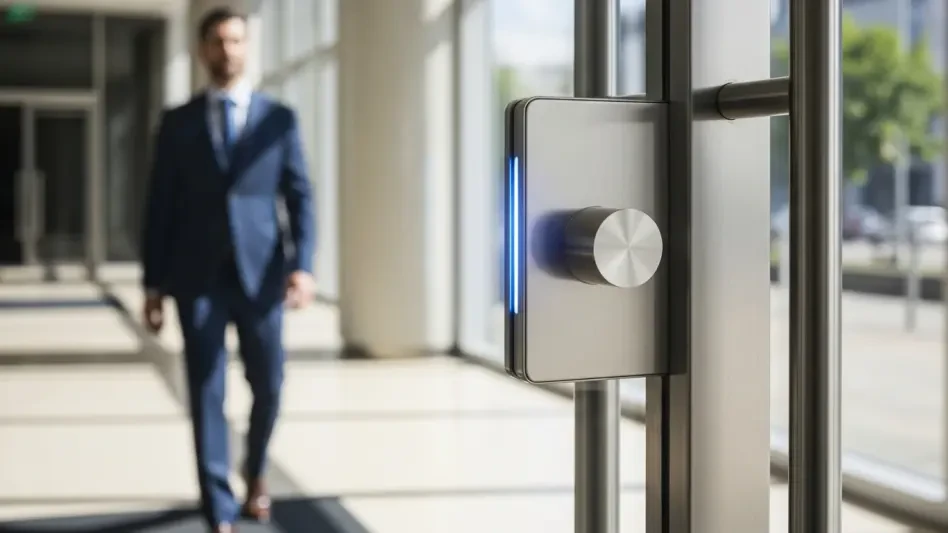
The traditional friction inherent in physical security checkpoints often forces a compromise between robust verification and operational efficiency, yet the landscape of access control is undergoing a profound transformation. As facilities transition toward seamless, high-throughput environments, the demand for systems that do more than just match a face to a database has reached a critical inflection point. At the recent ISC West security conference in Las Vegas, a significant milestone was reached with the introduction of the RealSense ID Pro, a solution designed to transcend standard facial recognition by incorporating intent-aware situational intelligence. This technology represents a shift from passive observation to active engagement, where the hardware understands the context of a user’s approach. By building on the established success of previous models like the F450, this new iteration provides a production-ready form factor capable of large-scale deployment while maintaining the agility required for modern architectural integration across diverse commercial sectors.
Evolution of Facial Recognition Technology
Defining Intent-Aware Biometric Capabilities
Intent-aware systems differentiate themselves by analyzing motion and proximity to determine if a person actually intends to enter a secure zone. Unlike legacy systems that might trigger accidentally as someone walks past a door, the ID Pro uses advanced vision-based AI to filter out non-essential movements. This level of situational awareness ensures that the authentication process only initiates when necessary, reducing system fatigue and improving the overall user experience. The hardware is meticulously engineered to recognize subtle behavioral cues, allowing it to function effectively in high-traffic areas such as corporate lobbies or airport terminals. By focusing on the user’s trajectory and engagement level, the system provides a more natural interaction that feels less like a checkpoint and more like an automated gateway. This capability is essential for organizations looking to modernize their physical security without creating bottlenecks that hinder the daily flow of employees and visitors in complex environments.
Beyond simple movement detection, the integration of specialized neural networks allows for a deeper understanding of environmental variables that could otherwise interfere with biometric accuracy. The system is designed to handle challenging lighting conditions and various physical orientations, ensuring that the intent-aware logic remains consistent regardless of the time of day or the specific layout of the entry point. This technological progression marks the end of an era where biometric sensors were static, unresponsive tools. Instead, the current generation of hardware functions as an intelligent edge device that processes complex visual data in real time to make split-second decisions about authorization. This shift toward intent-driven logic is particularly relevant for high-security facilities where every second of delay can lead to congestion. By refining the criteria for what constitutes a valid access attempt, the system significantly lowers the false-trigger rate, which in turn extends the lifespan of the hardware components and reduces the computational load on the supporting network infrastructure.
Technical Benchmarks and Security Standards
Performance metrics for the ID Pro establish a new industry standard, particularly regarding the speed and accuracy of the underlying authentication engine. With a NIST-verified biometric accuracy rate of 99.77% across diverse demographic groups, the system addresses long-standing concerns regarding algorithmic bias and reliability in global deployments. The authentication cycle is completed in under 250 milliseconds, a timeframe that is virtually imperceptible to the user and facilitates a continuous flow of movement. Furthermore, the device is capable of storing up to 10,000 faceprints locally, which eliminates the need for constant communication with a central server for every individual transaction. This decentralized approach not only improves response times but also enhances the overall resilience of the security network by allowing localized operation even during network outages. The combination of high-capacity local storage and rapid processing power makes it a formidable tool for large enterprises that require both high security and high volume processing at the edge.
Security is further reinforced through rigorous compliance with international standards, such as the iBeta Level 2 Presentation Attack Detection certification. This specific validation confirms that the system is equipped to defend against a wide array of sophisticated spoofing techniques, including the use of high-resolution 3D masks, deepfake projections, and high-quality printed photographs. By utilizing a multi-layered sensing approach, the hardware can distinguish between a living human presence and a digital or physical reproduction, effectively neutralizing the threat of biometric identity theft. This focus on anti-spoofing is critical as artificial intelligence tools for creating realistic synthetic media become more accessible to malicious actors. The implementation of advanced liveness detection ensures that the integrity of the access control system remains uncompromised, even when faced with professional-grade bypass attempts. Consequently, facility managers can maintain a high degree of confidence in the system’s ability to serve as the primary line of defense for sensitive areas where unauthorized entry could lead to significant risk.
Strategic Integration and Industry Applications
Collaborative Ecosystems in Smart Infrastructure
The successful adoption of advanced biometric solutions often depends on their ability to integrate seamlessly with existing building management systems and hardware providers. Strategic partnerships have become a cornerstone of this rollout, with major global players like dormakaba actively incorporating vision-based AI into their latest door and entry system designs. This collaboration allows for the creation of truly “smart” buildings where the entry hardware and the biometric sensor function as a unified entity rather than disparate components. By embedding the ID Pro directly into high-end architectural hardware, manufacturers can offer a more aesthetic and functional solution for modern office spaces and residential complexes. These integrated systems are designed to communicate through standard protocols, making it easier for security integrators to deploy comprehensive solutions without the need for extensive custom programming or specialized physical modifications to the building’s infrastructure. This ecosystem-driven approach ensures that the technology is accessible to a broader range of industries looking to upgrade their physical security.
Innovation is also being driven by specialized software platforms like the Vision 2 system developed by Ones Technology, which is built specifically to leverage the unique capabilities of the new hardware. This platform provides an additional layer of management and analytics, allowing administrators to gain deeper insights into traffic patterns and security events within their facilities. The synergy between high-performance hardware and sophisticated management software creates a robust environment where security is proactive rather than reactive. As more developers utilize the provided API-driven architecture, the range of available applications for this technology continues to expand, covering everything from healthcare facility management to secure retail environments. These partnerships highlight the trend toward open-ended security platforms that can be tailored to the specific needs of a diverse clientele. By fostering a collaborative environment, the industry is moving away from proprietary, “walled garden” solutions toward a more interconnected and versatile model of biometric security that benefits from the collective expertise of hardware engineers and software developers alike.
Deployment Scalability and Privacy Frameworks
One of the most significant challenges in modern biometrics is balancing the need for data-driven security with the increasing demand for individual privacy and data protection. The architecture of this system is fundamentally designed with a privacy-first mindset, ensuring that no personally identifiable information is stored on the device or transmitted across the network during the authentication process. Instead of storing actual images, the system converts facial features into encrypted mathematical representations that are useless to unauthorized parties. This approach significantly mitigates the risks associated with data breaches and aligns with stringent global privacy regulations such as GDPR and CCPA. By removing the liability of managing sensitive biometric data, organizations can deploy these systems more confidently across international borders where privacy laws vary significantly. The emphasis on local processing further ensures that data remains within the physical control of the facility, providing an additional layer of assurance for users who may be wary of cloud-based biometric storage and the potential for centralized surveillance.
Scalability and ease of deployment are also prioritized, as the system is designed as an API-driven solution that requires no complex hardware calibration or specialized tuning for specific environments. This “drop-in” capability allowed organizations to implement the technology rapidly across multiple sites starting from 2026 to 2028, ensuring a consistent security posture throughout a global enterprise. The absence of custom hardware requirements lowers the barrier to entry for smaller firms while providing the robust performance needed by large-scale institutional users. Furthermore, the commitment to responsible AI training policies ensured that the underlying models were developed using diverse datasets, which prevented the systemic errors often found in less rigorous biometric systems. Looking ahead, the focus for security professionals shifted toward integrating these intent-aware systems into broader automated workflows, such as contactless visitor management and automated lighting control based on presence. These advancements provided a clear roadmap for facilities to achieve higher operational efficiency while maintaining an uncompromising stance on both physical security and the ethical handling of user data.