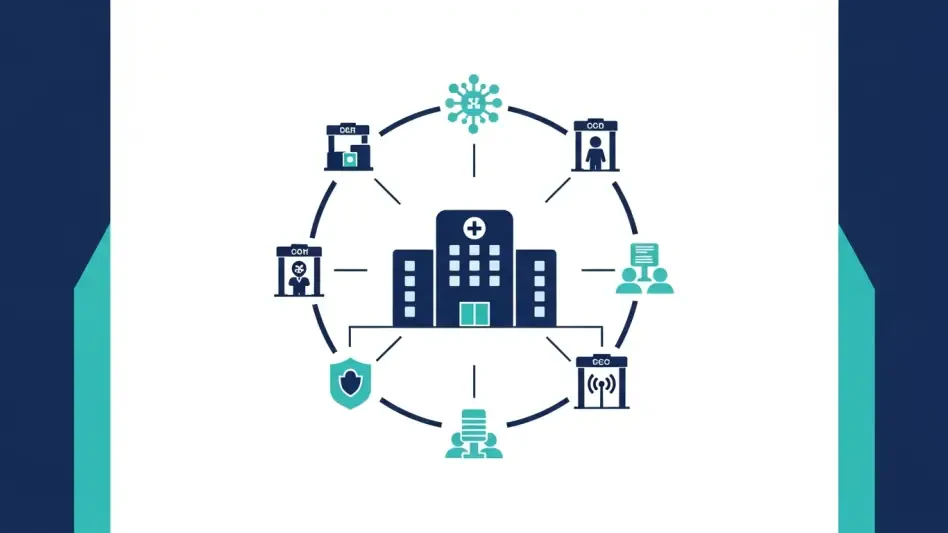

As cybersecurity shields grow stronger within the manufacturing sector, a more sinister threat has emerged from the shadows, transforming ransomware from a simple digital lockdown into a complex campaign of public extortion. This analysis of a recent comprehensive study reveals a critical strategic shift among cybercriminals, who, faced with more resilient defenses, are increasingly bypassing data encryption in favor of data theft and the subsequent threat of public exposure. The research synthesizes the experiences of 332 industry leaders to dissect the root causes of attacks, the evolving monetization strategies of adversaries, and the profound impact these incidents have on organizations and their personnel.
The Evolving Threat Landscape in Manufacturing and Production
The manufacturing and production sector has long been a lucrative target for cybercriminals, but recent trends indicate a significant evolution in both offensive tactics and defensive capabilities. Improved cybersecurity measures have made it more difficult for attackers to successfully encrypt organizational data, a development that would typically be celebrated as a victory. However, this success has inadvertently pushed adversaries to adopt a more insidious strategy: data exfiltration followed by extortion. Instead of merely holding systems hostage, they now hold sensitive data hostage, threatening to leak intellectual property, customer information, and operational plans if their demands are not met.
This strategic pivot is forcing a re-evaluation of what constitutes a “successful” defense. While stopping an encryption event is a crucial achievement, it no longer represents the end of the threat. The core of the problem has shifted from business continuity to data confidentiality and integrity. This article analyzes this dynamic landscape, examining how improved defenses are forcing attackers to change their methods and what this means for the future of cybersecurity in a sector where operational uptime and proprietary data are paramount.
Contextualizing the Ransomware Challenge for Modern Industry
The immense pressure on the manufacturing sector stems from its unique vulnerabilities. The value of its intellectual property—from proprietary product designs to complex chemical formulas—makes it an irresistible target. Moreover, the intricate nature of modern supply chains means that a disruption in one facility can trigger a cascade of costly delays across a global network. The financial repercussions of operational downtime, therefore, extend far beyond a single organization, creating immense pressure to resolve incidents quickly. This environment makes the threat of data leakage particularly potent, as the exposure of trade secrets can inflict long-term competitive damage that far outweighs the cost of a one-time ransom payment.
This research, drawn from the direct experiences of those on the front lines, is essential for shaping the next generation of defensive strategies. The findings illustrate that a security posture focused solely on preventing encryption is now dangerously incomplete. To effectively counter the modern ransomware threat, organizations must evolve their approach to include robust data loss prevention, advanced threat detection, and comprehensive incident response plans that account for the risk of extortion. Understanding these tactical shifts is no longer optional; it is a critical requirement for survival in a hostile digital environment.
Research Methodology, Findings, and Implications
Methodology
The foundation of this analysis is a comprehensive survey conducted among 332 senior IT and cybersecurity leaders within the manufacturing and production sector. Each respondent’s organization had been a direct target of a ransomware attack within the past year, providing a rich dataset grounded in real-world experience. The survey was designed to capture a holistic view of the attack lifecycle, from the initial breach to the final recovery.
The methodology involved gathering firsthand accounts on the specific attack vectors used by adversaries, the internal organizational vulnerabilities that contributed to the breach, and the ultimate outcomes of the incident. By synthesizing these qualitative and quantitative data points, the research provides an authoritative overview of the challenges, successes, and persistent weaknesses defining the sector’s cybersecurity posture. This approach ensures that the findings and subsequent implications are not theoretical but are instead directly reflective of the current threat landscape.
Findings
The data reveals a clear pattern of how attackers breach manufacturing defenses, with exploited technical vulnerabilities leading the way as the root cause in 32% of incidents. This was followed by malicious emails at 23% and compromised credentials at 20%. These technical entry points, however, were frequently amplified by significant operational weaknesses. A lack of in-house expertise was cited as a primary contributing factor in 42.5% of successful attacks, while the presence of unknown security gaps was a close second at 41.6%, highlighting a critical disconnect between security tool deployment and effective operational management.
Despite these vulnerabilities, defensive measures are showing remarkable improvement. The rate at which attacks were stopped before data could be encrypted more than doubled year-over-year to 50%, while the frequency of successful encryption events was cut nearly in half, falling to just 40%. In a direct response to this increased resistance, adversaries have pivoted their tactics. Data exfiltration has become a central component of attacks, and extortion-only incidents—where data is stolen but not encrypted—surged dramatically from 3% to 10% in the sector. This tactical evolution has been accompanied by a severe human cost, with 47% of security teams reporting increased anxiety and 27% seeing leadership changes following an attack. Financially, while average recovery costs have fallen to $1.3 million, the ransom payment rate has also declined from 62% to 51%, with 58% of organizations now successfully using backups to restore operations.
Implications
The clear evolution of ransomware from an encryption-centric threat to an extortion-driven one demands an immediate and strategic shift in defensive priorities. Organizations can no longer focus exclusively on anti-encryption technologies; they must now build a comprehensive security framework centered on data protection and data loss prevention. This means identifying and classifying critical data, monitoring for unauthorized access and exfiltration, and implementing controls that can safeguard information regardless of its location. The threat is no longer just about operational disruption but about the permanent loss of confidentiality.
Furthermore, the research exposes a dangerous skills gap that serves as a primary enabler of breaches. The fact that a lack of expertise is a leading contributor to successful attacks underscores an urgent need for targeted investment in people. This can be achieved through specialized training programs for internal staff, strategic resource allocation to hire cybersecurity talent, or partnerships with managed security providers who can offer 24/7 monitoring and response capabilities. Ignoring this human element creates a fundamental vulnerability that no amount of technology can fully mitigate. Finally, the severe psychological toll on cybersecurity professionals represents a critical and often overlooked business risk. The high levels of stress, anxiety, and burnout threaten talent retention and undermine the operational readiness of security teams, making it imperative for organizations to provide better support systems for their defenders.
Reflection and Future Directions
Reflection
The study successfully established a direct correlation between the manufacturing sector’s improved encryption defenses and the corresponding rise in data exfiltration and extortion tactics by cybercriminals. This confirms a significant and rapid adaptation in adversary strategy, proving that attackers are agile and will consistently seek the path of least resistance to monetization. The findings validate the hypothesis that as one attack vector becomes more difficult, another, more insidious one will take its place.
A primary challenge revealed by the research is the persistent disconnect between the implementation of security technology and the ability to address the underlying human factors that enable breaches. While organizations are investing in tools, they are struggling with the operational weaknesses caused by a lack of specialized expertise and the existence of unknown security gaps. Moreover, the study brought to light the severe mental health toll on security teams, a critical issue that is rarely quantified but has a direct impact on defensive capabilities. The research could have been strengthened by delving deeper into the specific types of intellectual property and operational data being targeted, which would help organizations better quantify their unique risk profiles and prioritize their data protection efforts more effectively.
Future Directions
Looking ahead, several avenues of research are needed to build upon these findings and better equip the manufacturing sector for the future. A longitudinal study investigating the long-term career and mental health impacts on cybersecurity professionals who manage ransomware incidents would provide invaluable insights for developing sustainable talent retention and support strategies. The current data points to a crisis in the making, and understanding its full scope is the first step toward addressing it.
Further studies are also required to measure the effectiveness of specific data-centric security controls in thwarting modern, extortion-focused attacks. While the need for a shift toward data protection is clear, empirical evidence on which tools and strategies—such as data loss prevention (DLP), digital rights management (DRM), or advanced exfiltration detection—yield the best results would be highly beneficial. Lastly, a detailed analysis into the reasons behind the manufacturing sector’s comparatively low data recovery rate (91%) could uncover systemic issues in backup strategies, incident response planning, or recovery processes. Unpacking this anomaly could yield powerful, actionable insights for improving organizational resilience across the industry.
A Multi-Layered Strategy for a Resilient Manufacturing Sector
The research underscored that ransomware has morphed from a singular threat of data encryption into a multi-faceted extortion crisis, demanding a far more sophisticated, defense-in-depth strategy. It was clear that a proactive approach built on four interconnected pillars—Prevention, Protection, Detection and Response, and Planning—was essential for building true resilience. By methodically addressing technical vulnerabilities, closing critical operational gaps, and providing robust support for security personnel, manufacturing organizations demonstrated they could effectively counter threats of operational disruption, intellectual property theft, and severe financial loss in this new era of cyber threats.