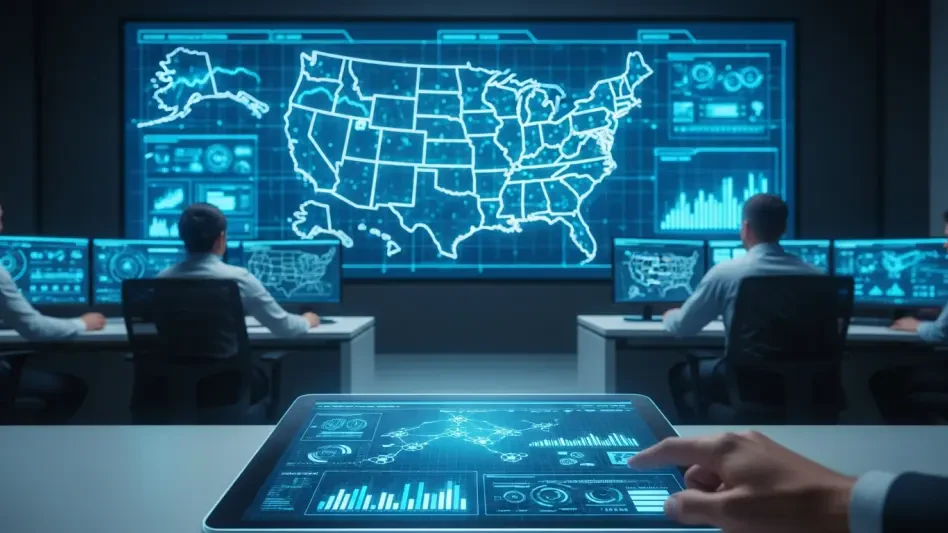

The stability of modern society hinges on a silent, intricate web of power lines and digital controls, a system increasingly vulnerable to disruption by a single malicious line of code. Recognizing this digital Sword of Damocles, a bipartisan group of lawmakers in the U.S. House of Representatives has introduced landmark legislation designed to fortify the nation’s energy infrastructure against a growing tide of cyber threats. Sponsored by Rep. Kathy Castor (D-FL) and Rep. Gabe Evans (R-CO), the Energy Threat Analysis Center Act of 2026 aims to create a unified, proactive defense by formalizing the collaboration between the federal government and the private sector entities that keep the lights on for millions of Americans.
When the Lights Go Out by a Keystroke: Is the Power Grid Ready?
America’s energy grid is a marvel of engineering, yet its complexity is also its vulnerability. A sprawling network of legacy analog systems and modern digital controls, it presents a patchwork of security challenges. As utilities embrace smart grid technologies and the Internet of Things to improve efficiency, they inadvertently expand the potential attack surface, creating new entry points for malicious actors. This digital transformation, while beneficial for operations, requires a parallel evolution in cybersecurity that has struggled to keep pace with the rapidly changing threat landscape.
The consequences of a successful cyberattack extend far beyond a simple blackout. A coordinated assault could trigger cascading failures across interconnected systems, crippling communications, transportation, and financial services. Such an event would not only cause massive economic disruption but also pose a direct threat to national security, undermining public safety and the government’s ability to function. The question is no longer if such an attack is possible, but whether the nation is prepared to withstand and recover from it when it inevitably occurs.
The Invisible Battlefield: Why the Energy Sector Is a Prime Target
The energy sector has become a focal point in a global, invisible conflict waged in cyberspace. State-sponsored hacking groups, backed by the resources of foreign governments, probe these critical systems for intelligence, to pre-position for future conflict, or to gain geopolitical leverage. Simultaneously, sophisticated ransomware syndicates, motivated by financial gain, see utilities as high-value targets, capable of paying substantial ransoms to restore essential services and avoid public panic. The very criticality of the energy infrastructure makes it an irresistible objective for those seeking to cause maximum disruption.
This targeting is not theoretical; it is an active and escalating reality. A recent report from the cybersecurity firm Cyfirma highlighted a significant increase in cyber threats aimed at the energy and utilities sector. These attacks are growing not only in number but also in sophistication, as adversaries refine their tactics to exploit vulnerabilities in operational technology—the specialized systems that control physical processes like power generation and distribution. This trend underscores the urgent need for a more coordinated and intelligence-driven defensive strategy.
A Bipartisan Shield: Unpacking the Energy Threat Analysis Center Act
In response to this clear and present danger, the Energy Threat Analysis Center Act of 2026 offers a legislative shield. The bill, enjoying support from both sides of the aisle, seeks to reauthorize and significantly expand the Department of Energy’s existing Cyberresilience Program. Its central purpose is to move beyond siloed, reactive security measures toward a cohesive, national defense framework where government and industry work in lockstep to protect the grid.
The cornerstone of this legislation is the formal establishment of an Energy Threat Analysis Center. This center is envisioned as a central hub for real-time collaboration. It will facilitate the sharing of both classified and unclassified threat intelligence, enabling joint analysis of adversary tactics and capabilities. By creating a unified picture of the threat landscape, the center will allow for faster detection of intrusions and more effective, sector-wide mitigation efforts, transforming the way the nation defends its most critical infrastructure.
Building a Collaborative Defense: Key Provisions to Foster Industry Trust
A primary obstacle to effective public-private cybersecurity partnerships has always been the issue of trust and liability. Private companies are often hesitant to share sensitive information about vulnerabilities or incidents for fear of regulatory penalties, legal action, or reputational damage. The proposed bill directly addresses these concerns by creating a trusted environment for collaboration. It includes critical legal protections, stipulating that information shared voluntarily with the center will be exempt from disclosure under the Freedom of Information Act (FOIA) and similar state-level public records laws.
Furthermore, the legislation grants the Secretary of Energy “sole and unreviewable discretion” over the program’s activities, a provision designed to ensure agility and prevent legal entanglements that could slow down rapid response efforts. This clarifies that providing assistance to one entity does not create a right for others to receive similar support, protecting the department from potential litigation. To ensure this initiative has lasting impact, the bill extends the program’s authorization through fiscal year 2031, signaling a long-term commitment to securing the nation’s energy future.
The introduction of this bill marked a critical acknowledgment that the digital and physical worlds are inextricably linked, especially where national infrastructure is concerned. By fostering a collaborative ecosystem built on trust and shared intelligence, the legislation laid the groundwork for a more resilient and adaptive defense posture. Its success ultimately depended on the willingness of both public and private stakeholders to embrace this unified approach, recognizing that in the invisible battle for the grid, a coordinated shield was far stronger than any single wall. The act represented a pivotal step toward ensuring that the nation’s power remained in the hands of its operators, not at the mercy of a keystroke from afar.