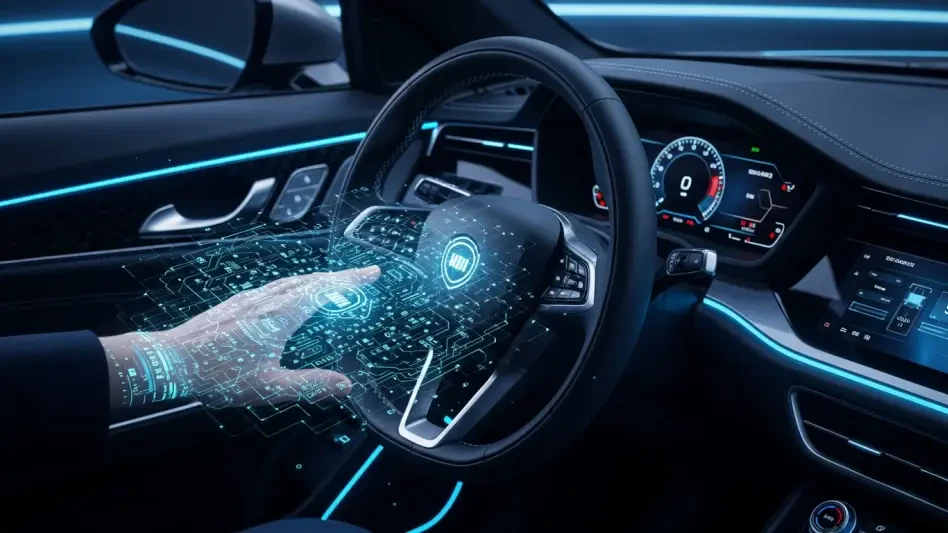
The familiar jingle of car keys may soon become a sound of the past, as Mercedes-Benz has secured a patent for an advanced palm-vein biometric system poised to redefine how we access and interact with our vehicles. This groundbreaking technology proposes a future where a simple, contactless wave of the hand over a sensor is all that is required to unlock and start a car. By leveraging the intricate and unique network of veins within an individual’s palm, the system promises a level of security and convenience that traditional keys and even modern fobs cannot match. This innovation is not merely a novelty; it represents a strategic move by the luxury automaker to address the escalating cybersecurity risks in an increasingly connected automotive world. It aims to establish a new standard for seamless, personalized mobility, aligning perfectly with the industry’s trajectory toward more sophisticated, intuitive, and secure user experiences in the age of electric and software-defined vehicles.
A New Frontier in Biometric Security
The technological foundation of this system is both elegant and robust, utilizing a near-infrared scanner that can be discreetly integrated into a vehicle’s door handle or dashboard. When a user presents their hand, the scanner emits near-infrared light, which is absorbed by the deoxygenated hemoglobin flowing through the veins. This process causes the unique vein pattern to appear as a dark network against the lighter surrounding tissue. A specialized sensor captures this image, converts it into an encrypted digital template, and uses it for verification. This subsurface approach provides a distinct advantage over more common biometric methods. Unlike fingerprint readers, which can be foiled by moisture, dirt, or minor skin abrasions, the palm-vein system is largely impervious to external conditions. It is also less intrusive than facial recognition technologies, mitigating many of the privacy concerns associated with constant camera-based monitoring, while the internal nature of vein patterns makes them exceptionally difficult to replicate or spoof.
Security remains the paramount benefit of this pioneering technology. Palm-vein patterns are not only unique to each person but also remain stable throughout an individual’s lifetime, offering a far more reliable identifier than fingerprints, which can change due to age or wear. To safeguard this highly sensitive biometric data, the system employs robust encryption protocols. The patent specifies that the digital template is encrypted and stored locally within the vehicle’s own secure hardware module, deliberately avoiding transmission to external cloud servers. This on-board storage strategy directly addresses widespread consumer and regulatory concerns regarding data breaches, effectively minimizing the risk of remote hacking and unauthorized access. By authenticating the driver directly at the vehicle, the system is designed to neutralize prevalent car theft techniques like relay attacks and signal jamming, which exploit vulnerabilities in conventional keyless entry fobs. This multi-layered security architecture positions the technology as a formidable defense in the modern automotive landscape.
Redefining the Driving Experience
The true potential of palm-vein biometrics extends well beyond simple vehicle access, heralding a new era of deep in-cabin personalization. Upon recognizing an authenticated driver, the vehicle could instantly and automatically adjust a wide array of settings to match their pre-saved preferences. This includes tailoring the position of the driver’s seat, steering wheel, and mirrors; setting the climate control to the desired temperature and fan speed; and loading the user’s favorite infotainment configurations, playlists, and navigation destinations. This capability transforms the car from a generic mode of transportation into a bespoke environment that anticipates the driver’s needs. When integrated with other sophisticated systems, such as the AI-driven MBUX Virtual Assistant, it contributes to a holistic and supremely intuitive user interface. This synergy allows for a seamless transition from a contactless entry gesture to conversational voice commands, realizing a vision of effortless, natural interaction between the driver and their vehicle.
This patent places Mercedes-Benz at the forefront of a significant industry-wide shift toward intelligent and frictionless vehicle interactions. The global automotive biometrics market is currently experiencing robust growth, driven by consumer demand for heightened convenience, personalization, and advanced anti-theft measures. Market analyses project this sector will expand significantly, potentially reaching a valuation of $1.6 billion by 2032. While competitors are also innovating with biometrics, such as facial and voice recognition, Mercedes’ strategic focus on the subtle and superior security of palm-vein scanning could provide a crucial competitive advantage. Beyond private vehicles, this technology holds immense potential for commercial applications. In fleet management and car-sharing services, it could streamline operations by eliminating physical keys, reducing fraud, and ensuring that only authorized individuals can operate the vehicles, thereby enhancing both efficiency and security.
Navigating the Path to Adoption
The successful implementation of this technology will hinge on overcoming several practical and perceptual hurdles. A primary consideration is accessibility, as the system needs to function reliably for all users, including those with certain circulatory conditions or hand injuries that could potentially affect vein visibility. To ensure inclusivity, reliable fallback methods, such as a dedicated smartphone application or a physical keycard, are essential components of the overall design strategy. Furthermore, consumer adoption represents a critical challenge. Many drivers remain accustomed to the tangible security of a physical key, and overcoming skepticism toward biometric data collection will require a concerted effort in transparent communication about privacy safeguards and a flawless real-world performance. The patent filing marks a bold and forward-thinking step, signaling a future where a simple, intuitive gesture could unlock the next generation of secure and personalized mobility. The industry will be observing closely as prototypes emerge, viewing them as the ultimate test of the technology’s practicality and consumer appeal.