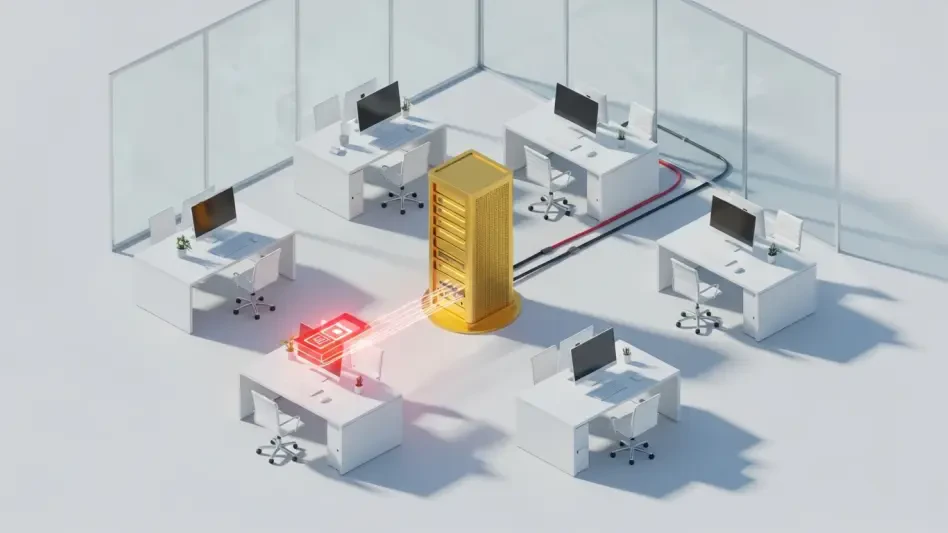

The silent hum of a power station or the rhythmic clatter of a freight train often masks a fragile digital reality where critical components remain tethered to an increasingly hostile public internet. While the push for efficiency has merged industrial operations with global connectivity, this synergy has inadvertently birthed a dangerous security paradox. Recent investigations into Industrial Control Systems (ICS) reveal a landscape where the backbone of modern civilization—power grids, water treatment plants, and transportation networks—is far more vulnerable than the public might assume. Many of these systems are directly exposed to external scanning, often relying on legacy technologies that were never intended to face the sophisticated threats of the current era. This digital exposure is not merely an IT concern; it represents a physical risk to public safety and national stability. As the barrier between the virtual and physical worlds continues to dissolve, the urgency of securing these environments has reached a critical threshold that demands immediate attention from both policymakers and engineers.
The Vulnerability of Legacy Protocols and Direct Port Exposure
The primary technical challenge stems from the continued use of Modbus, a data communications protocol that has remained an industry standard since its introduction in the late 1970s. Designed for an era when industrial devices were physically isolated or “air-gapped” from external networks, Modbus lacks the fundamental security features that define modern digital communication. It does not support encryption, meaning data packets can be intercepted and read in plain text, nor does it require any form of authentication. In a localized factory setting forty years ago, these omissions were negligible risks. However, in the current landscape, this lack of security means that any device running the protocol is essentially speaking a language that anyone can overhear and manipulate. The persistence of this legacy technology in modern infrastructure highlights a significant lag between industrial hardware lifecycles and the rapid evolution of cybersecurity threats.
Beyond the inherent weaknesses of the protocol itself, the method by which these systems are connected to the internet creates an easily accessible entry point for malicious actors. Security researchers have identified hundreds of industrial devices globally that are reachable via port 502, which is the default gateway for Modbus communication. Many of these systems are configured such that they require no username or password for access, providing an open invitation for everyone from amateur “script kiddies” to highly organized state-sponsored hacking groups. This “low-hanging fruit” represents a systemic failure in network configuration and oversight. By allowing direct access to the internal logic of a power grid or a manufacturing line, operators are bypassing the very security perimeters designed to protect them. The ease with which these ports can be discovered using simple scanning tools turns critical infrastructure into a visible target for anyone with basic networking knowledge.
Geographical Risks and Vital Sector Vulnerabilities
The distribution of these vulnerabilities is not uniform, with specific industrialized nations showing a higher concentration of exposed systems. The United States currently leads the world in the number of identifiable industrial control devices accessible via the public web, followed closely by nations such as Sweden and Turkey. This trend suggests that higher levels of technological integration often correlate with a larger “attack surface” if security protocols are not updated in tandem with connectivity. These findings are particularly concerning because the exposed devices are not limited to minor industrial processes. Instead, they are frequently linked to vital infrastructure that supports millions of citizens. When a high-tech economy relies on a network of connected sensors and controllers to manage its daily life, the presence of even a few dozen exposed entry points can jeopardize the stability of the entire national economy and its public services.
Within these vulnerable regions, the sectors at risk include some of the most sensitive areas of societal function, such as transportation and energy distribution. For instance, researchers have identified controllers linked to national railway networks where a compromise could lead to disastrous logistical failures or even physical accidents through the manipulation of signaling systems. Similarly, the energy sector remains a prime target, with numerous devices identified as part of electrical power grids in Asia and Europe. A successful intrusion into these systems could allow an attacker to trigger widespread blackouts or, more destructively, cause physical damage to expensive electrical hardware by inducing controlled power surges. The potential for disruption extends to water treatment facilities and chemical plants, where the manipulation of a single valve or sensor could have immediate and catastrophic environmental consequences for the surrounding communities.
Technical Hardware Specifics and the Malware Threat
A closer examination of the exposed hardware reveals that equipment from major manufacturers, including Schneider Electric and ABB Stotz-Kontakt, is frequently visible to online scanners. When an attacker identifies a specific model, such as a Schneider logic controller or an eGauge energy meter, they gain the ability to cross-reference that device with publicly available manufacturer documentation. These technical manuals often contain “register lists” that map the device’s internal memory locations to real-world physical values. With this information, a digital intruder is no longer just guessing; they know exactly which memory address corresponds to temperature, pressure, or motor speed. This level of granular detail allows for high-precision sabotage, where an attacker can slowly increase the pressure in a system until it reaches a breaking point, all while spoofing the monitoring data to show that operations are normal until the moment of failure.
The risk of such technical exploitation is grounded in a well-documented history of industrial malware that has transitioned from theoretical research to real-world deployment. Programs such as Stuxnet, which was famously used to degrade nuclear centrifuges, and Industroyer, which successfully crippled parts of a regional power grid, serve as stark reminders of what specialized code can achieve. These historical examples demonstrate that once an entry point like an exposed Modbus port is secured by an attacker, they can deploy sophisticated payloads designed specifically to disable safety instrumented systems. These safety systems are the final line of defense intended to prevent physical explosions or chemical leaks. By neutralizing these safeguards, modern malware turns industrial equipment into a weapon against itself. The current state of internet-exposed ICS devices provides the perfect environment for the next generation of industrial malware to take root and cause lasting physical damage.
Growth Projections and Resilient Defense Frameworks
The scale of this challenge is expected to intensify as the industrial automation market continues its rapid expansion, with projections suggesting a valuation of over $504 billion by 2033. This growth signifies a massive influx of new connected devices entering the global supply chain, many of which will be integrated into existing legacy environments. If the current trend of direct internet exposure continues, the attack surface available to cybercriminals will grow much faster than the implementation of modern security standards. The rapid adoption of industrial internet technologies provides significant economic benefits, but it also creates a systemic risk that could undermine those very gains. Without a fundamental shift in how organizations prioritize the security of their operational technology, the gap between the speed of digital innovation and the strength of our defensive measures will continue to widen, leaving essential services in a state of constant peril.
Establishing a resilient defense required a transition toward multi-layered security architectures that prioritized the isolation of critical control systems from the public web. Effective strategies involved the deployment of virtual private networks and industrial-grade firewalls to create secure, authenticated tunnels for any necessary remote access. Organizations also moved toward rigorous network segmentation, ensuring that a breach in a corporate office environment could not laterally migrate into the sensitive industrial control layer. Furthermore, the industry began a gradual but necessary shift away from legacy protocols like basic Modbus, opting instead for secure versions that integrated robust encryption and mandatory authentication. These steps were not merely technical adjustments but represented a holistic change in organizational culture where cybersecurity was treated as a prerequisite for operational safety. By implementing these measures, infrastructure operators successfully reduced their visible footprint and significantly raised the cost of entry for potential attackers.