
A single, publicly exposed automation endpoint could be the one unlocked door that allows an intruder to not just enter your digital house, but to seize the master key to every connected service, database, and application you own. For thousands of organizations, that hypothetical scenario has become a tangible threat with the discovery of a critical vulnerability in the n8n automation platform. This guide explains the danger and outlines the essential steps to secure your infrastructure.
A Perfect Storm The ni8mare Vulnerability Explained
n8n has established itself as a powerful low-code platform, acting as the central nervous system for countless business workflows. It orchestrates actions between disparate systems, from CRMs and databases to cloud storage and communication tools, making it an indispensable asset for operational efficiency. However, its position as a central hub also makes it a prime target for malicious actors seeking widespread access.
This risk was brought into sharp focus with the discovery of “ni8mare” (CVE-2026-21858), a maximum-severity vulnerability assigned a perfect Common Vulnerability Scoring System (CVSS) score of 10.0. A score this high signifies a flaw that is both easy to exploit and catastrophic in its potential impact. The discovery challenges administrators to look beyond n8n’s utility and critically assess its security posture within their environment.
The goal of this analysis is to dissect this vulnerability, not to cause alarm, but to foster a clear understanding of the threat. By examining how the exploit works, assessing its true impact on a connected enterprise, and detailing the mitigation path, organizations can transform this potential crisis into a lesson in proactive security management for deeply integrated platforms.
Why This Flaw Threatens Your Entire Digital Infrastructure
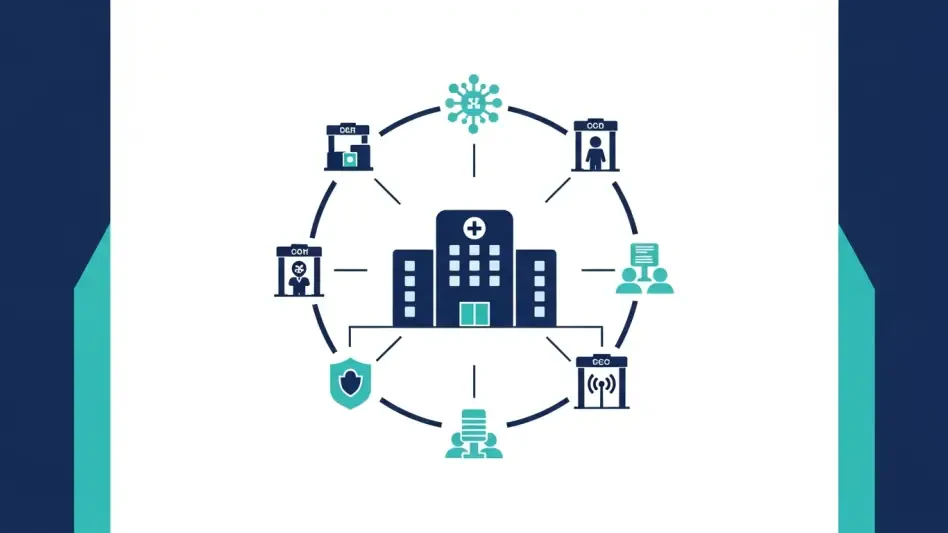
In cybersecurity, the “blast radius” refers to the total potential damage a single security breach can cause. For a central automation tool like n8n, this radius is immense. A compromise is not contained to the n8n server itself; instead, it radiates outward, touching every single application and service it is configured to interact with, turning a localized incident into a systemic failure.
The value of an n8n instance to an attacker lies in the secrets it holds. These platforms are routinely entrusted with API keys, OAuth tokens, database credentials, and other sensitive authentication data needed to perform their automated tasks. Gaining access to the n8n server is equivalent to finding a master key ring that unlocks access to payment processors, customer data in Salesforce, internal documents in cloud storage, and much more.
Consequently, the compromise of a single self-hosted n8n server can trigger a complete organizational breach. An attacker who gains control of the platform effectively inherits its permissions across your entire digital ecosystem. This elevates the vulnerability from a simple server takeover to a catastrophic event that can lead to massive data exfiltration, financial loss, and irreparable reputational damage.
The Anatomy of an Attack and How to Defend Against It
Understanding the mechanics of the “ni8mare” vulnerability is crucial for appreciating the urgency of the required response. The flaw itself is deceptively simple, yet its potential for escalation is what makes it so dangerous. Defending against it requires immediate and decisive action from every administrator running a self-hosted instance.
The Exploit How a Simple Webhook Becomes a Backdoor
At its core, the vulnerability stems from a “Content-Type Confusion” issue. An unauthenticated attacker can send a request to an n8n webhook endpoint with specially manipulated HTTP headers. This manipulation tricks the application into misinterpreting the nature of the incoming data, allowing the attacker to overwrite internal variables that were never meant to be accessible.
This initial access provides the foothold needed for escalation. In a typical attack scenario, an adversary targets a public webhook, using the header confusion to first gain the ability to read arbitrary files from the server’s filesystem. They can then retrieve sensitive configuration files containing secrets or credentials. With this information, the attacker can leverage their position to achieve full Remote Code Execution (RCE), granting them complete command-line control over the server and, by extension, every system connected to it.
The Mandate Why Upgrading Is the Only Option
Given the nature of this vulnerability, there is no viable workaround or partial mitigation. The only effective defense is to upgrade your n8n instance to version 1.121.0 or any later release where the flaw has been patched. This is not a recommendation but a mandate for any organization that values its digital security. Any instance running an older version remains critically exposed.
The disclosure timeline adds another layer of concern. Security firm Cyera reported the flaw to the n8n team in November 2025, and a patch was admirably released in just over a week. However, this fix was shipped weeks before the vulnerability was publicly assigned a CVE identifier. This “silent patch” created a dangerous window where tens of thousands of self-hosted instances were vulnerable to a devastatingly simple attack, with their administrators completely unaware of the risk.
Conclusion A Powerful Tool That Demands Responsibility
The “ni8mare” vulnerability served as a stark reminder that with great power comes great responsibility. It demonstrated how the very interconnectedness that makes n8n an invaluable automation engine also transforms it into a critical point of failure if not properly secured. The incident underscored the security diligence required when self-hosting platforms that hold the keys to an entire digital kingdom.
For all administrators running self-hosted n8n instances, the immediate imperative was to verify their software version and perform an upgrade without delay. This was not a routine maintenance task but a critical security intervention necessary to protect organizational assets from a severe and easily exploitable threat.
Ultimately, while the flaw itself was critical, the prompt response from the n8n team provided a clear and effective path to mitigation. The security of the wider ecosystem rested on the swift action of individual organizations to apply the available patch, proving that proactive maintenance and awareness are the cornerstones of a resilient security posture in an increasingly automated world.