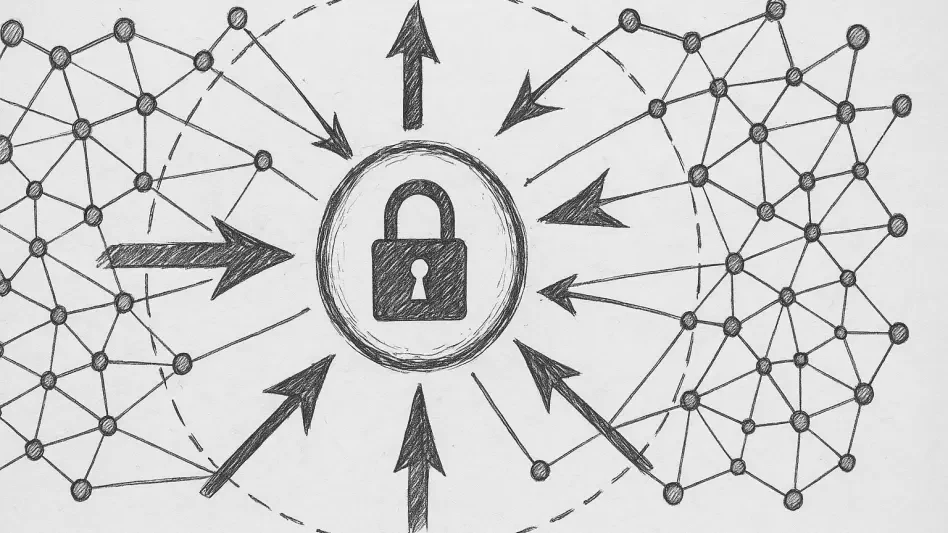

The transparency of open-source software now serves as a double-edged sword by allowing AI bots to analyze git logs for insecure coding patterns in real-time. For decades, the cybersecurity industry relied on a predictable rhythm where researchers provided a ninety-day window for vendors to patch flaws. This buffer was designed to protect users while developers worked on complex fixes. However, the emergence of advanced large language models has shattered this timeline by automating the identification of memory safety issues and logical errors that previously took weeks of manual labor to uncover. Modern security professionals are observing a paradigm shift where the grace period is no longer a safety net but a period of high risk. As attackers deploy autonomous agents to crawl through public repositories, the distinction between a private disclosure and a public exploit is blurring. Organizations that continue to rely on the traditional three-month cycle find themselves vulnerable to actors who can process vast quantities of data in seconds.
The Evolution of Discovery Speed
AI-Driven Persistence in Code Analysis
Modern large language models operate without the constraints of human fatigue or the need for specific contextual focus, allowing them to scan millions of lines of code across thousands of repositories simultaneously. These models are trained on decades of historical vulnerability data, which enables them to recognize subtle patterns and “bad programming habits” that frequently lead to buffer overflows or injection flaws. Unlike traditional static analysis tools that often generate high rates of false positives, AI-integrated scanners provide a more nuanced understanding of data flow and execution paths. This capability has fundamentally changed the economics of bug hunting, making it possible for both ethical researchers and malicious entities to maintain a constant vigil over software projects. The sheer scale of this automated surveillance means that once a specific type of vulnerability is identified in one codebase, the AI can immediately search for identical or similar structural weaknesses across the entire digital ecosystem.
The Collision Effect and Simultaneous Discovery
The democratization of advanced AI tools has led to a significant increase in bug collision, where multiple independent researchers or automated bots discover the exact same vulnerability within a very narrow timeframe. When a flaw is identified by a human researcher, the assumption was traditionally that they held a unique piece of information that could be managed through responsible disclosure. However, in the current landscape, if an AI bot can find a bug in a few minutes of processing time, it is statistically probable that other bots—some controlled by nation-state actors or cybercriminal syndicates—have already flagged the same issue. This reality creates a dangerous race condition where a ninety-day waiting period provides a window for covert exploitation before the official patch is even finalized. Security experts now argue that the probability of a “private” bug remaining secret for three months has plummeted, necessitating a reevaluation of how long a vendor can safely keep a known vulnerability under wraps without endangering the public at large.
The Rapid Weaponization of Software Patches
The Threat of Instantaneous 1-Day Exploits
One of the most critical threats emerged from the ability of AI to perform near-instantaneous patch analysis, transforming a newly released fix into a blueprint for a “1-day” exploit. By utilizing automated diffing tools, attackers can compare the updated version of a software package with its predecessor to pinpoint exactly which lines of code were modified. AI models can then interpret these changes to understand the underlying logic of the vulnerability and generate a functional exploit script in as little as thirty minutes. This rapid reverse-engineering bypasses the traditional delay between patch release and exploit availability, often leaving system administrators with no time to test or deploy the update. In this environment, the public release of a patch acts as a starting gun for a sprint that the defenders are already losing. The speed at which these automated scripts can be weaponized against unpatched systems has effectively turned what was once a defensive advantage into a source of immediate, widespread systemic risk.
Real-World Evidence and the Shift to P0 Urgency
Recent high-profile security incidents involving the Linux kernel, specifically the “Copy Fail” and “Dirty Frag” vulnerabilities, provided clear evidence that the industry is abandoning the ninety-day disclosure model. In these instances, the critical nature of the flaws and the ease with which AI bots could identify them forced developers to shorten the disclosure window to just a few days. This shift signifies the adoption of a “Priority 0” mindset, where every critical vulnerability is treated as a localized emergency requiring immediate public notification and remediation. The transparency of the open-source development process, while beneficial for community collaboration, provides AI bots with total visibility into the evolution of codebases, making it impossible to hide significant changes for long. These cases highlighted that the risk of exploitation has become so high that the traditional buffer is now perceived as a liability. This movement toward shorter timelines is gaining momentum as vendors realize that delay no longer buys safety.
Strategic Shifts Toward Continuous Security
To mitigate these mounting risks, forward-thinking organizations implemented a fundamental overhaul of their defensive strategies by integrating AI directly into their development pipelines. This proactive approach focused on identifying and neutralizing vulnerabilities at the point of creation, long before the code reached a production environment or a public repository. The transition away from rigid patch cycles toward a model of continuous remediation allowed security teams to stay ahead of automated exploitation tools. By deploying autonomous agents that could analyze incoming commits and apply security fixes, companies reduced their exposure time from months to mere seconds. These advancements transformed the cybersecurity landscape from a reactive struggle into a dynamic, data-driven defense posture. Ultimately, the industry recognized that the traditional ninety-day window was a relic of a slower era. By embracing real-time monitoring and automated response mechanisms, defenders established a new standard of resilience that addressed the challenges posed by high-speed, AI-driven cyber threats.