
A catastrophic building fire erupts not from a discarded cigarette or faulty wiring but from a silent, malicious line of code pushed to the HVAC system by an unknown third-party vendor, triggering an unstoppable thermal event. This is not a futuristic scenario; it is the present reality of Operational Technology (OT) risk, a pervasive and profoundly misunderstood threat vector that has already breached the insurance industry’s defenses. The central challenge is not that these losses are occurring, but that they are being systematically misidentified. Carriers are paying for these programmable catastrophes, yet the claims are being recorded on loss runs as conventional equipment failures, acts of nature, or human error, creating a massive, unaccounted-for hole in risk pools and skewing actuarial models toward an obsolete understanding of peril.
The insurance industry has crossed a critical threshold where the digital control of physical systems is no longer a niche concern but a primary driver of loss across every major line of business. From property damage and general liability to workers’ compensation and professional liability, the failure to distinguish between a mechanical breakdown and a programmable malfunction is leaving carriers exposed to a silent drain on their reserves. This systemic blind spot demands a fundamental shift in underwriting, claims adjusting, and risk assessment—a move away from siloed thinking toward a holistic view that recognizes how a single line of code can trigger a multimillion-dollar physical disaster.
The Ghost in the Machine When a Software Glitch Causes a Physical Catastrophe
The core of the issue lies in a failure of classification. When a digitally controlled sprinkler system fails to activate during a warehouse fire due to a network segmentation error, the resulting property claim is almost invariably coded as “fire damage,” not as a technology failure. The true root cause—the programmable element—vanishes from the record, becoming a ghost in the claims data. This omission prevents underwriters and actuaries from pricing the risk accurately, as the data they rely on tells an incomplete and dangerously misleading story. The frequency and severity of what appear to be standard perils are being inflated by these invisible technological triggers.
This phenomenon has created an environment where insurers are already covering these losses without realizing the full scope or origin of their exposure. The industry has effectively been subsidizing the unmanaged OT risks of its insureds. The “event horizon” has been passed; these are not future threats but present-day losses that have been absorbed under the guise of conventional claims. Until the industry develops the forensic capability to trace a kinetic event back to its digital origin, it will continue to operate with a fundamentally flawed understanding of its own risk landscape, leaving a gaping vulnerability in its financial foundations.
Beyond the Firewall Why Operational Technology Is Not Just Another IT Problem
A critical error in modern risk management is the conflation of Information Technology (IT) with Operational Technology (OT). IT risk management is primarily concerned with protecting data and information systems; a failure results in data breaches, financial theft, or service interruptions. In contrast, OT risk management deals with the technology that controls the physical world. OT systems are the digital brains behind building automation (HVAC, elevators, automated sprinklers), industrial controls (robotics, automated loading bays), and manufacturing equipment. A failure in OT does not just corrupt a file; it can cause a boiler to explode, a robotic arm to malfunction and injure a worker, or an elevator to fail.
The convergence of these two domains has created a new epoch of risk. For decades, OT systems were isolated, air-gapped from external networks and considered purely mechanical. Now, these systems are connected to the internet for remote monitoring, maintenance, and efficiency, creating countless new access points for failure or malicious intrusion. This connection transcends the traditional “cyber” silo. A cyber policy might cover the data breach that allowed an attacker access, but it is the property, general liability, and workers’ compensation policies that will bear the brunt of the physical consequences. This convergence blind spot means that risk managers are often looking at the firewall when the real threat is coming through a vendor’s remote access port to the building’s climate control system.
The Domino Effect How Unseen OT Failures Are Silently Draining Reserves
The impact of unacknowledged OT risk is not confined to a single policy but cascades across the entire insurance portfolio, creating a domino effect of losses that are never traced back to their source. Each line of business is pricing its own slice of the loss without anyone seeing the full cake. For property underwriters, an OT-driven equipment malfunction is simply booked as a standard mechanical failure, skewing loss models. A fire suppression system failing to deploy because of a firmware conflict is a seven-figure property claim whose programmable cause is never investigated.
For general liability, the consequences are equally severe. A bodily injury on a factory floor caused by a misconfigured Internet of Things (IoT) sensor controlling heavy machinery is often settled as a routine workplace accident. The claims adjuster, lacking the expertise to probe the technological cause, misses a clear subrogation path against the technology vendor or software developer responsible for the misconfiguration. Similarly, workers’ compensation actuaries are using frequency and severity data corrupted by these hidden risks. An outbreak of heat stroke among warehouse employees could be caused not by a heatwave but by a hacked or malfunctioning HVAC system, a programmable event that introduces large-scale Employers Liability exposures that current models fail to anticipate. Even professional liability is exposed, as engineers and architects who fail to disclose embedded OT vulnerabilities in their blueprints and designs can be held liable for subsequent failures.
The Accountants Blind Spot Uncovering Insistential Risk in Financial Statements
This systemic invisibility extends beyond insurance and into the core of corporate finance, creating what can be termed “The CPA Dilemma.” Auditors, controllers, and CFOs routinely validate financial statements without a framework to identify or quantify the kinetic, programmable exposures lurking within a company’s operations. Evidence of these risks may exist in system logs or vendor contracts, but it rarely translates into financial terms on the balance sheet, such as a contingent liability under ASC 450 or an impairment to a physical asset’s value. This omission is not merely an oversight; it creates a form of “Insistential Risk”—a risk that is institutionally insisted upon through the normalization of its absence in established audit frameworks and disclosure practices.
The financial ramifications of this invisibility are significant. Companies miss opportunities to treat automation and cybersecurity upgrades as tax-advantaged mitigation strategies under provisions like Section 179. Financial forecasts are rendered flawed because they fail to account for material OT threats that could halt production or trigger massive liabilities. Most importantly, this accounting blind spot prevents the monetization of a pathway toward mitigation. Only when the accounting profession begins to codify OT-triggered exposures at the ledger level can a clear, auditable trail be established. This would enable a forensic ability to determine whether a loss was truly kinetic or programmable, ensuring the claim is assigned to the correct insurance policy and preventing traditional carriers from improperly absorbing the financial burden of a technology failure.
Forging a Path Forward Making OT Risk Visible with a New Audit Framework
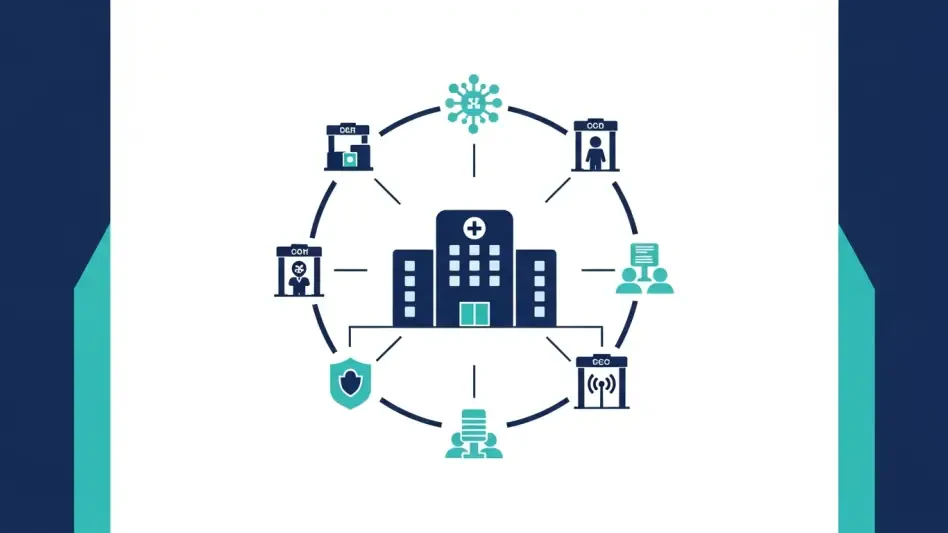
Addressing this systemic challenge requires a new tool designed to make the invisible visible. The solution is emerging in the form of specialized audit frameworks, such as the SOC 4-OT, which act as a necessary supplement to existing System and Organization Controls (SOC) audits. This type of framework is not a replacement for SOC 1 or SOC 2 reports but is specifically engineered to bridge the gap between the digital and physical worlds, providing the logic needed to connect a digital cause to its ultimate kinetic consequence. Its function is to translate technological vulnerabilities into a language that underwriters, brokers, and CFOs can understand and act upon.
The core functions of such a framework are multi-faceted and essential for modern risk management. It works to identify unmonitored external access points to critical control systems, revealing hidden pathways for intrusion or error. It clarifies liability by meticulously tracing the lines of control and responsibility between a company and its third-party technology vendors, which is crucial for post-incident subrogation. Furthermore, it maps how a single digital failure can trigger claims across Property, GL, and WC policies simultaneously. By providing this comprehensive view, an OT-specific audit framework gives insurers the data needed for accurate pricing and underwriting, moving the industry from a reactive posture of absorbing silent losses to a proactive one of strategic risk management.
The era of treating operational technology as a peripheral or purely “cyber” issue has definitively ended. It was recognized that the digital transformation of physical infrastructure had fundamentally and permanently altered the nature of risk, rendering legacy assessment models obsolete. The industry understood that without a clear, multi-line view of how programmable systems drive physical outcomes, it was operating with an incomplete and hazardous picture of its true exposures. The adoption of new, specialized audit frameworks marked the beginning of a crucial shift—a move from institutional omission toward strategic visibility, ensuring that the ghosts in the machine were finally brought into the light.