The thin line between digital bits and physical kinetic energy has dissolved, transforming a simple software exploit into a potential catalyst for massive industrial failure or community-wide blackouts. As critical infrastructure becomes increasingly intertwined with cloud-based management and remote diagnostic tools, the traditional “air gap” that once protected power plants and manufacturing floors has become a nostalgic myth. Modern industrial cybersecurity is no longer just about preventing data theft; it is about ensuring that a water treatment facility continues to provide clean water even when the primary administrative network is under siege. This review examines the shift from reactive software patching to a more resilient, engineering-led defense posture that prioritizes physical safety over digital convenience.
The Evolution of Industrial Control System (ICS) Protection
Protecting the brains of the modern factory—the Industrial Control Systems (ICS)—has moved through several distinct phases of maturity. Initially, security relied on obscurity and physical isolation, assuming that specialized proprietary protocols were too complex for outsiders to navigate. However, the rise of the Industrial Internet of Things (IIoT) forced these systems onto standard IP networks, exposing legacy hardware to vulnerabilities it was never designed to handle. This evolution has led to the current state of technology, where security is integrated into the very fabric of the operational environment rather than being bolted on as an afterthought.
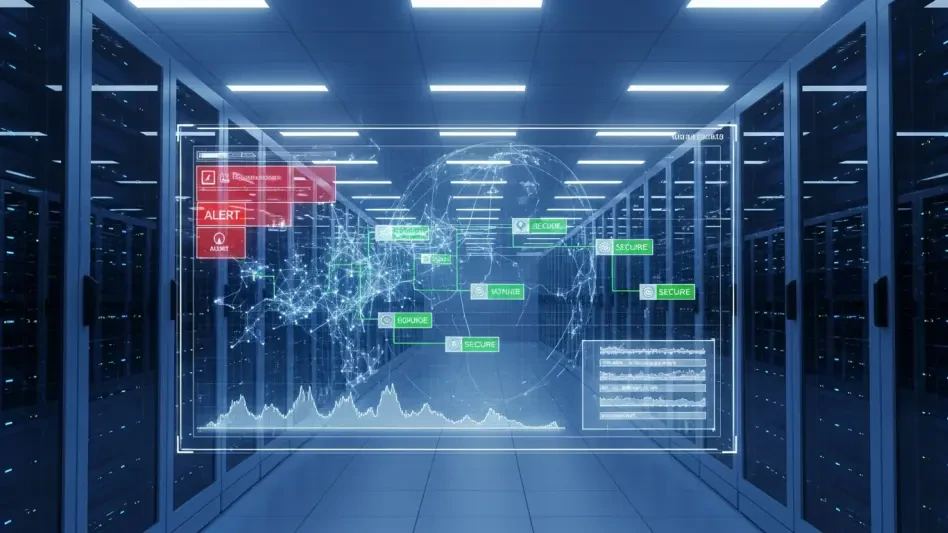
Today, the context of ICS protection is defined by a move toward pervasive visibility and deterministic control. Modern solutions must navigate the tension between the need for real-time data for business intelligence and the absolute requirement to keep the control loop sacred. As these systems evolve, they incorporate sophisticated behavioral analytics to identify deviations in process variables—such as an unexpected change in a valve’s pressure—rather than just looking for known malware signatures. This represents a fundamental shift in how the industry views “health,” moving toward a model where the integrity of the physical process is the ultimate metric of security success.
Core Architectural Components of Modern Industrial Defense
Hardware-Enforced Unidirectional Gateways
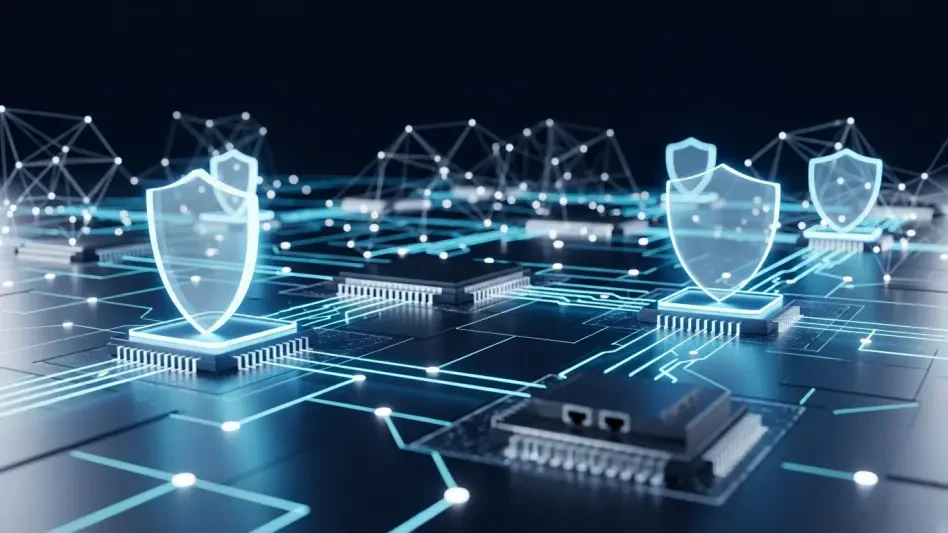
The most significant advancement in preventing remote command injection is the deployment of unidirectional gateways, which replace traditional firewalls with physical-layer isolation. Unlike a software firewall that relies on complex rule sets which can be misconfigured or bypassed, a gateway uses fiber-optic transmitters and receivers to ensure data can only flow in one direction. This physical limitation means that while operational data can be sent to the corporate office for analysis, it is physically impossible for an external signal or a malicious command to travel back into the sensitive control network.
The performance of these gateways in high-risk environments is unmatched because they eliminate the “handshake” protocols required by standard TCP/IP connections. By breaking the bidirectional nature of the network at the physical level, organizations can achieve a level of certainty that no software-based solution can provide. This is particularly significant for nuclear facilities or large-scale power grids where the cost of a single unauthorized command could be catastrophic. While this approach requires a shift in how data is mirrored and replicated, the trade-off is a robust immunity to the most common remote attack vectors.
Cyber-Informed Engineering (CIE) and Deterministic Controls
Beyond the network layer, the industry is embracing Cyber-Informed Engineering (CIE), which treats cybersecurity as a core engineering discipline rather than an IT problem. This methodology focuses on designing systems that are “secure by design” by implementing non-software layers of protection. For instance, safety-instrumented systems (SIS) are now being designed with manual overrides and hard-wired logic that operate independently of the primary control software. This ensures that even if a sophisticated exploit takes control of the digital interface, the physical machinery will still hit a mechanical or hard-wired limit that prevents a meltdown or explosion.
These deterministic controls provide a safety net that is immune to zero-day vulnerabilities or logic bombs hidden in software updates. By reintroducing manual fallback procedures and physical interlocks, engineers are creating a fail-safe environment where the consequences of a cyberattack are capped by physical reality. This shift marks a departure from the “detect and respond” mindset toward a “prevent by architecture” philosophy. It acknowledges that software will always have bugs, but the laws of physics and mechanical engineering are constant and predictable.
Shifting Threat Landscapes and Actor Profiles
The profile of the average industrial adversary has undergone a dramatic transformation, moving away from the high-volume, opportunistic ransomware that characterized previous years. While criminal gangs still exist, their activity in the industrial sector has hit a plateau as law enforcement pressure and improved backups make them less effective. In their place, we see a doubling of aggression from nation-state actors and politically motivated hacktivists. These groups are not looking for a quick payout; they are mapping critical infrastructure for future leverage or looking to cause immediate social disruption.
This shift has changed the requirements for defensive technology. It is no longer enough to guard against “known” criminal tools. Defenders must now assume they are facing adversaries with the resources to develop bespoke exploits and the patience to conduct multi-year reconnaissance. Moreover, the blurring lines between state-sponsored actors and “amateur” hacktivists mean that even lower-tier threats are now utilizing sophisticated, state-level techniques. This necessitates a move toward “zero-trust” architectures within the industrial perimeter, where every command and every user is treated as potentially hostile until proven otherwise.
Real-World Applications Across Critical Verticals
In the power sector, these advanced defenses are being deployed to secure distributed energy resources, such as solar farms and battery storage facilities that are often located in remote, unstaffed areas. By using hardware-enforced isolation, utilities can aggregate data from thousands of edge devices without creating thousands of entry points for a coordinated attack on the grid. Similarly, in maritime operations, the focus has shifted to protecting navigation and propulsion systems from GPS spoofing and electronic interference. Modern vessels are now being equipped with independent, manual verification systems that cross-reference digital data with physical sensor inputs to maintain operational integrity.
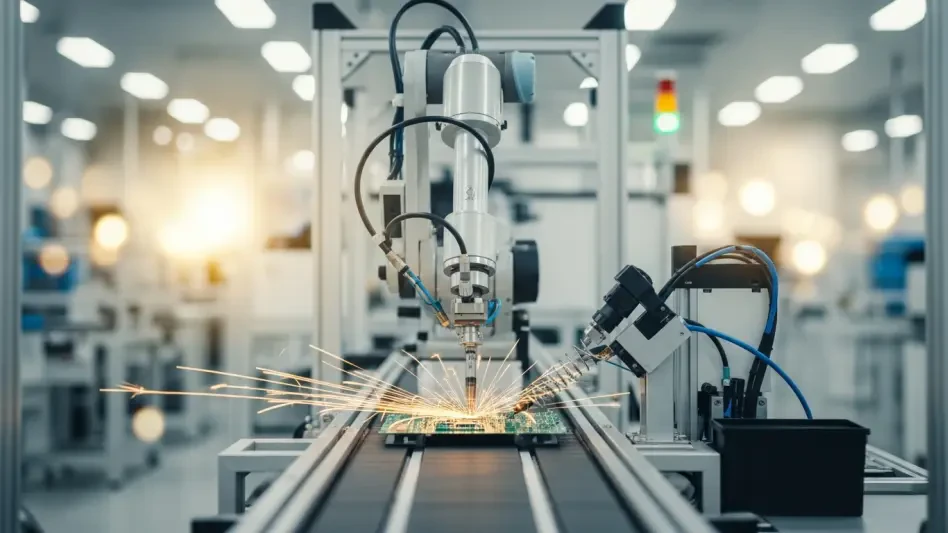
Discrete manufacturing and aerospace supply chains represent another critical use case. In these environments, the integrity of the “digital twin” and the precision of robotic assembly lines are paramount. A subtle change in a manufacturing specification could result in defective parts that are impossible to detect without destructive testing. To counter this, manufacturers are implementing high-fidelity monitoring that tracks the “physics” of the production line. By ensuring that the power consumption and vibration patterns of a robot match the expected digital command, these defenses can detect unauthorized tampering in real-time, safeguarding the global supply chain from subtle sabotage.
Technical and Operational Implementation Challenges
Despite the advancements, the “IT-to-OT” cascading failure risk remains a significant hurdle for many organizations. Most modern industrial facilities rely on IT-managed services for logistics, scheduling, and billing. When an IT network is compromised, operators often choose a “precautionary shutdown” of the OT environment because they cannot be certain the infection won’t spread. This results in massive financial losses even when the control systems themselves are perfectly healthy. Bridging this gap requires a cultural shift where IT and OT teams work in tandem rather than in silos, ensuring that the critical control path is isolated enough to remain operational during an administrative crisis.
Securing legacy hardware presents an even more daunting challenge. Many controllers currently in operation were installed a decade ago and lack the processing power to support modern encryption or authentication protocols. Replacing this equipment is often cost-prohibitive or physically impossible without a multi-month shutdown. Consequently, development efforts are focused on “wrapper” technologies—security appliances that sit in front of legacy devices to provide a protective layer of modern defense. However, these wrappers introduce their own complexities and potential points of failure, highlighting the ongoing struggle to modernize old infrastructure against modern zero-day threats.
The Future of Industrial Resilience
The trajectory of industrial cybersecurity points toward a future defined by “unhackable” hardware architectures. We are likely to see a transition where the most critical functions of a plant are entirely decoupled from the internet-facing software, relying instead on specialized chips that use formal verification to prove their security. This proactive approach aims to make the cost of an attack so high that even nation-state actors are deterred. Furthermore, the integration of automated threat detection will evolve into automated response, where AI-driven systems can reconfigure network paths or isolate compromised segments in milliseconds, far faster than a human operator could react.
Beyond the technical hurdles, the long-term impact on global economic stability will be profound. As nations realize that their economic health is tied to the resilience of their infrastructure, we may see more aggressive international standards for industrial security. The goal is a state of “resilient autonomy,” where a factory or a power plant can continue its primary mission even while its digital nervous system is being hammered by external threats. This evolution will likely lead to a new era of engineering where the ability to withstand a cyberattack is considered as fundamental as the ability to withstand a fire or an earthquake.
Conclusion and Strategic Assessment
The transition from software-heavy defenses to hardware-enforced engineering was a necessary response to the rising sophistication of state-sponsored threats. While firewalls and antivirus software provided a foundational layer of protection in the past, they proved insufficient for the unique demands of high-stakes industrial environments. The industry correctly pivoted toward deterministic architectures, such as unidirectional gateways and manual safety interlocks, which offered a level of reliability that software alone could not achieve. These developments successfully addressed the inherent vulnerabilities of legacy systems while paving the way for more integrated and resilient critical infrastructure.
As society moves forward, the primary focus must remain on the absolute isolation of safety-critical processes from the vulnerabilities of the public internet. The lessons learned from recent near-miss events and production shutdowns highlighted the danger of excessive cloud dependency and the risks of precautionary outages. By prioritizing “security by design” and investing in hardware that physically prevents malicious interference, organizations took a decisive step in safeguarding global economic stability. Ultimately, the role of cybersecurity in the industrial sector shifted from a technical niche to a core pillar of national security, ensuring that the essential services upon which we all depend remain robust in an increasingly hostile digital landscape.