
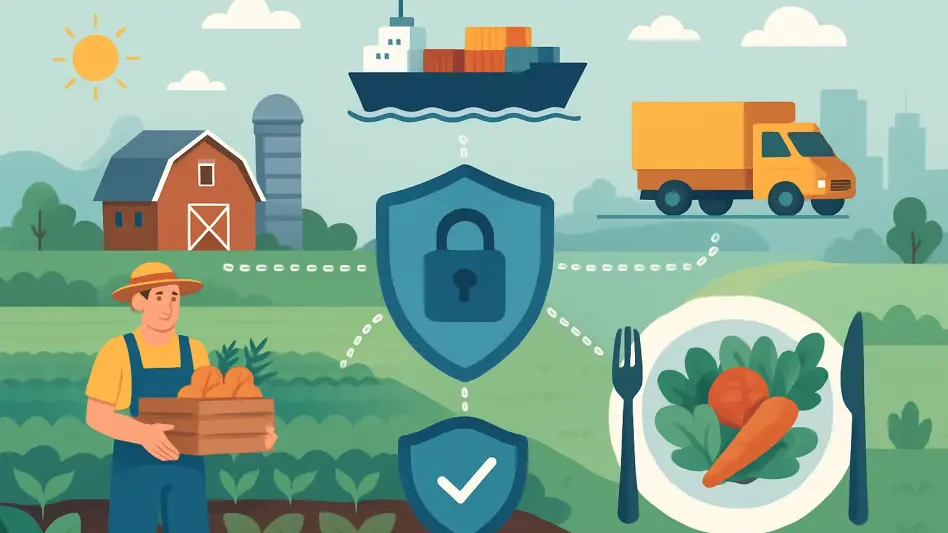
The realization that a single line of malicious code could halt the movement of grain across oceans or freeze the operations of a thousand dairy farms is no longer a dystopian fiction but a documented operational reality in today’s digital landscape. According to the findings of the 2025 Food and Agriculture Cyber Threat Report, the global supply chain is currently entangled in a complex web of digital vulnerabilities that extend from the automated sensors in a tractor to the sophisticated logistics software of international distributors. This critical infrastructure sector has become a primary target for over 330 monitored entities, with 72 specific threat actors actively conducting campaigns designed to exploit the farm-to-table continuum. The transition from sporadic, opportunistic interference to highly organized, strategic aggression highlights a fundamental shift in how adversaries view the food supply. These groups no longer see agricultural networks as peripheral targets but as essential hubs of national and economic security that can be leveraged for significant geopolitical and financial gain.
The complexity of modern food production, which relies heavily on interconnected Industrial Control Systems and Internet of Things devices, provides an expansive attack surface for these sophisticated entities. As the industry has embraced automation to meet the demands of a growing global population, the digital protections for these systems have often lagged behind the pace of technological adoption. This gap has created a landscape where the fundamental stability of the food supply depends on the resilience of networks that were often designed for efficiency rather than security. The current situation demands a comprehensive reassessment of how the industry protects its digital assets, as the threat actors involved range from financially motivated cybercriminal syndicates to state-sponsored units seeking to exert political pressure through the disruption of essential services. By understanding the breadth and depth of these risks, stakeholders can begin to move toward a more secure and resilient future that safeguards the integrity of every meal served.
The Geopolitical Dimensions of Agricultural Cybersecurity
The current threat environment is heavily influenced by the strategic interests of specific nation-states, with Russia and China emerging as the primary sources of digital aggression toward the global food sector. Russia-based activity accounts for approximately 59.3% of all observed adversary actions, a statistic that reflects the country’s role as a sanctuary for ransomware operators who function with near-total impunity. While many of these actors are ostensibly driven by financial gain, their presence provides a convenient tool for the state to disrupt Western economies without direct military engagement. These groups have identified the food and agriculture sector as a high-value target because of its inherent time sensitivity; when dealing with perishable goods, the pressure to pay a ransom and restore operations is significantly higher than in other industries. This creates a lucrative environment for extortionists who understand that every hour of downtime translates into thousands of tons of wasted food and massive financial losses for the producers.
In contrast to the immediate financial focus of Russian groups, Chinese threat actors contribute roughly 25.4% of observed activity with a focus on long-term strategic objectives. These operations are often characterized by the theft of intellectual property, such as proprietary seed genetics or advanced processing techniques, which can be used to bolster domestic industries. Furthermore, Chinese actors are frequently engaged in the pre-positioning of malware within agricultural networks, a tactic known as leaving behind dormant software that can be activated during a future geopolitical conflict. This just-in-case approach allows an adversary to maintain a persistent presence within critical infrastructure, ready to sabotage food supplies or logistics at a moment’s notice. The sophistication of these campaigns suggests that the global food supply chain is being used as a staging ground for a broader digital shadow war, where the control of resources is just as important as the control of information.
Sophisticated Methodologies and the Evolution of Extortion
Adversaries targeting the food supply have moved away from loud, easily detectable methods in favor of stealth-first tactics that prioritize long-term persistence within a network. Every active threat group identified in recent assessments now utilizes living-off-the-land techniques, which involve using a company’s own legitimate administrative tools, such as PowerShell or Windows Management Instrumentation, to carry out malicious activities. By blending in with normal system behavior, these attackers can bypass traditional antivirus software and remain undetected for months or even years. This methodology allows them to conduct extensive reconnaissance, identify high-value data, and map out the entire organizational structure before launching a disruptive strike. The use of custom-built malware and the exploitation of zero-day vulnerabilities further complicate the defense landscape, as security teams find themselves constantly reacting to new and previously unknown threats that are specifically tailored to penetrate agricultural systems.
The rise of the ransomware epidemic has further intensified the danger, with incidents across all industrial sectors seeing an 82% increase in just a single year. Within the food and agriculture space, this has evolved into a brutal three-stage extortion process that maximizes the leverage held by the attacker. First, sensitive data is exfiltrated to be used as secondary blackmail material; second, the organization’s primary operational systems are encrypted to halt production; and third, the adversary threatens to leak the stolen data publicly if the ransom is not paid. Groups like Qilin and Akira have perfected this model, targeting companies at vulnerable points in the harvest or distribution cycle to ensure the highest possible payout. The sheer volume of these attacks indicates that the sector is viewed as a soft target with high stakes, where the cost of a prolonged shutdown often outweighs the cost of the ransom, creating a self-sustaining cycle of criminal profitability that threatens global food security.
Implementing Proactive Defenses and Systemic Resilience
To counter the growing sophistication of these digital threats, the industry has begun to adopt the Predictive Adversary Scoring System as a means of prioritizing security resources. This data-driven framework allows organizations to move beyond reactive measures by evaluating threat actors based on their recency of activity, frequency of targeting the sector, and technical sophistication. By assigning a score to each adversary, security teams can focus their limited budgets and personnel on the most immediate and severe risks rather than trying to defend against every possible threat simultaneously. This transition toward a risk-based defense strategy is essential for an industry that often operates on thin margins and may not have the massive cybersecurity budgets of the financial or defense sectors. Proactive defense also involves participating in information-sharing communities where companies can exchange data on new attack patterns and vulnerabilities, creating a collective shield that benefits the entire supply chain.
On a technical level, building a resilient defense requires the implementation of a defense-in-depth strategy that starts with the universal adoption of multi-factor authentication. This simple but effective measure can invalidate the utility of stolen credentials, which remain the primary point of entry for many attackers. Furthermore, the critical practice of network segmentation must be prioritized to ensure that a breach in a corporate email system does not allow a hacker to gain control over the automated machinery in a processing plant or a grain elevator. By physically and logically separating Information Technology from Operational Technology, companies can contain a digital infection and prevent it from cascading into a full-scale operational catastrophe. Maintaining verified, air-gapped backups is the only guaranteed way to recover from a ransomware event without yielding to extortion, making it a cornerstone of any modern business continuity plan in the agricultural sector.
Future Considerations for National Food Security
The evolution of digital threats against the farm-to-table supply chain necessitated a fundamental shift in how food security was defined at the national and international levels. It was clear that the era of viewing cybersecurity as a purely technical issue for the IT department had ended, and it was instead recognized as a core component of operational safety and national resilience. Leadership teams across the agricultural landscape began to treat digital hygiene with the same level of rigor as physical sanitation and food safety standards. This cultural change was supported by the development of cross-functional incident response plans that integrated technical experts with executive decision-makers, ensuring that organizations could respond to a crisis with clarity and speed. The focus transitioned from merely preventing attacks to building systems that could withstand a breach and recover quickly without compromising the safety or availability of the food supply for the general population.
The integration of advanced monitoring tools and behavior-based detection systems provided a new level of visibility into the silent corners of agricultural networks where adversaries once hid. Governments and private industry partners worked more closely than ever before to map out the dependencies of the global supply chain, identifying the third-party vendors and logistics providers that represented the most significant points of failure. By strengthening the weakest links in the chain through mandatory security standards and collaborative audits, the industry moved toward a more robust posture. These collective efforts were grounded in the reality that the food supply is a shared resource, and its protection is a shared responsibility. The lessons learned from the surge in strategic digital aggression provided the blueprint for a future where the journey from farm to table remained secure, regardless of the technological challenges or geopolitical tensions that defined the digital age.