
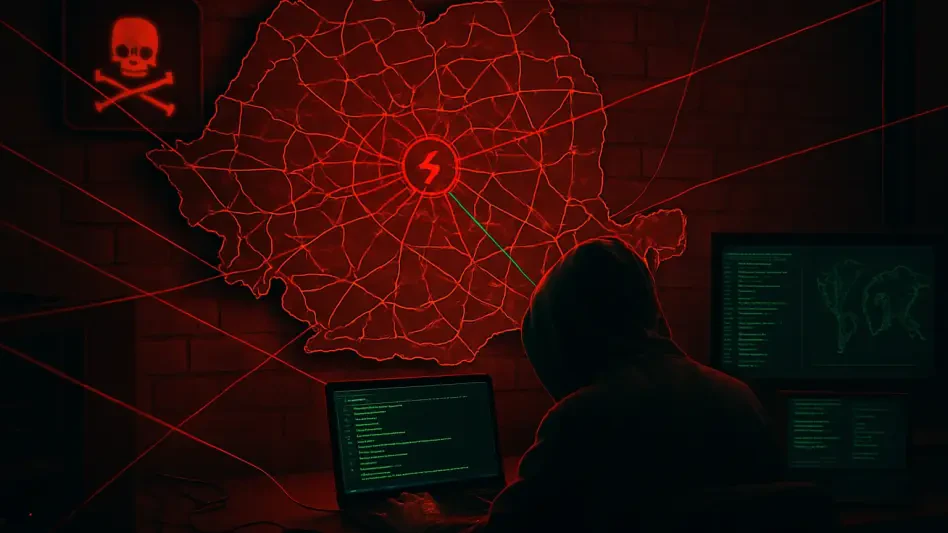
The silent choreography of a nation’s essential services, from the flow of water through its dams to the hum of its power plants, was nearly brought to a standstill not by a physical force but by a meticulously planned digital ambush. An extensive analysis of the sophisticated cyber campaign that targeted Romania’s critical infrastructure during the December 2025 holiday season reveals a sobering new blueprint for attacks on national assets. Involving two distinct yet strategically linked assaults on the country’s largest coal-based energy producer and its national water authority, the incidents exposed significant vulnerabilities in the administrative and logistical foundations of Romania’s utility networks. This campaign suggests a deliberate, multi-stage effort to first map critical inter-dependencies between sectors before launching a crippling strike, serving as a stark warning of the evolving threat landscape.
The Digital Battlefield: Romania’s Interconnected Utilities Under Siege
The Anatomy of a Coordinated Holiday Campaign
The selection of late December for this campaign was no accident. Threat actors deliberately exploited the holiday period, a time characterized by reduced staffing levels and potentially slower incident response protocols across both public and private sectors. This strategic timing allowed the attackers a wider window of opportunity to establish a foothold, deploy their payloads, and inflict maximum damage before containment measures could be fully mobilized. The campaign’s design points to a high level of operational planning and intelligence gathering.
Although the attacks on the energy and water sectors employed different technical methodologies—one using sophisticated custom ransomware and the other weaponizing native system tools—their orchestration reveals a common strategic objective. Both intrusions specifically targeted the administrative IT infrastructure rather than the operational technology (OT) systems that directly manage physical processes. This calculated approach aimed to cause severe logistical and business disruption, sowing chaos within the organizations’ support functions while carefully avoiding the kind of direct physical threat that would trigger an immediate and overwhelming national security response.
Key Players in the Crosshairs: Energy and Water Infrastructure
The campaign’s primary targets represent two of the most critical pillars of Romania’s national infrastructure. The first was the Oltenia Energy Complex, the nation’s foremost coal-based power producer, responsible for generating approximately 30 percent of the country’s electricity. A successful disruption of its operations carries the potential for significant impact on the stability of the national energy grid, making it a high-value target for any adversary seeking to undermine state functions.
The second entity, Administrația Națională ‘Apele Române’ (Romanian Waters), is the national authority tasked with managing the country’s vast water resources. Its role extends far beyond public water supply, as it oversees the dams and waterways that are indispensable for industrial processes, agriculture, and, crucially, the cooling systems and hydroelectric functions of power producers like the Oltenia Energy Complex. The symbiotic relationship between these two entities makes them a logical pairing for a coordinated, multi-stage cyber operation.
A Campaign Unmasked: The Two-Pronged Cyber-Assault
The Ransomware Blitz: Paralyzing the Oltenia Energy Complex
The most visible element of the campaign materialized in the early hours of December 26, 2025, when a ransomware attack struck the Oltenia Energy Complex. The company publicly confirmed it was hit by a variant known as “Gentlemen,” which swiftly compromised its core administrative infrastructure. The attack resulted in the encryption of essential documents and files, effectively paralyzing key operational support systems. The company’s enterprise resource planning (ERP) platforms, document management tools, and internal email services were all rendered temporarily unavailable.
Despite the severe disruption to its IT and business operations, the company was quick to assure the public that the attack did not endanger the stability of the National Energy System. The operational technology controlling power generation remained secure and isolated from the compromised IT network, preventing a widespread blackout. This distinction underscores the attackers’ precise targeting of the administrative “brain” of the organization, aiming to disrupt its ability to function as a business rather than immediately cutting off power.
The Stealth Incursion: Weaponizing System Tools Against Romanian Waters
Preceding the strike on the energy producer, a separate but related incident targeted the national water management agency, Romanian Waters, on December 20, 2025. This attack had a widespread impact, compromising approximately 1,000 systems across the organization, including servers, workstations, and its primary website. The attackers encrypted files and left ransom notes demanding negotiations, signaling a clear intent to extort the agency.
However, an analysis by the National Directorate of Cyber Security (DNSC) revealed a different modus operandi. Instead of deploying a custom ransomware strain, the attackers employed a “living off the land” technique, weaponizing Windows’ native BitLocker disk encryption tool against the agency. By using a legitimate system utility for malicious purposes, the perpetrators were able to lock employees out of their own systems in a manner that was harder to detect and attribute. This stealthy approach suggests a focus on infiltration and control, possibly as a precursor to a more disruptive action.
Cracks in the Armor: Exposing Critical Infrastructure Vulnerabilities
Targeting the Brain: Why Administrative Systems Were the Primary Goal
The decision to focus the attacks on administrative systems rather than industrial control systems was a highly strategic one. By compromising the ERP layer, which cybersecurity expert Prayukth K V of Shieldworkz describes as the “brain” of corporate operations, the attackers could inflict maximum administrative paralysis. This approach disrupts an organization’s ability to manage finances, logistics, and human resources, creating significant internal chaos and financial pressure without triggering the immediate, kinetic response associated with a direct attack on the power grid or water supply.
This strategy allows adversaries to achieve profound disruption with a lower risk of immediate escalation. An attack that causes a blackout is an unambiguous act of aggression, whereas an attack that cripples a company’s billing and communication systems occupies a grayer area. It demonstrates capability and causes significant harm while maintaining a degree of plausible deniability, making it a powerful tool for geopolitical coercion and strategic reconnaissance.
The Achilles’ Heel: Exploiting the Link Between Water and Power
The sequencing of the attacks—first on the water authority, then on the energy producer—points to a calculated effort to exploit the systemic link between these two vital sectors. Romanian Waters is directly responsible for managing the water flows that the Oltenia Energy Complex relies upon for critical cooling functions. This dependency creates a hidden vulnerability, where a compromise in one sector can create an opening to attack the other.
It is highly probable that the initial breach of the water authority served as a form of strategic reconnaissance. By infiltrating its network, the attackers could have gathered valuable intelligence on the operational dependencies of Romania’s broader power grid. This would allow them to map key nodes, identify systemic weaknesses, and select their next target with greater precision. This two-phased approach demonstrates a level of long-term planning aimed at understanding and leveraging the intricate connections within a nation’s most essential services.
Sounding the Alarm: National Response and Defensive Postures
Mobilizing the Authorities: The Role of DNSC and DIICOT
In the wake of the ransomware attack, the Oltenia Energy Complex acted swiftly to engage national authorities. The incident was formally reported to the National Directorate of Cyber Security (DNSC), which began an immediate investigation into the breach, and the Ministry of Energy was kept fully apprised of the situation. This rapid mobilization of government cybersecurity resources was crucial for coordinating a national-level assessment of the threat.
Furthermore, the company elevated the incident to a criminal matter by filing a complaint with DIICOT, Romania’s Directorate for Investigating Organized Crime and Terrorism. The complaint cited offenses of illegal access to a computer system and the alteration of computer data integrity, framing the attack not merely as a corporate issue but as a serious threat to national security. This legal step initiated a formal law enforcement investigation aimed at identifying and prosecuting the perpetrators.
Containment and Recovery: Rebuilding from Secure Backups
The immediate technical response focused on damage control. Security teams at the affected organizations worked to isolate the compromised IT systems from the wider network to prevent the ransomware from spreading and causing further damage. This containment strategy is a standard and essential first step in managing an active cyber intrusion, creating a digital quarantine to protect uninfected assets.
Following containment, the arduous process of recovery began. IT specialists started rebuilding the affected systems on a new, clean infrastructure, a painstaking task that relies heavily on the availability of recent and uncorrupted data backups. Oltenia Energy Complex confirmed it was leveraging its existing safety backups to restore functionality, highlighting the critical importance of a robust backup and recovery plan as a last line of defense against destructive cyberattacks. An ongoing analysis was also initiated to determine the full extent of the incident and ascertain whether sensitive data had been exfiltrated.
The Ominous Blueprint: Future Threats to the National Grid
From Reconnaissance to Disruption: A New Model for Infrastructure Attacks
The coordinated campaign against Romania’s utilities unveils a sophisticated and replicable model for future attacks on critical national infrastructure. This two-phase blueprint—commencing with a stealthy reconnaissance operation on a related, dependent sector before launching a direct disruptive attack on a high-value primary target—marks a significant evolution in adversary tactics. It allows threat actors to gather critical intelligence and map systemic vulnerabilities under the radar.
This emerging model shifts the paradigm from simple, opportunistic ransomware attacks to long-term, strategic campaigns designed to understand and exploit the complex inter-dependencies of a modern state. Such an approach indicates that adversaries are not just seeking financial gain but are also developing the capability to cause widespread, cascading failures across multiple sectors of a nation’s economy and society.
Profiling the Adversary: The Rise of the “Gentlemen” Group
The group identified in the Oltenia attack, known as “Gentlemen,” is a relatively new but highly aggressive operation. According to industrial cybersecurity firm Dragos, the group emerged in the third quarter of 2025 and quickly distinguished itself with an unusual concentration of attacks against industrial organizations. This focus suggests a specialized interest in, and knowledge of, the vulnerabilities inherent in critical infrastructure sectors.
Operating as a tightly controlled, non-affiliate team, the Gentlemen group does not use a Ransomware-as-a-Service model, indicating a more professional and disciplined structure. Their typical attack chain involves exploiting compromised credentials, using Group Policy to escalate privileges and move laterally, terminating security services to evade detection, and exfiltrating data before deploying their custom encryptor. This methodical approach, combined with their tactic of publishing stolen data to pressure victims, paints a picture of a sophisticated and determined adversary.
Fortifying the Frontlines: Strategic Imperatives for National Security
A Wake-Up Call: Rethinking Cross-Sector Cybersecurity
The December 2025 incidents serve as a critical wake-up call, demonstrating that national cybersecurity can no longer be approached in isolated silos. The attacks masterfully exploited the interconnectedness of the energy and water sectors, proving that a vulnerability in one can become a threat to all. This reality necessitates a fundamental shift in defensive strategy, moving away from protecting individual organizations toward securing entire ecosystems of interdependent critical infrastructure.
This new paradigm requires a holistic understanding of systemic risks, where government agencies and private operators work in concert to identify and mitigate shared vulnerabilities. The security of the national grid is not just the responsibility of power companies but also depends on the digital resilience of their suppliers, partners, and related regulatory bodies. A failure to adopt this cross-sector perspective leaves the entire system exposed to adversaries who already think and operate in this manner.
Recommendations for a Resilient and Secure Grid
Building a more resilient and secure grid requires immediate and strategic action. Critical infrastructure operators must enhance the security of their administrative IT systems with the same rigor applied to their OT environments, implementing principles like zero-trust architecture to limit lateral movement. Furthermore, organizations must conduct regular and realistic security drills that simulate complex, cross-sector attack scenarios to test their response and recovery capabilities.
Strengthening public-private partnerships is equally vital. Enhanced, real-time information sharing between government bodies like the DNSC and the operators of essential services is necessary to foster a collective defense. Finally, the paramount importance of maintaining and regularly testing secure, air-gapped backups cannot be overstated. As these attacks have shown, the ability to rebuild from a trusted source is often the final and most critical line of defense against a determined adversary, representing the ultimate key to organizational resilience.