
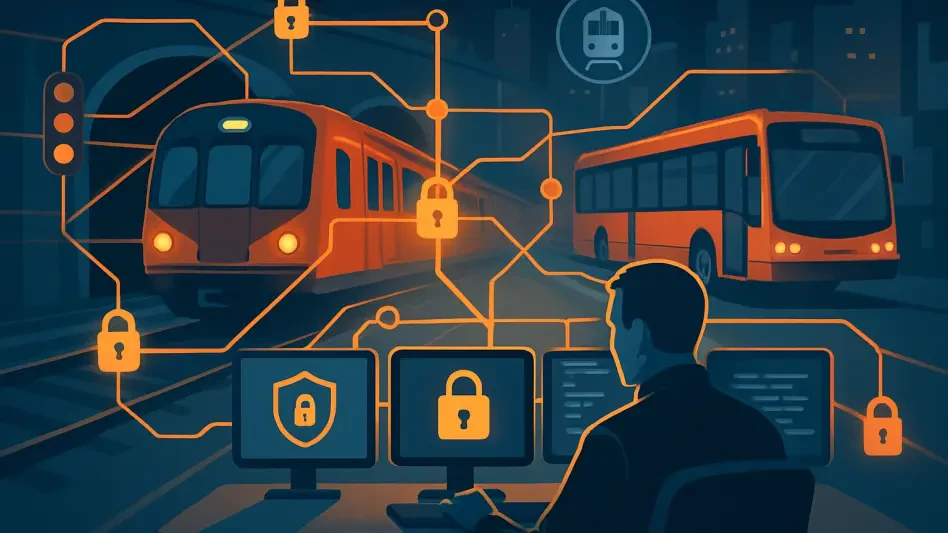
The daily commute for millions of Americans relies on an intricate and increasingly vulnerable digital backbone, a reality that has prompted federal cybersecurity experts to devise a new protective strategy for this essential public service. Public transit is far more than just buses and trains; it is a sprawling network of interconnected systems that forms the circulatory system of modern urban life. From the complex signaling that guides subways to the payment systems that process fares and the real-time apps that inform passengers, every component is part of a high-stakes digital ecosystem. The National Institute of Standards and Technology (NIST) has stepped forward to address the growing cyber threats to this critical infrastructure, proposing a unified framework designed to fortify the nation’s transit agencies against a new generation of digital risks.
The Modern Transit Ecosystem a Complex Web of Critical Infrastructure
Today’s public transit industry operates as a sophisticated blend of physical machinery and advanced information technology (IT) and operational technology (OT). This ecosystem encompasses a vast array of segments, including heavy rail, light rail, bus networks, and paratransit services, each reliant on a unique set of digital controls. Key operational components, such as train control systems, bus fueling and charging management, and scheduling and dispatch software, are fundamental to daily service. These are supported by an equally critical layer of business systems handling everything from ticketing and revenue collection to emergency communications and public information displays.
The significance of this sector cannot be overstated; it is the lifeline for countless communities, enabling economic activity and ensuring mobility. The market is populated by a diverse range of players, from large metropolitan transit authorities to smaller rural operators, each interacting with a broad supply chain of technology vendors and service providers. This complex environment is governed by regulations from bodies like the Federal Transit Administration (FTA) and the Transportation Security Administration (TSA), which set standards for safety and security. The increasing integration of technology into every facet of operations has made cybersecurity a central pillar of regulatory compliance and operational resilience.
Navigating the Digital Shift Emerging Threats and Future Imperatives
The Double-Edged Sword of Connectivity How Digitalization Is Reshaping Transit Risks
The digital transformation sweeping through the public transit sector presents both unprecedented opportunities for efficiency and significant new vulnerabilities. Historically, many of the core operational systems, like rail signaling, functioned in isolated environments with physical connections, creating a natural defense against remote cyber threats. However, the modern trend is toward hyper-connectivity. These once-siloed systems are now linked through digital, network-based communications, often utilizing wireless technology to create a more integrated and responsive transit network.
This digital shift, while driving innovation and improving the passenger experience, has dramatically expanded the cyberattack surface for transit agencies. Operational technologies that were never designed with internet connectivity in mind are now exposed to a global threat landscape. Consequently, transit operators face the daunting task of securing a hybrid environment where legacy OT systems coexist with modern IT infrastructure. This convergence creates complex risk scenarios where a breach in a business system could potentially cascade into the operational controls that ensure passenger safety and service reliability.
Anticipating the Threat Horizon Projecting Cybersecurity Needs for Future Transit
As transit agencies continue to adopt smart technologies, the Internet of Things (IoT), and data analytics to optimize services, the demand for robust cybersecurity measures is projected to grow exponentially. Market indicators point toward a sustained increase in investment in securing critical infrastructure, with the transit sector becoming a key focus. The future of transit security is not merely about preventing data breaches but about ensuring the physical safety of passengers and the uninterrupted flow of services in the face of sophisticated cyber-physical threats.
Looking forward, the industry’s cybersecurity needs will be shaped by the continued integration of autonomous vehicle technologies, advanced traffic management systems, and predictive maintenance platforms. These innovations will generate massive volumes of sensitive data and create new entry points for malicious actors. Therefore, future imperatives will include developing proactive threat intelligence capabilities, implementing zero-trust security architectures, and fostering a deep talent pool of cybersecurity professionals who understand the unique intersection of IT and OT in a transit context. The ability to anticipate and neutralize threats before they materialize will be a defining performance indicator for resilient transit operations.
Confronting the Core Hurdles the Diverse Challenges Facing Transit Agencies
The American transit landscape is characterized by immense diversity, and this heterogeneity translates into a wide spectrum of cybersecurity challenges. For smaller and rural transit agencies, the primary obstacles are often severe constraints on resources. These organizations typically operate with limited budgets and small technical teams where staff members must wear multiple hats. They may lack dedicated cybersecurity expertise and rely heavily on third-party vendors for technology solutions, making comprehensive security governance and consistent workforce training difficult to achieve.
In contrast, large metropolitan transit authorities face challenges of scale and complexity. While they may have greater financial resources and specialized staff, they must secure vast, geographically dispersed networks that often include aging or obsolete legacy systems. Maintaining and protecting this outdated infrastructure, for which vendor support may no longer be available, is a significant operational and financial burden. For these larger agencies, the core hurdles revolve around standardizing security practices across a sprawling organization and ensuring that new technologies are integrated safely without disrupting critical legacy functions.
The NIST Blueprint a New Framework for a Resilient Transit Sector
In response to these mounting challenges, NIST has introduced a landmark regulatory guide: the Transit Cybersecurity Framework Community Profile. This blueprint is not intended to replace existing cybersecurity policies but to augment them with a sector-specific lens. It provides a structured, risk-based methodology for managing cyber threats, built upon the foundation of the widely adopted NIST Cybersecurity Framework 2.0. Its primary function is to offer a common language and a shared set of priorities for transit owners, operators, and their partners, facilitating clearer communication and more effective collaboration.
The profile aggregates transit-specific security considerations from numerous industry sources into a single, cohesive document. This helps stakeholders align on desired security outcomes and establish a clear target state for their cybersecurity programs. By offering a consistent and repeatable process for identifying and prioritizing areas for improvement, the framework empowers agencies to make more strategic investments in their cyber defenses. It provides a roadmap for organizations at any level of maturity, from those just beginning to build a cybersecurity program to those looking to refine their existing practices, ensuring that security measures directly support the core mission of safe and reliable transit.
Charting the Path Forward NIST’s Strategic Vision for Secure Transit
NIST’s strategic vision for a secure transit sector is organized around three interconnected focus areas, designed to help agencies prioritize actions based on their unique mission objectives. The first area, securing and managing critical assets, centers on the fundamental need to deliver resilient transit services. This involves identifying and protecting the most vital IT and OT systems, maintaining robust business continuity plans, and safeguarding sensitive data. It emphasizes a systematic approach to asset management that accounts for both modern and legacy infrastructure.
The second strategic area focuses on collaboration with partners and suppliers, recognizing that cybersecurity is a collective responsibility. This calls for aligning security goals across the entire transit ecosystem, including vendors and service providers. It places a strong emphasis on securing the supply chain by integrating cybersecurity requirements into procurement processes and proactively managing vendor risk. The third area, continuously improving the organization and workforce, underscores the importance of human factors and organizational culture. It advocates for ongoing investment in training for all staff, from back-office personnel to frontline operators, and integrating cybersecurity into the broader enterprise risk management program to foster a pervasive culture of security awareness.
a Collaborative Future Shaping the Next Generation of Transit Security
The introduction of the NIST Transit Community Profile marked a pivotal moment in the industry’s approach to cybersecurity. It provided a common framework that moved the conversation from abstract risk to concrete, prioritized actions. By establishing a shared taxonomy, the profile has improved communication between operational teams, IT departments, and executive leadership, enabling a more unified strategy. The distinction between “Elevated” and “Supporting” priorities gave agencies a practical starting point, allowing even the most resource-constrained organizations to take meaningful steps toward enhancing their security posture.
This initiative helped foster a more collaborative and proactive security culture across the sector. Agencies that adopted the framework reported a clearer understanding of their own vulnerabilities and a more strategic basis for allocating their limited resources. The focus on supply chain security and workforce development addressed two of the most persistent challenges, leading to stronger partnerships with technology vendors and a more cyber-aware employee base. Ultimately, NIST’s blueprint provided not just a guide, but a catalyst for change, shaping a more resilient and secure future for the nation’s public transit systems.