Modern industrial infrastructure remains a primary target for sophisticated cyber threats because the intersection of legacy physical systems and digital connectivity creates a massive, often undefended, attack surface. The release of HVACSim by the MITRE Caldera for OT team marks a major turning point in operational technology security training by providing a high-fidelity, software-only simulation environment. Historically, learning to defend these critical systems required expensive, bulky physical hardware that was often out of reach for students and smaller security teams. HVACSim fundamentally changes this dynamic by offering a virtualized platform that mimics a building’s heating, ventilation, and air conditioning system. By integrating directly with the open-source Caldera framework, it allows users to experiment with discovery, data collection, and process manipulation in a risk-free setting. This innovation effectively bridges the long-standing gap between theoretical network protocols and the tangible, real-world physical consequences of a cyberattack on critical infrastructure components.
Origins and Strategic Importance of Building Automation
Academic Collaboration and Development: A New Model
The development of HVACSim serves as a powerful testament to the impact of academic and professional partnerships in solving complex cybersecurity challenges through collective innovation. Created as a capstone project by students at the University of Hawaii at Manoa, the simulator was built in direct coordination with MITRE experts to ensure the final product met rigorous industry standards for authenticity. This collaboration resulted in a tool that is far more than a static model; it is a functional, dynamic representation of a server room HVAC controller designed for active testing. By leveraging fresh academic perspectives and integrating them into an established professional framework, the project provides a sophisticated way to emulate adversaries without the prohibitive costs of specialized industrial equipment. This approach makes high-level security research more accessible to the global community, allowing organizations to train their personnel on realistic scenarios that previously required multi-million dollar laboratory setups.
Lessons From Historical Breaches: Beyond Corporate Networks
Focusing specifically on HVAC systems is a strategic choice rooted in the sobering reality of cybersecurity history, most notably the landmark breach involving a major retailer in the past decade. In that instance, attackers successfully used the stolen credentials of an HVAC contractor as an initial entry point to pivot into the corporate network and exfiltrate sensitive customer data. Beyond serving as a gateway for lateral movement, HVAC systems are absolutely critical to the operational stability of modern data centers and healthcare facilities, where even minor temperature fluctuations can lead to catastrophic hardware failure or life-threatening disruptions. HVACSim highlights these often-overlooked vulnerabilities by demonstrating exactly how manipulating fan speeds or temperature setpoints can damage expensive machinery and create hazardous conditions for on-site personnel. Understanding these risks is vital for modern defenders who must protect the physical safety of a facility as much as its digital assets and private data.
Technical Mechanics and Simulated Realism
Core Components and User Interface: Bridging the Digital Divide
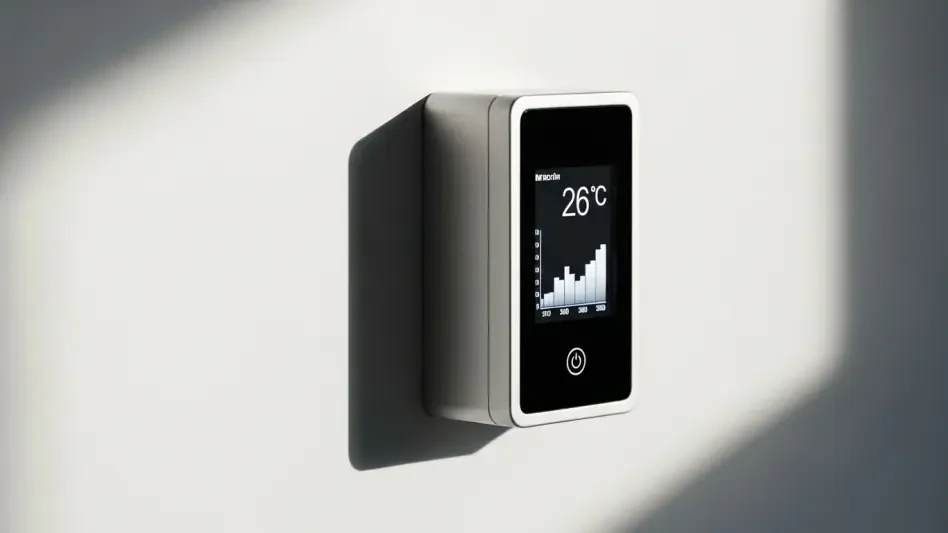
At its fundamental level, HVACSim is designed to be a lightweight yet highly functional tool that focuses on the complexities of the BACnet industrial control protocol used globally. The architecture consists of two primary components: a robust BACnet/IP server that handles all incoming communication requests and a detailed Human-Machine Interface built with the matplotlib library for visualization. This interface provides a live, interactive dashboard that displays temperature trends, chiller loads, and fan speeds in a format that is easy for security analysts to interpret. When a user or an automated Caldera agent modifies settings within the simulator, the interface reflects those changes in real-time, allowing defenders to see the immediate physical impact of their digital commands. This real-time feedback loop is essential for training, as it transforms abstract lines of code and network packets into visible physical changes that help practitioners grasp the gravity of industrial control system compromises.
Modeling Physical Physics and Noise: The Quest for Authenticity
To provide a truly realistic experience, the developers went beyond simple data points by modeling a complex temperature control loop that accounts for the laws of physics. The simulation incorporates various environmental factors, such as ambient heat, internal heat sources from servers, and airflow-based cooling mechanisms, to ensure the virtual environment behaves like a real building. To ensure the training environment is not too perfect or laboratory-clean, the simulator includes intentional sensor noise and actuator lag, which are common characteristics of physical hardware in the field. These realistic imperfections force security professionals to learn how to distinguish between normal system fluctuations and actual malicious interference, a skill that is absolutely essential for anyone working with real-world industrial sensors. By simulating the “messiness” of physical processes, HVACSim prepares defenders for the nuances of industrial environments where data is rarely as clear-cut as it is in traditional IT systems.
Practical Training and Ecosystem Integration
Adversary Emulation Workflows: Tactical Application in the Field
The true utility of HVACSim is found in its tactical application through the MITRE Caldera plugin, which allows for the automation of complex attack sequences against the virtual system. Security teams can deploy automated agents to perform specific adversarial actions, such as scanning the network for active BACnet devices or reading sensitive process values to establish a baseline of normal operations. More importantly, they can execute unauthorized write requests to change temperature setpoints or trigger emergency shutdowns, observing the results immediately. This hands-on workflow helps defenders understand exactly how protocol-level traffic manifests as physical changes, enabling them to build more effective detection strategies for spotting unauthorized commands. By practicing these scenarios in a sandbox, organizations can develop robust incident response playbooks that are tailored to the specific quirks of industrial protocols, ensuring that their teams are ready to act when a real threat emerges in their production environments.
Accessibility and the Future of OT Sandboxes: Democratizing Defense
One of the most significant advantages of HVACSim is its remarkably low barrier to entry, as it runs on standard consumer hardware and requires only basic Python dependencies to operate. It joins a growing suite of open-source MITRE tools, such as the Wildcat Dam and Aloha Water Treatment Plant simulators, which focus on different industrial protocols like Modbus to provide a holistic view of the threat landscape. Together, these tools provide a comprehensive, risk-free ecosystem for the next generation of operational technology defenders to hone their skills without fear of damaging expensive infrastructure. By removing the financial and safety risks traditionally associated with industrial security training, this initiative empowers a much broader range of researchers and small-scale utilities to protect the critical infrastructure that supports modern society. This shift toward accessible, software-defined simulation ensures that the global defense community can keep pace with the rapidly evolving tactics of modern cyber adversaries.
Strategic Implementation for Industrial Resilience
The introduction of this simulation platform effectively lowered the barriers to entry for specialized cybersecurity training by providing a viable alternative to physical hardware labs. Organizations that adopted these virtualized tools observed a marked improvement in the ability of their incident response teams to identify anomalous BACnet traffic before it resulted in physical equipment damage. Security leaders moved toward integrating these simulations into their regular red-teaming exercises to validate that their existing detection sensors were capable of catching subtle changes in industrial setpoints. To maximize the benefits of this technology, technical managers should implement localized versions of these simulators within their internal training programs to build muscle memory among junior analysts. Future efforts must focus on expanding these virtual sandboxes to include more diverse industrial protocols and vendor-specific behaviors to keep pace with an increasingly complex threat landscape. By prioritizing these accessible training tools, the industry moved closer to a standard where every defender had the opportunity to practice on realistic systems.